Gorilla Trekking Cost in Uganda 2026: The Full, Honest Breakdown
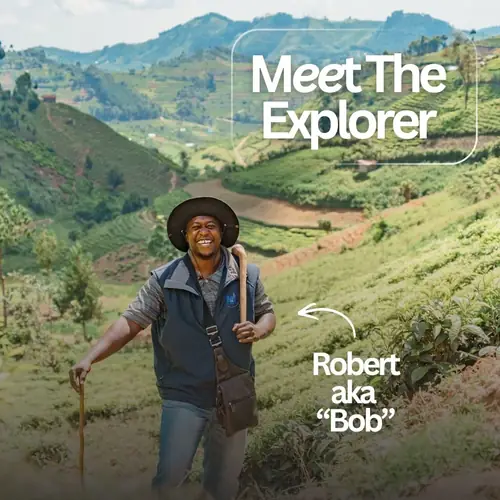
By Robert Ahenda•Senior Tour Guide & Operations•April 8, 2026•14 min read
The gorilla permit costs $800. That is the number everyone searches for, and it is correct. But if you budget only $800, you will not make it to Bwindi and back. This guide breaks down every single cost — permits, accommodation tiers, transport, porter fees, park extras, and full package estimates — so you can plan your Uganda gorilla safari with no surprises.
The Headline Figure: $800 Per Person
Uganda's gorilla trekking permit is $800 USD per person. This fee is set by the Uganda Wildlife Authority (UWA) and is non-negotiable. It does not matter which tour operator you book with, whether you are Ugandan or foreign, whether you book six months ahead or two weeks out — the permit price is $800, full stop.
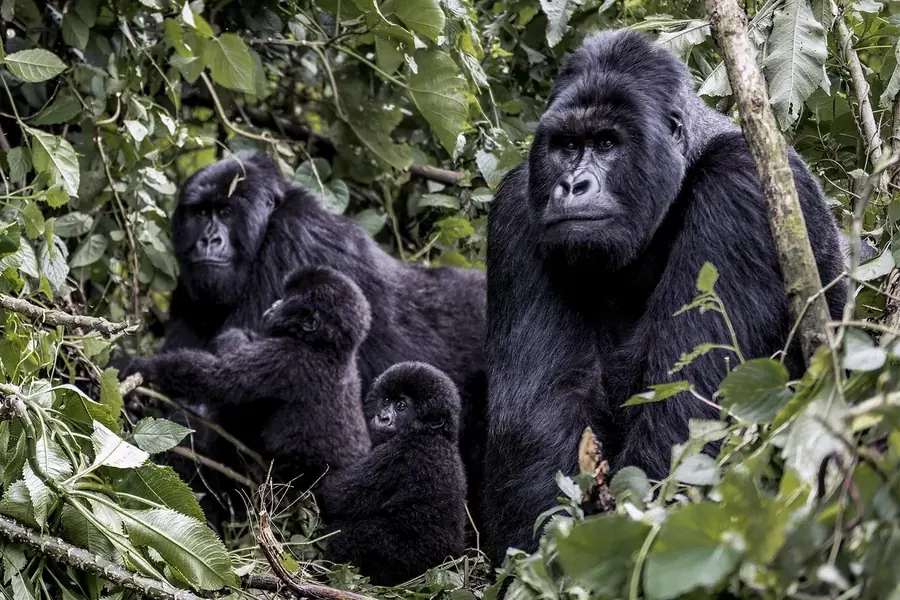
That price is not arbitrary. Only 1,063 mountain gorillas are estimated to remain in the wild as of the latest IUCN census, and every single one lives in a small pocket of forest straddling Uganda, Rwanda, and the Democratic Republic of Congo. The $800 goes directly to Uganda Wildlife Authority, which uses the funds for ranger salaries, anti-poaching patrols, community conservation programmes, and veterinary care for the gorilla families. When you pay $800, you are directly financing the survival of a species.
The permit entitles you to:
Entry into the gorilla sector of Bwindi Impenetrable National Park (or Mgahinga Gorilla National Park)
The services of an experienced UWA ranger-guide from briefing to final photograph
Exactly one hour of close contact with a habituated gorilla family once located
It does not include a porter, transport, accommodation, meals, or tips. We will cover each of those below.
Quick Fact: Conservation Impact
Mountain gorillas are one of only two wildlife species whose population is actually increasing — because of well-funded conservation. Gorilla permit revenue is the primary mechanism funding that conservation. The $800 fee is the reason mountain gorillas now number over 1,000 when they were below 620 in 1989.
The Full Cost Breakdown: Every Line Item
Here is every cost associated with a gorilla trek, presented clearly. Most costs are either fixed (set by UWA or government) or within a known range. Nothing here is hidden.
Cost Item
Price
Notes
Gorilla trekking permit
$800 per person
Set by UWA, non-negotiable, includes park entry for gorilla sector
Porter
~$20
Optional but strongly recommended. Carries your daypack, assists on steep descents
Ranger guide tip
$20–$30
Not mandatory but standard practice. Rangers work exceptionally hard
Accommodation per night
$80–$1,200+
Wide range; see tiers below. Most packages include 2–3 nights near Bwindi
Transport (Land Cruiser)
~$150–$200/day in package
TRVE operates its own 4WD fleet; cost absorbed into package daily rate
Meals
Mostly included in packages
Mid-range and luxury lodges are full board or half board
Uganda e-Visa
$50
Most nationalities; apply at immigration.go.ug before travel
International flights
$600–$1,800+ (varies widely)
Excluded from all TRVE packages. Entebbe (EBB) is the main airport
Travel insurance
$60–$150 per trip typically
Strongly recommended; look for cover that includes permit cancellation
Yellow fever vaccination card
$50–$80 (varies by country)
Required for entry into Uganda; get vaccinated at least 10 days before travel
The Gorilla Habituation Experience: $1,500 Per Person
Beyond the standard trek, Uganda offers something no other country in the world does: the Gorilla Habituation Experience (GHE). This costs $1,500 per person and is available only in the Rushaga sector of Bwindi.
The difference between a standard trek and a habituation experience is profound. With a standard trek, you spend one hour with a gorilla family that has already been fully habituated to human presence — meaning they are comfortable being observed and largely ignore you. With the habituation experience, you join the UWA research team working with a gorilla family that is still in the process of becoming accustomed to humans. You spend four or more hours with the family, following them as they feed, travel, interact, and sometimes react with curiosity or wariness to your presence.
It is a more unpredictable, more intimate, more emotionally intense experience. You witness behaviours that standard trekkers rarely see — because you have the time. Silverbacks display, juveniles play, infants are carried. You see the whole rhythm of a morning in a gorilla family's life.
Availability is extremely limited. Only a small number of permits are issued per day for each habituation family, and this experience books up months in advance. If the GHE is something you want, tell us early. We can secure the permit as part of your package, but the window to book closes quickly during the June–August and December–January peak seasons.
"In fifteen years of taking clients into Bwindi, the gorilla habituation experience produces a different kind of person coming out of the forest. They are quieter. Something has shifted."
Robert Ahenda, Senior Tour Guide & Operations, TRVE
Why Gorilla Permits Are Non-Refundable
This is the part of gorilla trip planning that causes the most anxiety, and it is worth addressing directly. Once a gorilla trekking permit is paid for, it is generally non-refundable. If you fall ill the morning of your trek, if rains make your trail temporarily impassable, if your connecting flight from Kampala is delayed — the permit is almost certainly lost.
The conservation rationale is straightforward. UWA allocates a fixed number of permits per gorilla family per day (typically 8). An empty slot on trek day still represents a vacancy in a conservation programme that depends on consistent revenue. Unlike a hotel room that can be sold to a walk-in, a permit slot simply disappears unused. That is why the no-refund policy exists — and why it is firm.
UWA does allow date transfers in some circumstances if requested with at least 30 days' notice, and this is subject to availability. But a transfer is not a guarantee. If you request a transfer within 30 days of your trek date, it is almost never granted.
Our strong advice: purchase comprehensive travel insurance that explicitly covers gorilla permit cancellation due to illness, injury, or flight disruption. Some specialist travel insurers (particularly those covering adventure wildlife travel) offer this as a named benefit. The premium is typically $60–$150 for a two-week trip — a fraction of the $800 permit you are protecting. We always raise this with clients during the booking process.
Accommodation Cost Tiers Near Bwindi
Where you sleep in Bwindi makes an enormous difference to your overall safari cost. The Bwindi area offers accommodation across a genuinely wide range — from clean, functional guesthouses to some of the most celebrated wilderness lodges on the African continent.
Budget: $80–$150 per person per night
Budget accommodation near Bwindi is typically simple guesthouses or basic lodges in and around Buhoma or Nkuringo. You will get a private room, a clean bed, and a hot shower. Meals are usually included or available for a small additional cost. The surroundings are beautiful — you are still inside one of Africa's great wilderness areas. Examples include Bwindi Guest House and Ruhija Community Rest Camp. For travellers whose priority is the gorillas themselves and who are comfortable with simpler surroundings, budget accommodation is entirely adequate and delivers excellent value.
Mid-Range: $200–$400 per person per night
Mid-range properties near Bwindi offer a meaningful step up in comfort — proper lodge infrastructure, attractive dining areas, sometimes elevated views into the forest, and attentive service. Most are full board (all meals included) or at minimum half board. Properties in this range near Bwindi's various sectors include Ichumbi Gorilla Lodge near Ruhija, Gorilla Valley Lodge near Rushaga, and Nkuringo Gorilla Camp near Nkuringo. These properties give you a comfortable, memorable experience without approaching the premium of the ultra-luxury tier.
Luxury: $500–$1,200+ per person per night
The luxury end of Bwindi accommodation is genuinely world-class. These are properties that attract travellers for whom the lodge experience is as central to the safari as the trek itself. Bwindi Lodge (Buhoma sector) is a classic, with elegant cottages overlooking the forest and impeccable service. Clouds Mountain Gorilla Lodge (Nkuringo) is one of the most acclaimed luxury safari lodges in Africa, perched on a ridge with extraordinary views of the forest canopy and the distant Virunga volcanoes. Sanctuary Gorilla Forest Camp (Buhoma) places guests literally inside the national park boundary, with forest sounds at night and occasional gorilla activity near camp. At this level, everything is full board, guides and briefings are personalised, and the attention to detail is extraordinary.
TRVE Tip: Location Affects More Than Price
The lodge you choose should partly be driven by which sector your permit is for. Bwindi has four sectors — Buhoma, Rushaga, Nkuringo, and Ruhija — and it is a 1–3 hour drive between them. Booking accommodation in the wrong sector can mean an early-morning scramble across difficult roads. We match your accommodation to your permit sector as part of the package planning process.
Full 5-Day Package Cost Estimates
Now that we have established the individual components, here is what a realistic 5-day Uganda gorilla safari actually costs per person, from Entebbe airport and back.
These figures assume two travellers sharing accommodation (single supplements apply if travelling alone), and include: gorilla permit, accommodation (4 nights), all overland transport in a private 4WD Land Cruiser, park and sector fees, and most meals. Excluded from all packages: international flights, Uganda e-visa, travel insurance, tips, and personal spending.
Package Tier
Est. Cost Per Person
Accommodation Style
Key Inclusions
Budget
$2,200–$2,800
Guesthouses & basic lodges ($80–$150/night)
Permit, transport, accommodation, most meals
Mid-Range
$3,500–$4,500
Comfortable lodges ($200–$400/night)
Permit, private 4WD, full board accommodation, game activities
Luxury
$6,000–$9,000+
Premium lodges ($500–$1,200+/night)
Permit, private guide, luxury full board lodge, all activities included
The budget tier is for travellers who prioritise the experience over the surroundings, and it delivers exactly what it promises — a genuine mountain gorilla encounter in one of Africa's great forests, at the most accessible price point the park allows.
The mid-range tier is where most of TRVE's international clients land. It represents excellent value: proper lodges, full board meals, a private Land Cruiser and guide, and the kind of service and expertise that makes a real difference in the forest. Our Gorilla Trek Classic package is built around this tier.
The luxury tier is for travellers who want no compromises — those who want the forest and exceptional hospitality in equal measure. Our Big Seven Quest and extended East Africa packages can include Bwindi at this level. For honeymooners, milestone celebrations, or those who simply want the very best Uganda has to offer, this is it.
Rwanda vs Uganda: The Honest Comparison
No cost discussion about gorilla trekking is complete without addressing Rwanda. Both countries offer mountain gorilla trekking. Both are excellent. But the cost difference is significant and worth understanding clearly.
Factor
Uganda (Bwindi)
Rwanda (Volcanoes NP)
Gorilla permit price
$800
$1,500
Habituated gorilla families
19+ families across 4 sectors
12 families in Volcanoes NP
Typical trek duration
2–8 hours (variable)
2–5 hours (generally shorter)
Forest character
Ancient tropical rainforest (Bwindi)
Montane Virunga volcanic landscape
Typical 5-day safari cost
$2,200–$9,000+ per person
$3,500–$12,000+ per person
Gorilla habituation available?
Yes (Rushaga, $1,500)
No
Combine with other wildlife?
Excellent (chimp, savannah, Big 5)
Limited wildlife options
Rwanda's higher permit price reflects a deliberate policy choice by the Rwandan Development Board: premium pricing for a premium brand. Rwanda targets the high-end market and largely succeeds. The Volcanoes National Park landscape — misty volcanic peaks, bamboo forests, the dramatic Virunga Massif — is spectacular and different in character from Bwindi's ancient tropical rainforest.
But Uganda offers considerably more value at every price tier. At $800 versus $1,500 for the permit alone, a Ugandan gorilla safari saves you $700 per person before you have booked a single night's accommodation. Over a party of two, that is $1,400 — enough to fund a full additional safari activity. And with 19+ habituated gorilla families across four sectors, Uganda offers more scheduling flexibility, particularly important when booking permits for large groups or popular dates.
For travellers visiting East Africa for the first time and wanting to combine gorillas with Uganda's exceptional savannah wildlife (lions, elephants, hippos, buffaloes, leopards in Queen Elizabeth National Park or Murchison Falls), Uganda is the clear choice. Rwanda makes most sense for travellers who have a Rwanda-specific itinerary, or who want to combine Volcanoes NP with Kigali and Rwanda's own remarkable history.
How to Book Your Gorilla Permit
There are two routes to securing a Uganda gorilla trekking permit.
Option 1: Direct through UWA. The Uganda Wildlife Authority issues permits directly through its online booking platform at theuwacollections.com. You can search available dates, select your preferred sector and gorilla family, and pay online by card. This works well for independent travellers who are confident managing their own logistics. The limitation is that you are responsible for selecting the right sector, matching it to your accommodation, and managing any changes.
Option 2: Through a licensed operator like TRVE. When you book a gorilla safari package through us, permit acquisition is handled as part of the package. We hold UWA allocations for peak dates, which means we can sometimes secure permits on dates that appear sold out on the public platform. We match your permit sector to your accommodation, handle contingency planning, and manage any changes or date transfers on your behalf. There is no additional cost for this service — the permit fee is the same $800 whether you book direct or through us.
If you are travelling in peak season — June, July, August, December, or January — permits sell out. The gap between wanting a specific date and that date being unavailable can be as short as a single busy morning. Booking at minimum 3–4 months in advance for peak dates is not excessive caution; it is standard practice. We have seen clients lose their preferred date by waiting three weeks too long.
For the wet season (March–May, October–November), availability is considerably better, and last-minute bookings are sometimes possible within 4–6 weeks. But even in low season, a specific sector and date combination can be tight if only one or two families are available.
What Is Included vs Excluded in TRVE Packages
There are no hidden surprises in TRVE's gorilla trekking packages, but it is worth being explicit about what each package covers. Here is a clear summary:
Typically Included in TRVE Gorilla Packages
Gorilla trekking permit ($800 per person)
All overland transport in a private 4WD Land Cruiser with a professional driver-guide
Accommodation for the duration of the package (budget, mid, or luxury as selected)
Meals as specified (most packages are full board or half board)
All park entry fees and activity fees within Uganda
Pre-trek briefing and ranger guide services within Bwindi
Emergency and operational support from TRVE throughout the trip
Typically Excluded
International flights to and from Entebbe (EBB)
Uganda e-visa ($50, apply online before travel at immigration.go.ug)
Travel insurance (required; clients must arrange their own)
Porter fees ($20, paid in cash at the trailhead)
Ranger and guide tips ($20–$30 per ranger per day, customary but not mandatory)
Items of personal nature: laundry, alcoholic drinks, additional activities not in the itinerary
Gorilla habituation experience upgrade ($1,500 — available as an add-on when booked in advance)
Note on Single Supplements
All package prices quoted per person assume two travellers sharing accommodation. Solo travellers pay a single supplement — typically an additional $200–$600 per package depending on the accommodation tier. If you are travelling alone and want to avoid this, we can sometimes match you with another solo traveller on similar dates. Contact us to discuss options.
The Porter: $20 Well Spent
In a budget built around an $800 permit, the $20 porter fee is statistically trivial. But in terms of impact on your actual trekking experience, it is disproportionately significant.
Bwindi's forest floor is steep, muddy, and demanding even for physically fit hikers. You will be moving through dense vegetation, crossing streams, ascending hillsides, and navigating exposed roots while simultaneously trying to look around at the forest rather than only at your feet. A porter carries your daypack — freeing both your hands and your attention — and physically steadies you on steep descents using a wooden staff. The porters at Bwindi are local community members, and their income from tourism is a direct economic argument for forest conservation over alternative land uses. Hiring a porter is both practical and the right thing to do.
We include a porter recommendation in every TRVE gorilla trekking briefing. Not everyone takes one, but most clients who initially decline change their mind by the first major descent.
Planning Your Budget: A Realistic Summary
Here is the simplest way to think about the total cost of a Uganda gorilla safari, from departure to return:
International flights: $600–$1,800 depending on origin (the single largest variable, entirely outside TRVE's control)
Uganda e-visa: $50
Travel insurance: $60–$150
TRVE 5-day gorilla package (mid-range, 2 pax sharing): $3,500–$4,500 per person
Porter + tips: ~$50
Personal spending: $100–$300
For a traveller from Europe or North America, a realistic all-in budget is $5,000–$7,000 per person for a 5-day gorilla safari at the mid-range tier, including flights. Budget travellers can bring this below $4,000 all-in with careful flight sourcing and budget accommodation. Luxury travellers should expect $10,000–$14,000+ per person including premium flights and first-tier lodges.
These are significant sums. But mountain gorillas are one of only a handful of experiences on this planet that meet the weight of their own reputation. Almost every traveller who has done this trek will tell you it exceeded what they expected — and what they expected was already extraordinary.
Robert Ahenda
Senior Tour Guide & Operations
Robert has been guiding safaris across Uganda, Rwanda, and Kenya for over twelve years. He oversees operations reporting and itinerary costing at TRVE, and has escorted hundreds of clients to their first mountain gorilla encounter. He authors TRVE's quarterly operations reports and is the team's authority on gorilla sector logistics and permit planning.
Ready to Plan Your Gorilla Safari?
We handle permit booking, accommodation matching, and every logistics detail. Tell us your travel dates and we will build your itinerary.