Western Uganda · Wildlife Safari
Queen Elizabeth National Park is Uganda's most celebrated wildlife destination — a vast, varied landscape where savanna, wetlands, tropical forest, and ancient volcanic craters meet on the floor of the Albertine Rift. It is the only park in East Africa where you can watch lions lounging in trees in the morning, drift past hippos on a boat safari at midday, and listen to chimpanzees call in dense forest by afternoon.
Established in 1954 and designated a UNESCO Biosphere Reserve in 1979, Queen Elizabeth National Park covers 1,978 square kilometres in the western arm of the Great Rift Valley, straddling the districts of Kasese, Kamwenge, Rubirizi, and Rukungiri. The park sits between two of the African Great Lakes — Lake George to the north-east and Lake Edward to the south-west — connected by the celebrated Kazinga Channel.
What makes Queen Elizabeth extraordinary is its ecological diversity. Within its boundaries you will find open savanna grassland where Uganda kob graze in their thousands, dense papyrus swamp teeming with specialist waterbirds, ancient tropical forest harboring chimpanzees and giant forest hog, and a landscape of volcanic craters — some dry, some filled with deep, alkaline lakes — that punctuate the northern sector with a geological drama found nowhere else in Uganda.
The park holds the Big Five minus the rhino: elephant, lion, leopard, buffalo, and hippo are all present. Uganda removed rhinos from the wild in the 1980s due to poaching, but a rhino sanctuary at Ziwa, en route to Murchison Falls, now breeds white rhinos for eventual reintroduction. For the widest possible range of species in a single destination, QENP has no equal in Uganda.
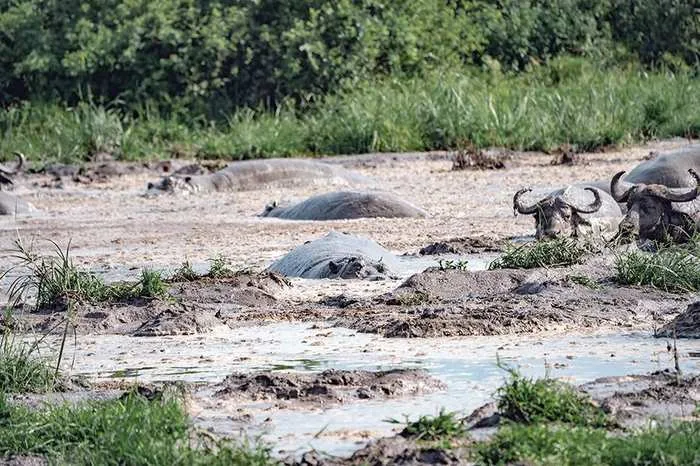
The Kazinga Channel is a 40-kilometre natural waterway connecting Lakes George and Edward, and it forms the beating heart of the Queen Elizabeth ecosystem. No other body of water in Uganda concentrates quite so much life in so small a space. The standard two-hour boat safari, departing from the channel jetty near Mweya Safari Lodge, is one of the most rewarding wildlife experiences in all of East Africa.
The reason for this density is simple: the channel provides fresh water to an enormous surrounding area, and every living thing within range — from the largest hippo to the smallest kingfisher — needs it. Uganda Wildlife Authority estimates that the Kazinga Channel supports the largest concentration of hippos in any single protected area in Uganda. On a typical morning cruise you will encounter multiple pods of several dozen animals each, submerged to their eyes, grunting, snorting, and occasionally rearing up in territorial disputes.
Wildlife regularly encountered on the Kazinga Channel includes:
Game drives along the channel bank are also rewarding, particularly at dawn and dusk when elephants and buffalo move to the water in large numbers. The channel road runs along the southern bank and offers excellent photography from the vehicle — the landscape is wide open and the light at golden hour is extraordinary.
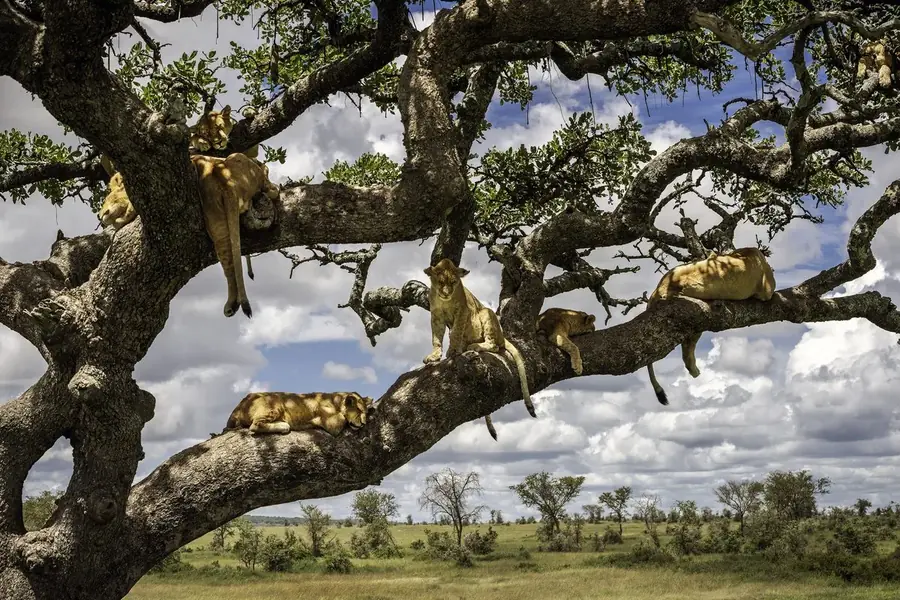
In the far south of Queen Elizabeth National Park, reached by a long drive through wild, largely unvisited savanna, lies the Ishasha sector — home to one of Africa's most peculiar and captivating wildlife phenomena. The lions of Ishasha regularly climb into the branches of large fig trees and remain there for hours, resting on the upper limbs with their legs dangling down like enormous domestic cats.
This behaviour is highly unusual. Across most of Africa, lions are ground-dwellers. While isolated cases of tree-climbing have been recorded at Lake Manyara in Tanzania and in a handful of other locations, the Ishasha lions are the most reliably arboreal lion population on the continent. Sightings are not guaranteed on any given game drive, but the success rate here is significantly higher than anywhere else, and the experience of finding a pride — sometimes six to twelve individuals — draped across the horizontal branches of a great fig tree is unlike anything else you will witness on safari.
Various explanations have been proposed for the behaviour: escape from biting flies and heat at ground level, improved vantage points for spotting prey, or simply a learned habit passed down through generations of the local pride. The most likely answer is a combination of all three. Whatever the reason, it makes for photographs that most safari-goers never achieve anywhere else in Africa.
Beyond the lions, the Ishasha sector offers excellent general game viewing through landscape that feels genuinely untouched. Expect large herds of Uganda kob — the national antelope of Uganda — as well as topi, Defassa waterbuck, warthog, elephant, and African buffalo. Leopards are present throughout the park and occasionally spotted in the riverine forest along the Ishasha River, which forms the DRC border.
The drive from Mweya to Ishasha takes approximately 90 minutes on dirt tracks through undisturbed bush. Most TRVE itineraries build in a full night at an Ishasha-area lodge so that guests can do both an afternoon and a morning game drive, maximising the chance of a lion sighting.
The northern sector of Queen Elizabeth National Park — centred on the Kasenyi and Mweya peninsulas — is the park's primary game drive area and where the majority of visitors spend their time. The landscape here is open savanna broken by fig trees, euphorbia candelabra, and the distinctive dark-green gallery forest along seasonal drainage channels. Visibility is excellent, and on a clear morning you can see the glaciated peaks of the Rwenzori Mountains — Africa's third-highest range — rising above the western horizon.
Queen Elizabeth holds Uganda's densest elephant population outside Murchison Falls. Herds of twenty to sixty animals are common sightings, and the park's elephants have become notably relaxed around safari vehicles over the decades, allowing close approaches that deliver exceptional photography. The elephants here tend to be larger than those seen in Murchison, and old bulls with impressive tusks are occasionally encountered on the Kasenyi plains.
Other key species in the northern sector include:
The volcanic craters of the northern sector — particularly the Katwe crater lakes with their pink-tinged, salt-saturated water — are worth a visit in their own right. Flamingos sometimes gather on the more saline lakes, and the crater rims provide elevated viewpoints across the entire rift valley landscape.
On the eastern edge of Queen Elizabeth National Park, a tongue of dense tropical forest extends southward from the Kibale-Maramagambo forest corridor — one of the longest intact forest corridors in East Africa. Maramagambo Forest is home to a partially habituated chimpanzee community, offering a primate experience that many visitors do not expect to find alongside their savanna game drives.
Chimpanzee tracking in Maramagambo is conducted in a similar manner to Kibale: small groups of up to six visitors are led by Uganda Wildlife Authority rangers into the forest, with a one-hour rule in effect once the chimps are found. Sightings are less consistent here than in Kibale — the chimps have a much larger home range and the forest is denser — but the setting is dramatic and the experience of hearing chimpanzees call in the canopy before catching a glimpse of movement above you is genuinely thrilling.
Also within Maramagambo is one of Uganda's most unusual attractions: the python bat cave. This is a dark, humid cave system home to thousands of fruit bats, and Maramagambo's rock pythons have learned to hunt them. The pythons hang from the cave ceiling or lie in wait at the entrance, snatching bats from the air as they enter and exit. It is a remarkable spectacle of predator and prey in a confined space. Guided walks to the cave are offered daily from the forest headquarters.
Other wildlife regularly encountered in Maramagambo includes black-and-white Colobus monkey — large troops move through the canopy with spectacular leaps — giant forest hog (the largest member of the pig family, weighing up to 275kg), African civet, and an outstanding selection of forest birds including the rarely seen African green broadbill.
With over 600 recorded bird species, Queen Elizabeth National Park is one of the premier birding destinations in East Africa and ranks among the top ten birding sites on the entire African continent. The diversity of habitats — savanna, wetland, papyrus swamp, tropical forest, crater lake, and riverine woodland — creates a mosaic that supports an extraordinarily wide range of species.
| Habitat | Key Species |
|---|---|
| Kazinga Channel | African skimmer, pink-backed pelican, great white pelican, pied kingfisher, giant kingfisher, African fish eagle, yellow-billed stork |
| Papyrus swamp | Shoebill stork (rare but present), papyrus gonolek, white-winged warbler, papyrus canary |
| Open savanna | Bateleur eagle, martial eagle, secretary bird, African wattled lapwing, black-bellied bustard |
| Maramagambo Forest | African green broadbill, black bee-eater, yellow-rumped tinkerbird, great blue turaco, Nahan's francolin |
| Crater lakes | Lesser flamingo (seasonal), African jacana, malachite kingfisher, grey-crowned crane |
The shoebill — arguably Uganda's most sought-after bird, a prehistoric-looking grey giant that stands over a metre tall and hunts lungfish in papyrus swamp — is present in the park's wetland margins, particularly around the Katunguru area near the channel inlet from Lake George. Sightings are not guaranteed but are more achievable here than almost anywhere else in Uganda outside of Murchison Falls. TRVE's guides know the most reliable locations and can build in dedicated shoebill searches on full-day excursions.
The African skimmer is another iconic species found on the Kazinga Channel: a striking black-and-white bird that flies low over the water dragging its elongated lower mandible through the surface to catch fish. It is one of Uganda's most photogenic birds, and the Kazinga Channel is one of only a handful of reliable sites for it in the country.
Queen Elizabeth National Park can be visited year-round, and each season offers something distinct. Here is what to expect across the calendar:
The Kazinga Channel boat safari is excellent in every season — the hippo population does not vary with rainfall, and the channel banks are productive for wildlife viewing regardless of time of year.
All TRVE itineraries include private 4x4 transport, expert guide, and accommodation — just bring your binoculars.
Queen Elizabeth Signature Safari
Game drives on the Kasenyi Plains, the Kazinga Channel boat cruise, and an evening search for tree-climbing lions in Ishasha. The perfect introduction to QENP.
From $2,600 per person
View Itinerary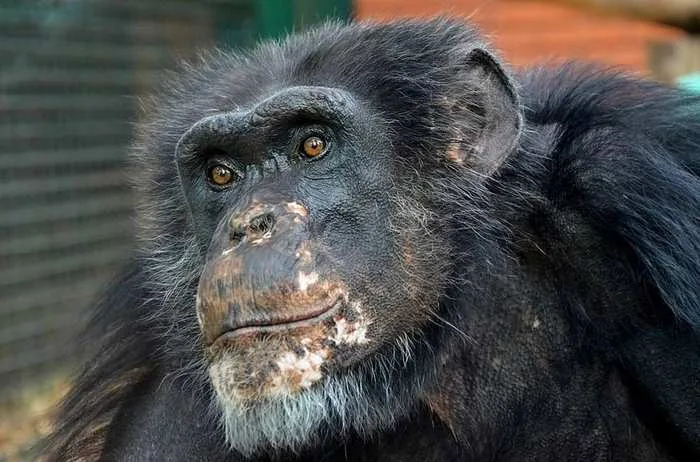
Primate Triangle Safari
Uganda's most popular wildlife circuit combining chimpanzee tracking in Kibale Forest with tree-climbing lions and the Kazinga Channel in Queen Elizabeth NP.
From $7,800 per person
View Itinerary
The Big Seven Quest
Mountain gorillas in Bwindi, chimpanzees in Kibale, tree-climbing lions and the Kazinga Channel in QENP — Uganda's ultimate wildlife experience in one epic journey.
From $11,500 per person
View ItineraryEvery TRVE safari is built from scratch around your travel dates, group size, and budget. Contact our team and we will have a custom itinerary in your inbox within 24 hours.
Get a Custom Quote WhatsApp Us NowWhere exactly can I see tree-climbing lions in Uganda?
Tree-climbing lions are found exclusively in the Ishasha sector of Queen Elizabeth National Park, located in the south of the park near the DRC border. The lions have developed an unusual habit of resting in the branches of large fig trees — a behaviour not seen in the majority of Africa's lion populations. Sightings are most likely in the early morning when the animals climb to catch a breeze. TRVE recommends staying overnight in or near Ishasha to maximise your chances with both an afternoon and a morning game drive.
What happens on the Kazinga Channel boat cruise?
The standard Kazinga Channel boat safari runs for approximately two hours, departing from the jetty near Mweya. You drift along the 40-kilometre channel observing wildlife at the water's edge at close range — hippo pods of dozens of animals, Nile crocodiles basking on sandy banks, buffalo herds drinking, and remarkable birdlife including African fish eagle, pink-backed pelican, pied and giant kingfisher, and marabou stork. The experience is suitable for all ages and fitness levels, as everything is viewed from a comfortable motorised launch.
What is the best time of year to safari in Queen Elizabeth National Park?
The dry seasons — January to February and June to August — provide the best game drive conditions, with short grass, concentrated wildlife around water, and accessible tracks throughout the park including Ishasha. However, the Kazinga Channel boat cruise is excellent year-round, and the wet seasons offer lower lodge prices, lush landscapes, and superb birding with migratory species present. There is genuinely no bad time to visit Queen Elizabeth.
How far is Queen Elizabeth National Park from Kampala?
Queen Elizabeth National Park is approximately 410 kilometres from Kampala, typically a 5 to 6-hour drive via the Masaka–Mbarara highway. TRVE's Land Cruisers make the journey comfortable, and the road passes through some beautiful Ugandan countryside including the rolling hills and tea estates of western Uganda. Most TRVE itineraries plan the drive as a scenic transfer, often stopping at the equator monument at Kayabwe for photographs.
Can I track chimpanzees in Queen Elizabeth National Park?
Yes — chimpanzee tracking is available in Maramagambo Forest in the eastern part of the park. The chimps here are partially habituated and sightings are possible, though less reliable than in Kibale Forest, which remains Uganda's premier chimpanzee destination. Maramagambo also offers the famous bat cave (where rock pythons prey on fruit bats), black-and-white Colobus monkeys, giant forest hog, and exceptional forest birding. For the most reliable chimpanzee encounter on the same trip, TRVE recommends the Kibale–QENP circuit.