Western Uganda · Primate Trekking
Kibale Forest National Park is the undisputed capital of primate watching in Africa. No other forest on the continent packs more primates into a single area — thirteen species, over 1,400 chimpanzees, and an ecological richness that scientists have been studying for half a century. Tracking wild chimpanzees through Kibale's cathedral-like forest is one of the most profound wildlife encounters available on Earth.
Kibale Forest National Park covers 766 square kilometres in western Uganda, situated on a plateau between 1,100 and 1,600 metres above sea level near the town of Fort Portal. The forest is dominated by tall semi-deciduous tropical trees — some exceeding 55 metres — and creates a closed canopy that shelters an astonishing diversity of wildlife from the equatorial heat below.
Uganda Wildlife Authority established Kibale as a national park in 1993, though the forest had been a crown reserve since the 1930s and the subject of intensive primate research since the 1970s. The Makerere University Biological Field Station at Kanyawara, established in 1970, is one of the longest-running primate research sites in the world and has produced foundational findings about chimpanzee behaviour, ecology, and social structure.
The park is contiguous with Queen Elizabeth National Park to the south via the Kibale–Maramagambo Forest Corridor — one of the longest unbroken forest corridors in East Africa — which allows wide-ranging species including chimpanzees and elephants to move between the two protected areas. This connectivity is crucial for maintaining the genetic diversity of Kibale's wildlife populations.
Uganda itself sits in the Albertine Rift, the most biodiverse region on the African continent, and Kibale sits at a particularly rich junction of forest types. The result is a park that, despite its modest size, holds more primate species per square kilometre than almost anywhere else in the world.
The chimpanzee trekking experience at Kibale is centred on the Kanyanchu visitor centre, located approximately 36 kilometres south of Fort Portal along the main road. The habituated chimpanzee community at Kanyanchu has been accustomed to human presence for decades through a deliberate and patient habituation process, and it is their relaxed, natural behaviour — grooming, feeding, playing, and vocalising — that makes the encounter so remarkable.
Treks depart twice daily: the morning session at 8:00am and the afternoon session at 2:00pm. A maximum of six visitors are permitted per trekking session per chimpanzee group, keeping the impact on the animals minimal and ensuring an intimate experience for each small group. Groups are led by Uganda Wildlife Authority ranger-guides who have intimate knowledge of the forest and the individual chimpanzees.
Before departure, the ranger team will have already been tracking the chimpanzees since dawn, establishing the community's location in the forest. The walk to reach them can take anywhere from 20 minutes to two hours depending on where they are sleeping. Once the chimps are located, the one-hour rule comes into effect: all visitors must leave the group after 60 minutes. This is strictly enforced by UWA as a conservation measure to prevent habituation to disturbance and to protect the animals from prolonged human contact.
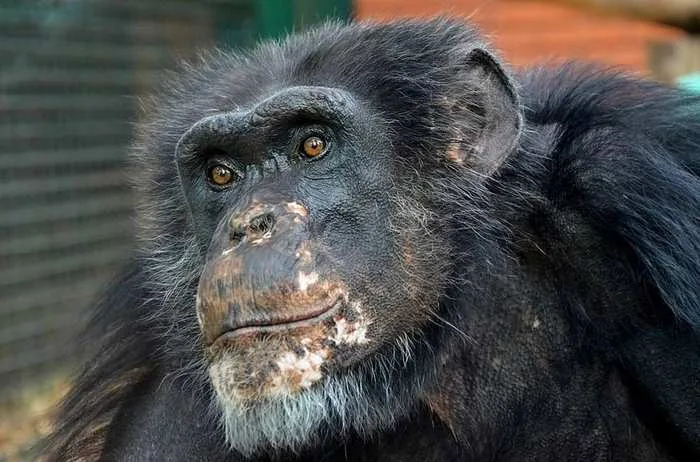
During that hour, the experience is extraordinary. Chimpanzees are our closest living relatives — sharing 98.7% of their DNA with humans — and the similarities in their behaviour, facial expressions, and social interactions are immediately, sometimes uncomfortably, obvious. You may witness youngsters wrestling in the undergrowth, adult males performing charging displays to establish dominance, mothers cradling infants, or a group building sleeping nests high in the canopy as dusk approaches.
Vocalisations are one of the great experiences of Kibale. The pant-hoot — a rising series of calls that builds to a crescendo of screams and hoots — carries for kilometres through the forest and sets off a cascade of responses from other groups. Hearing it at close range, feeling the sound vibrate in your chest, is something visitors describe as primitive and electrifying.
For visitors who want more than an hour and are prepared for a full day in the forest, Kibale offers a habituation experience with a separate community still in the process of being accustomed to human presence. The permit costs $250 per person per day, and the experience runs from early morning — when the chimps descend from overnight sleeping nests — until midday or early afternoon. You follow the researchers and rangers as they track the group through its natural daily routine.
Because the community is not yet fully habituated, they may move away from observers more readily, and the walks are often longer and more demanding. But what you gain is a depth of engagement impossible in a one-hour window: witnessing dawn behaviour, watching the chimps forage, travel, and interact over the course of half a day, and gaining a genuine sense of how these animals live their lives through the forest. Many long-term visitors to Uganda regard the habituation experience as the single most powerful wildlife encounter they have ever had.
Kibale's record of 13 primate species in a single forest is unmatched in Africa. This density is the product of the forest's exceptional diversity of microhabitats — from the dense closed canopy at higher elevations to the more open forest edge and swamp margins — which allows species that would compete elsewhere to occupy different ecological niches and coexist.
| Species | Notes |
|---|---|
| Chimpanzee | 1,400+ individuals; habituated groups at Kanyanchu. Our closest living relative. |
| Red-tailed monkey | Abundant and easily seen; named for the distinctive reddish tail and white nose patch. |
| Olive baboon | Large troops move through forest margins and the Bigodi wetland edge. |
| Grey-cheeked mangabey | Large, terrestrial monkey that moves in noisy troops through the understorey; guaranteed in Bigodi. |
| Black-and-white Colobus | Spectacular in flight between trees, their long black-and-white capes streaming behind them. |
| Red Colobus (endangered) | IUCN Endangered; Kibale holds one of East Africa's most important populations. |
| L'Hoest's monkey | A dark, secretive species that prefers dense forest and is rarely seen outside Kibale. |
| Blue monkey | Common in the forest canopy; forms mixed-species groups with red-tailed monkeys. |
| Vervet monkey | Found mainly at the forest edge and around the Kanyanchu visitor area. |
| De Brazza's monkey | Rare; found mainly in the swampy forest margins of the park. |
| Potto | Slow-moving nocturnal primate; requires a night walk to spot. |
| Bush baby (Galago) | Tiny, large-eyed nocturnal primate detected by its distinctive wailing call; night walks essential. |
| Uganda red Colobus | A subspecies of East African red Colobus; Uganda's rarest primate, listed as Endangered. |
The coexistence of so many primate species in one forest is not accidental. Research from the Kanyawara field station has shown that the species partition the forest both vertically — with different species preferring different canopy layers — and temporally, with different species active at different times of day. Chimpanzees, as the apex primate, have a direct influence on the behaviour and distribution of smaller species: vervets and red-tailed monkeys follow chimp groups to benefit from fallen fruit, while red Colobus monkeys — a prey species for chimpanzees — maintain watchful distances and issue alarm calls when a hunting party approaches.
Adjacent to Kibale's southern boundary, the Bigodi Wetland Sanctuary is a community-owned and operated conservation area that offers one of the most rewarding walks in western Uganda. Managed by the Kibale Association for Rural and Environmental Development (KAFRED), Bigodi demonstrates exactly the model of community-based conservation that Uganda Wildlife Authority and international conservation bodies promote: local communities protecting wildlife because they directly benefit from tourism revenue.
The guided walk through Bigodi covers approximately 4 kilometres of boardwalk and forest trail through papyrus swamp, woodland, and forest edge. The birding is exceptional — over 200 species have been recorded here, including many species difficult to find in the national park itself. The papyrus swamp holds papyrus gonolek, white-winged warbler, and occasionally the shoebill. The forest edge is reliable for great blue turaco, black-and-white Colobus, and numerous sunbirds and weavers.
For primates, Bigodi is one of the most reliable sites in Uganda to see grey-cheeked mangabey and red Colobus without the cost of a park permit. The mangabeys are large, loud, and move in substantial troops through the swamp margin vegetation. Red Colobus troops are present in the forest fringing the wetland. L'Hoest's monkeys, red-tailed monkeys, black-and-white Colobus, and olive baboon are all regularly encountered on a two-hour walk.
Entrance fees and guide fees at Bigodi go directly to community projects: a health clinic, a secondary school bursary fund, and local infrastructure. The quality of the guiding is consistently high — local guides who grew up around the wetland have an intimate, encyclopaedic knowledge of the resident wildlife. TRVE includes Bigodi as a half-day excursion in most Kibale itineraries.
Fort Portal, 36 kilometres north of Kibale, is one of Uganda's most appealing small towns and the natural base for exploring the entire western Uganda safari circuit. Set at over 1,500 metres above sea level on the edge of the Rwenzori foothills, Fort Portal enjoys a cooler, cleaner climate than Kampala and is surrounded by some of the most beautiful countryside in East Africa.
The town itself is worth an afternoon: the central market, colonial-era buildings, and the nearby tea estates — Kibale is literally surrounded by the geometric rows of tea bushes that supply some of Uganda's best-known tea brands — create a distinctive atmosphere that feels genuinely different from the rest of the country. The Rwenzori Mountains, snowcapped year-round despite sitting on the equator, are visible on clear mornings from the town centre.
The crater lakes scattered around Fort Portal are a quiet, underrated attraction. Lake Nkuruba, a small community reserve with a campsite on the crater rim, allows swimming in the dark, tannic water and offers superb birding in the surrounding community forest. Lake Nyabikere, slightly larger, is home to hippos and a variety of waterbirds. Both are accessible as short excursions from Fort Portal before or after a day of chimp tracking.
Fort Portal also has good-quality accommodation at all price points — from budget guesthouses to the upmarket Ndali Lodge perched on a crater rim with views of multiple lakes and the Rwenzori peaks. TRVE has strong relationships with the key properties in the area and can recommend and book accommodation to match any budget and travel style.
Kibale is at its most powerful when combined with other western Uganda parks into a flowing road trip. The logical circuit — Kampala to Kibale, south to Queen Elizabeth NP, then on to Bwindi — covers the greatest concentration of wildlife, primates, and landscapes in Uganda and is TRVE's most popular and most-requested itinerary.
A minimum of 7 days is required to do this circuit justice — two nights in Kibale, two nights in Queen Elizabeth (splitting time between Mweya and Ishasha), and two nights in Bwindi for gorilla trekking. TRVE's Primate Triangle itinerary covers this route over 7 days; the Big Seven Quest extends it to 10 days for a deeper experience at each destination.
The entire circuit is driven in TRVE's own fleet of custom-fitted Toyota Land Cruiser GX 4x4s, with the same guide throughout — allowing you to build a genuine rapport with your guide and benefit from their accumulated knowledge of where to look for wildlife at each location.
This is the most common question TRVE receives from visitors planning a primate-focused Uganda trip. The honest answer is: both, if budget and time allow. But if you must choose, here is an honest comparison:
| Chimpanzee (Kibale) | Mountain Gorilla (Bwindi) | |
|---|---|---|
| Permit cost | $250 USD | $800 USD |
| DNA similarity to humans | 98.7% | 98.3% |
| Behaviour | Fast-moving, acrobatic, noisy, energetic | Sedentary, calm, imposing, deliberate |
| Physical size | Up to 60kg (male) | Up to 250kg (silverback male) |
| Reliability of sighting | High (90%+) in Kibale | Very high (95%+) in Bwindi |
| Time with the animals | 1 hour | 1 hour |
| Trek difficulty | Moderate — flat to gentle forest | Moderate to strenuous — steep mountain forest |
| Best for | Dynamic, fast-paced, behavioural observation | Awe-inspiring, intimate, once-in-a-lifetime scale |
Chimpanzees move rapidly — they may cover several kilometres in the time you are with them, and keeping up requires attentiveness and some agility. The experience is kinetic and often chaotic in the most joyful way. Gorillas, by contrast, are massive, slow, and so utterly unbothered by your presence that the experience borders on the meditative.
Most TRVE clients who do both say the experiences are so different that comparing them feels wrong. Chimps make you laugh; gorillas make you fall silent. Both change how you think about what it means to be human.
Chimpanzees are present in Kibale year-round — they do not migrate, and the habituated community at Kanyanchu is tracked and located every day regardless of season. This makes Kibale one of the most reliably visitable parks in Uganda across the full calendar year.
That said, conditions vary significantly between the dry and wet seasons, and the choice of when to visit affects both the walking experience and what else you can do on the same trip:
TRVE recommends booking chimp permits at least three months in advance for travel during June–August and December–January, and at least six weeks in advance for all other periods. Kibale is one of Uganda's most popular parks and permits for the morning session sell out first.
All permits, transport, guide, and accommodation included. TRVE handles every booking so you arrive knowing everything is confirmed.
Primate Triangle Safari
Chimpanzees in Kibale, tree-climbing lions and the Kazinga Channel boat cruise in Queen Elizabeth — Uganda's most popular wildlife circuit, guided by TRVE experts.
From $7,800 per person
View Itinerary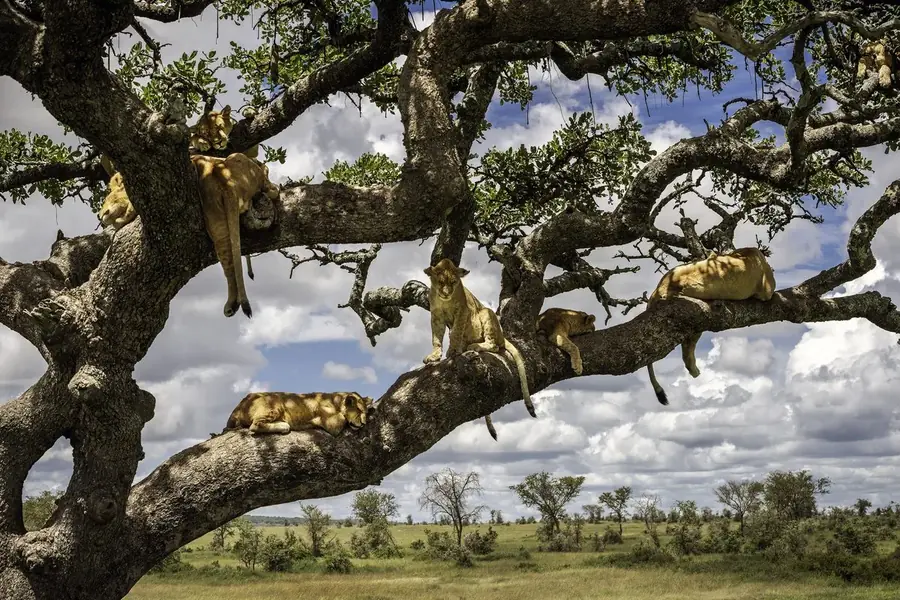
The Big Seven Quest
Kibale chimps, QENP tree-climbing lions, Kazinga Channel, and mountain gorillas in Bwindi — Uganda's ultimate primate and wildlife experience across 10 unforgettable days.
From $11,500 per person
View Itinerary
Extended Uganda Birding Safari
An immersive 17-day journey through Uganda's finest birding and primate destinations — Kibale, Bwindi, QENP, Murchison Falls, and Kidepo — with dedicated birding in every park.
From $21,958 per person
View ItineraryChimp permits sell out months in advance in peak season. Get in touch now and TRVE will secure your permits and build your personalised itinerary within 24 hours.
Get a Custom Quote WhatsApp Us NowHow much does a chimpanzee trekking permit cost in Kibale?
A standard chimpanzee trekking permit in Kibale Forest costs $250 USD per person. This covers a ranger-led trek into the forest and one enforced hour with the habituated Kanyanchu chimpanzee community. The chimp habituation experience — a full-day activity with a semi-habituated community — also costs $250 per person. TRVE includes permit booking as part of all Kibale packages; permits must be secured well in advance as they sell out during peak season.
How long does a chimpanzee trek in Kibale take?
Treks depart at 8:00am and 2:00pm. The total time from the Kanyanchu visitor centre and back ranges from approximately 2 to 6 hours depending on where in the forest the chimps are located on the day. Once you find the community, you have exactly one hour with them — strictly enforced by UWA rangers. The walk itself through the forest is an experience in its own right, passing through cathedral canopy draped in vines, with constant birdsong and the likelihood of encountering other primate species en route.
What is the chance of finding chimpanzees on the trek?
Kibale Forest consistently achieves sighting rates above 90% — one of the highest of any habituated chimp site in Africa. UWA rangers track the Kanyanchu community each morning before trekking groups depart, so by the time you set out, the guides already know broadly where the chimps are. On the rare occasions where the chimps are not located within the forest, Uganda Wildlife Authority typically offers a complimentary follow-up trek. TRVE has never had a client return from Kibale without a sighting.
Is chimpanzee trekking suitable for children?
Uganda Wildlife Authority requires all chimpanzee trekking participants to be at least 12 years old. This age limit exists to protect both the chimpanzees — who share human respiratory diseases and are sensitive to unpredictable behaviour — and young visitors, as chimpanzees are powerful animals. Children aged 12 and over who are comfortable in an outdoor environment and can walk for several hours on uneven terrain are well-suited to the experience. The Bigodi Wetland walk, with no age restriction, is an excellent alternative for younger children travelling with the family.
What is the chimpanzee habituation experience and is it worth it?
The habituation experience at Kibale is a full-day activity — typically 6 to 8 hours — spent following a chimpanzee community that is still in the process of being accustomed to human presence. The permit costs $250 per person per day. Unlike the standard one-hour trek, the habituation experience allows you to follow the chimps from dawn nest descent through feeding, travelling, and social behaviour across half a day. It is more physically demanding and less predictable than the standard trek, but many visitors who have done both regard it as the more profound experience. It is particularly suited to researchers, photographers, and anyone with a deep interest in primate behaviour.