People ask me every week: when is the best time to visit Uganda? My honest answer is that Uganda is one of the very few African safari destinations where there genuinely is no bad month. But the right month changes what you see, how hard you work for it, how much you pay, and how many other tourists you share it with. This guide tells you everything I know after more than a decade walking Uganda's parks and forests.
Uganda's Two Dry Seasons and Two Wet Seasons
Uganda straddles the equator, which means it does not follow the single annual wet-dry cycle you find further north or south in Africa. Instead, Uganda has a double equatorial rainfall pattern — two dry seasons and two wet seasons cycling through the year.
The pattern looks like this:
- Long dry season: June to August — the peak safari season, optimal conditions across most parks
- Short wet season: September to November — rains return, migratory birds arrive, prices ease
- Short dry season: December to February — second dry window, excellent wildlife and great value in January–February
- Long wet season: March to May — the green season, lush landscapes, serious birding, lowest prices
This cycling pattern means that wherever you are in the calendar year, Uganda is never more than a few months from a dry season. There is no month that is truly off-limits for travel, and even the wet seasons have genuine appeal for the right traveller. The key is knowing what each season offers and aligning it with what you want to experience.
One important note: Uganda is not a uniform landscape. The country spans savannah, tropical rainforest, highland volcano, wetland, and lakeside environments — and these ecosystems respond differently to the seasons. What is true of Murchison Falls in March is not necessarily true of Bwindi. I will flag the important distinctions as we go through the months.
Month-by-Month Summary Table
Here is the full year at a glance, then I will break each season down in detail below.
| Month |
Season |
Game Viewing |
Gorilla Trekking |
Birding |
Visitor Numbers |
Price Level |
| January |
Short dry |
Excellent |
Good |
Good (migrants present) |
Medium |
Medium |
| February |
Short dry |
Excellent |
Good |
Good |
Low-Medium |
Medium-Low |
| March |
Long wet begins |
Good |
Challenging but rewarding |
Excellent (breeding plumage) |
Low |
Low |
| April |
Long wet (peak) |
Good |
Most challenging |
Outstanding |
Very low |
Lowest |
| May |
Long wet (easing) |
Good |
Challenging |
Outstanding |
Low |
Low |
| June |
Long dry begins |
Very good |
Good — trails drying |
Very good |
High |
High |
| July |
Long dry (peak) |
Excellent |
Best conditions |
Good |
Peak |
Peak |
| August |
Long dry (peak) |
Excellent |
Best conditions |
Good |
Peak |
Peak |
| September |
Short wet begins |
Very good |
Good |
Very good (migrants arriving) |
Medium |
Medium |
| October |
Short wet |
Good |
Good |
Excellent |
Low-Medium |
Medium-Low |
| November |
Short wet (easing) |
Good |
Good |
Excellent |
Low |
Low-Medium |
| December |
Short dry begins |
Very good |
Good |
Good |
High (festive season) |
High |
Peak Season: June, July and August
The June-to-August dry season is Uganda's peak safari period, and the reasons are clear. Rainfall is minimal across most of the country. Roads that are rutted and challenging in the wet months become properly driveable. Vegetation in the savannah parks thins out, meaning animals are less concealed and congregate more predictably around permanent water sources. In Murchison Falls National Park, game drives in June through August regularly produce sightings of elephant herds, buffalo, lion, giraffe, and leopard in outstanding numbers. In Queen Elizabeth National Park, the famous tree-climbing lions of the Ishasha sector are most reliably seen in the dry months.
In Bwindi Impenetrable Forest, dry season means gorilla trails are at their most accessible. The steep inclines are drier underfoot, leeches are less prevalent, and the physical demands of the trek are at their lowest. If you are trekking gorillas for the first time, have any mobility concerns, or simply want the most comfortable experience in the forest, the dry season is your window.
The trade-off is visibility. Peak season means peak tourist numbers. Gorilla permits for popular families in Buhoma and Rushaga sectors book up four to six months in advance. Popular lodges — particularly the luxury and mid-range properties — fill up quickly. July and August in particular attract international tourists from the northern hemisphere summer holidays, and the difference in crowd levels compared to March is significant.
Book permits and accommodation at minimum 3–4 months ahead for June-to-August travel. For peak weeks in July, 5–6 months is safer. We hold allocations for TRVE clients and can sometimes access dates that appear sold out on public booking platforms, but we cannot work miracles — the earlier you commit, the better your options.
Peak Season Pricing Note
Many Ugandan lodges operate on a peak-season pricing structure that adds 10–20% to their standard rates for June through August and the festive December period. Combined with the fact that permits are sold at face value regardless of season, peak season is when Uganda safaris reach their highest cost. If budget is a primary concern, the short dry season (January–February) offers virtually identical wildlife conditions at considerably lower prices.
Shoulder Dry Season: December, January and February
The short dry season running from December through to February is Uganda's second-best safari window and, in my view, significantly underrated. Weather conditions are genuinely excellent — dry roads, clear skies, and warm temperatures across the savannah parks. Wildlife in Murchison Falls is outstanding during this period: low water levels in channels and floodplains mean hippos spend more time on riverbanks and are more visible, while game concentrations around the Albert Nile's permanent water are exceptional.
December carries a complication: the Christmas and New Year holiday period drives prices at mid-range and luxury lodges close to peak-season rates, and international visitor numbers spike in the final two weeks of the month. If you are flexible, the week of 27 December to 2 January is among the most expensive in Uganda's safari calendar.
January and February, however, are genuinely excellent value. This is what safari professionals sometimes call the "sweet spot" dry season — conditions are almost identical to July and August, but visitor numbers are lower, prices at many lodges drop by 10–20% compared to peak, and permit availability for gorilla treks is considerably easier. The birding remains good, with Palearctic migratory species still present before departing for their northern breeding grounds in March.
If you can travel in late January or February and are frustrated by the difficulty of securing peak-season permits, this is your moment. You will find excellent availability, lower prices, and conditions that rival the peak months in almost every respect.
Long Wet Season: March, April and May
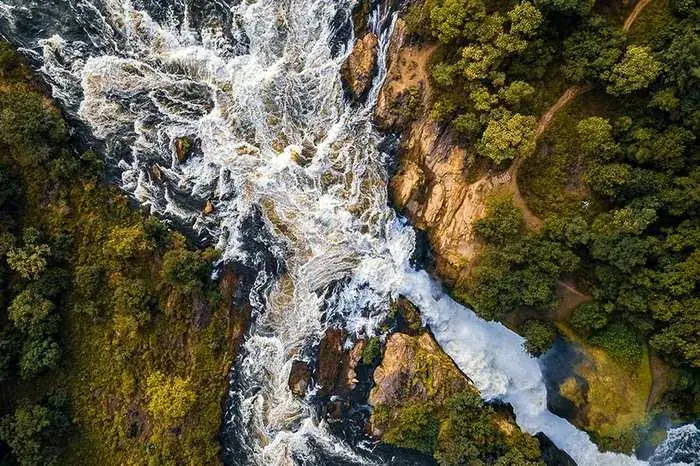
The long wet season is the part of Uganda's calendar that deters some visitors and rewards those who come anyway. From roughly March through May, Uganda receives its heaviest annual rainfall. The landscape transforms dramatically: savannah parks become lush and green, the forest thickens, waterfalls run at full power, and the entire country takes on a richness of colour that the dry months cannot match.
For wildlife, the picture is nuanced. Game viewing does not collapse in the wet season — Uganda's savannah parks operate year-round and remain productive. But animals are more dispersed (they do not need to cluster around water holes when water is everywhere), vegetation provides more cover for predators, and some roads in Murchison Falls and Kidepo can become genuinely challenging. Game drives in the wet season require more patience and more time per sighting. The trade-off is that you often have entire stretches of road to yourself.
For gorilla trekking, the long wet season is the most physically demanding option. Bwindi's trails become slippery, muddy, and leech-infested. The trek can take longer. You will get wet, even with good rain gear. But this is not a reason to avoid the wet season — the gorillas are always there, the forest is at its most primordially alive, and the experience of earning the encounter through real effort creates its own kind of satisfaction. Many experienced trekkers specifically prefer the wet season precisely because the trail feels more authentic and the forest more untamed.
For birders, the wet season is simply the best. April and May are when Uganda's resident forest and woodland species are in full breeding plumage and at their most vocal and visible, and when African breeding populations are joined by Palearctic and inter-African migrants. The number of species recordable in a single day in Murchison Falls or Bwindi's Ruhija sector during April–May is exceptional. Uganda is considered one of Africa's top ten birding destinations, and the wet season is where that reputation is most visible.
"People say April is the rainy season. I say April is when Uganda shows you what it really is — the colour, the birds, the smell of the earth after rain. For photography, nothing touches it."
Michael Wamani, Senior Safari Guide, TRVE
The other compelling argument for the long wet season is price. Most Ugandan lodges offer their lowest published rates from March through May. Discounts of 15–25% compared to peak rates are common, and some lodges offer even deeper reductions to fill beds in their quietest weeks. Gorilla permit availability is at its highest — you can often book permits within 4–6 weeks of your travel date rather than 3–6 months. And the number of other tourists on any given trail or in any given park is substantially lower. April in particular can feel almost private.
Short Wet Season: September, October and November
The short wet season is, in many ways, Uganda's most underestimated travel window. Unlike the long rains of April, which can be sustained and heavy, the short rains of October and November typically follow a pattern of afternoon and evening storms followed by clear mornings. Game drives in the morning hours are often held in perfect conditions, with dramatic cloud formations and golden light. Only in the afternoons do rains typically arrive.
September is a transition month — the dry season fades, first rains arrive, and the landscape begins to green up. Wildlife conditions remain very good, carrying the benefit of dry season game concentrations into the early wet period. Gorilla permits are easier to secure than in peak season, and prices begin to ease. September is genuinely one of the better months to visit Uganda if you want a balance of good conditions, reasonable prices, and manageable tourist numbers.
October and November bring the Palearctic migratory season in earnest. Species that winter in Uganda — arriving from Europe and western Asia — are present and countable alongside Uganda's extraordinary resident bird community. The Murchison Falls wetlands, Queen Elizabeth's Kazinga Channel, and Bwindi's mid-altitude forest all become exceptional birding locations. If birding is a significant part of your Uganda plans, October through November should be on your shortlist.
December begins the short dry season again, completing the cycle.
Activity-Specific Timing
Rather than thinking purely in seasons, it also helps to consider what you primarily want to do in Uganda and which months optimise for that specific activity.
Gorilla Trekking — Bwindi & Mgahinga
Gorilla trekking operates year-round. Any month will produce an encounter. For the easiest physical experience, choose June–August or December–February. For lower prices and permits, choose March–May or October–November. The gorillas are always in the forest — the only variable is how hard the trail is underfoot and how crowded the trailhead is when you arrive.
Game Drives — Murchison Falls National Park
The best game driving in Murchison Falls occurs in January–February and June–August. In January and February, low water draws game to predictable areas along the Nile's north bank, and the combination of dry conditions and lower tourist numbers makes this period exceptional. The Murchison Falls boat cruise to the base of the falls is excellent year-round — hippo density on the Nile is always impressive and the falls always dramatic, though water volume peaks in the wet months.
Game Drives — Queen Elizabeth National Park
Queen Elizabeth National Park is productive year-round due to its mix of savannah, wetland, and forest habitats. The famous tree-climbing lions of Ishasha are most reliably found in the large fig trees of the southern sector during dry months. The Kazinga Channel boat cruise — arguably Uganda's best wildlife spectacle for sheer animal density — is outstanding year-round, with June–August offering the best conditions and March–May offering the best bird photography.
Chimpanzee Trekking — Kibale Forest
Kibale Forest National Park is home to the highest density of chimpanzees in East Africa and offers both standard chimpanzee trekking and the all-day chimpanzee habituation experience. Both are available year-round. The dry seasons are more comfortable for walking in Kibale's dense forest, but chimpanzee activity is reliable in all months. In wet months, chimps tend to descend to lower forest areas where food is plentiful, which can actually make tracking easier. The forest is at its most atmospheric and richly vegetated in the wet months, making for exceptional photography.
Birding — Countrywide
Uganda is one of Africa's great birding destinations, recording over 1,060 species within a country the size of the United Kingdom. For the absolute best birding — resident species in breeding plumage combined with Palearctic migrants — April and May are peak. October and November are the second window. The Albertine Rift endemic species concentrated in Bwindi and other western forests can be found year-round, but dawn in April in the Ruhija sector of Bwindi is something a birder never forgets.
Nile Rafting — Jinja
Jinja's Nile White Water rafting runs year-round and is not significantly affected by season in terms of safety or experience. Sections of the Nile at Jinja are class IV-V rapids that operate consistently throughout the year. The only seasonal variable is that the highest water (and therefore largest rapids) occurs during and just after the wet seasons.
Kidepo Valley National Park
Kidepo is Uganda's most remote and least-visited major park, located in the far northeast near the South Sudan and Kenya borders. Its semi-arid ecosystem makes it a distinct experience from Uganda's other parks, and it supports species not found elsewhere in Uganda including cheetah and greater kudu. Kidepo is best visited in the dry seasons (June–August and December–February). During peak rains (March–April), roads to Kidepo can become impassable and the park itself is more challenging. Flying into Kidepo rather than driving is recommended regardless of season, but especially in wet months.
What to Wear in Each Season
Packing correctly for Uganda's seasons makes a genuine difference to your comfort, and different environments within Uganda require different preparation.
Dry Season (June–August, December–February)
- Lightweight, breathable long sleeves and trousers in neutral colours (olive, khaki, brown) for game drives and forest treks
- Fleece or light down jacket for Bwindi and higher-altitude areas (evenings can drop to 12–15°C)
- Comfortable, broken-in closed-toe walking boots with ankle support — essential for gorilla trekking
- Wide-brim hat and high SPF sunscreen for open savannah game drives
- Dust can be significant in the dry months; a buff or scarf is useful in open vehicles
Wet Season (March–May, September–November)
- All the above, plus a quality waterproof jacket (not just a light rain layer — Bwindi in April requires real waterproofing)
- Waterproof gaiters for gorilla trekking, which prevent mud and leeches entering boot tops
- Dry bags or waterproof cases for electronics and camera equipment
- Extra pairs of socks — it is almost impossible not to get wet in the forest, and dry socks in a plastic bag in your pack are a luxury beyond price
- Leech socks (thin fabric socks worn over regular socks in the forest) are available cheaply in Kampala and at trailhead markets
- Temperatures remain warm in savannah parks even in the wet season (24–28°C daytime)
Clothing Colour Rule for Gorilla Trekking
UWA guidelines require that you do not wear bright colours — particularly white, bright red, or orange — when trekking gorillas. These can distress the animals and are easily stained in the forest. Stick to earthy, muted tones. Dark colours like navy or black are best avoided in tsetse-fly areas of the savannah parks (they attract the flies), but are fine in the forest.
When to Book: Practical Booking Timelines
Timing your booking is as important as timing your visit. Here is a practical guide to lead times for each season:
Peak Season (June–August, Christmas/New Year)
Book gorilla permits and accommodation 4–6 months in advance. For specific dates in July and August, 5–6 months is not excessive. July is the single most popular month and permits for the most-requested gorilla families (Mubare, Habinyanja, Rushegura in Buhoma; Nshongi, Kahungye in Rushaga) sell out early. If you have fixed travel dates, do not wait.
Short Dry Season (January–February)
Book 2–4 months ahead for January, and 1–3 months for February. This season is underbooked relative to its quality, meaning you have more flexibility — but popular lodges and specific gorilla families can still sell out faster than expected.
Long Wet Season (March–May)
Booking 4–8 weeks ahead is often sufficient for most itineraries. Gorilla permit availability is at its highest during this period and last-minute opportunities exist. However, some lodges close for maintenance in April and early May, so confirming availability is important. We can advise which properties operate year-round.
Short Wet Season (September–November)
Book 6–10 weeks ahead as a comfortable guide. October and November in particular are gaining in popularity among birding-focused visitors, so dedicated birding lodges in Bwindi's Ruhija sector and around Kibale are worth booking further ahead.
The Bottom Line
If you can only travel in one specific window, here is my recommendation by traveller type:
- First-time Uganda visitor, gorilla trekking priority: July or August — the full experience at its most accessible
- Best value without compromising quality: January or February — dry season conditions, lower prices, permit availability
- Serious birder or photographer: April or May — the wet season magic, extraordinary birds, lush landscapes
- Budget-conscious traveller: April — lowest prices across the board, genuine wilderness experience
- Traveller who wants Uganda to themselves: November — short rains, arriving migrants, excellent conditions, minimal crowds
The one thing I tell every client: do not let an imperfect month stop you. Uganda is remarkable in all twelve of them.