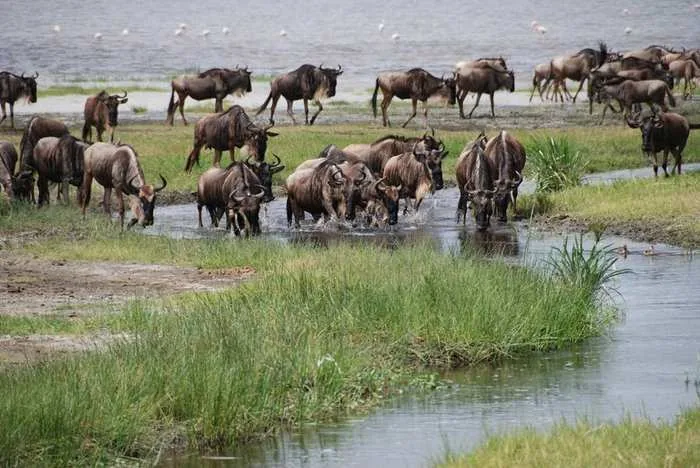
There is a moment, somewhere on the Masai Mara at dawn, when the light goes gold and the grass goes still and the only sound is a distant roar carrying across two kilometres of open plain — and you understand, completely, why people come back here again and again. The Mara is not just a safari destination. It is the standard against which every other safari experience is measured.
Why the Masai Mara Stands Alone
The Masai Mara National Reserve covers 1,510 square kilometres of open rolling grassland in southwestern Kenya, forming the northern extension of Tanzania's Serengeti ecosystem. Together they constitute the largest and most intact savannah ecosystem remaining in Africa — and the Mara is where the drama concentrates.
The reserve sits at the heart of the Great Rift Valley, flanked by the Siria Escarpment to the west and the ancient volcanic soils of the Loita Plains to the east. The Mara River runs through its western third, fringed by riverine forest of fig and acacia. This river is the centrepiece of the world's greatest wildlife spectacle and a permanent lifeline for the extraordinary year-round resident wildlife population.
What sets the Mara apart from every other African reserve is the sheer density and accessibility of its wildlife. Big Five sightings — lion, leopard, elephant, buffalo, and black rhino — are possible on a single afternoon game drive. Lion prides of 20+ individuals are not unusual. The Mara has one of the highest lion densities of any protected area on earth, and the open terrain means you can watch hunts, kills, and social interactions with unobstructed views that enclosed bush environments simply cannot offer.
Masai Mara at a Glance
- Location: Narok County, Southwestern Kenya
- Area: 1,510 km² (Reserve) + extensive private conservancies
- Altitude: 1,500 – 2,180 metres above sea level
- Wildlife: 95 mammal species, 570+ bird species
- Great Migration: July–October (Mara River crossings peak Aug–Sep)
- Big Five: Lion, leopard, elephant, buffalo, black rhino — all present year-round
- Nearest airport: Wilson Airport, Nairobi (then 45-min charter flight to the Mara)
- Drive from Nairobi: 5–6 hours via the Rift Valley
The Great Wildebeest Migration
Every year, between July and October, the world's greatest overland wildlife migration arrives in the Masai Mara. More than 1.5 million wildebeest, 200,000 zebra, and 500,000 Thomson's gazelle complete an annual circuit between the Serengeti's short-grass plains and the Mara's long-grass savannah — following the rains, following the grass, driven by an instinct older than human memory.
The Mara River crossings are the defining images of this event. Wildebeest mass along the riverbank in tens of thousands — nervous, jostling, retreating, advancing — before a single animal commits and the herd follows in a churning, chaotic, extraordinary torrent. Nile crocodiles, some over four metres long, wait in the shallows. Lions station themselves at the exit points. The river runs brown and churning. The noise is extraordinary. And when it is over, the plain on the other side is covered in wildebeest as far as you can see, streaming away across the grass.
It is the most powerful wildlife spectacle on earth. And it happens here every year.
| Month | Migration Status | Game Viewing | Visitor Numbers |
|---|---|---|---|
| Jan – Mar | Migration in Serengeti (Tanzania) | Excellent year-round residents; Big Five daily | Low – great value |
| Apr – May | Migration in Serengeti | Good; occasional rain; lush and green | Very low – best prices |
| Jun – Jul | Migration entering Kenya | Excellent – herds begin appearing in the north | Moderate and rising |
| Aug – Sep | Peak Mara River crossings | Exceptional – crossings, predator action, massive herds | Peak – book 12+ months ahead |
| Oct – Nov | Migration departing south | Very good; herds still present early October | Moderate and declining |
| Dec | Migration in Serengeti | Excellent resident wildlife; festive season | High (festive) then low |
The Mara Reserve vs. The Conservancies
One of the most important decisions when planning a Masai Mara safari is where to stay — inside the official National Reserve, or in one of the private conservancies that border it. This choice significantly affects the quality of your experience.
The National Reserve is the government-administered core. It has well-developed infrastructure and excellent wildlife, but vehicles must stay on designated tracks and the central areas can be congested during peak migration season. Camp and lodge options range from budget to luxury.
The Private Conservancies — Olare Motorogi, Naboisho, Ol Kinyei, Mara North, Lemek, and Ol Choro Oiroua among others — are leased from local Maasai landowners and managed by private safari operators. They offer several decisive advantages:
- Far fewer vehicles per sighting — no traffic jams at lion kills
- Off-road driving permitted — you can follow animals into the grass, not just watch from the track
- Night game drives available (not permitted in the Reserve)
- Walking safaris and bush breakfasts possible
- Revenue directly supports Maasai communities whose land borders the reserve
TRVE builds most of our Masai Mara itineraries around conservancy-based camps. The additional conservancy fee ($100–150 per person per night on top of camp costs) is, in our experience, among the best money spent in an East African safari.
Activities Beyond the Game Drive
Hot Air Balloon Safari
A dawn balloon flight over the Mara is one of Africa's iconic experiences. You lift off in near-darkness as the plains stir below, float silently over herds of wildebeest and elephant, and watch the sun ignite the Siria Escarpment. The flight ends with a champagne breakfast in the open bush. Cost: approximately $500 per person. Available year-round, weather permitting. Strongly recommended.
Walking Safari
Available in the conservancies only (not the National Reserve), walking safaris with an armed ranger give the landscape a completely different scale and texture. You become aware of things — tracks, dung beetles, termite mounds, bird behaviour — that disappear from notice inside a vehicle. Even a 90-minute morning walk fundamentally changes how you experience the afternoon game drive.
Maasai Cultural Visit
The Maasai people have co-existed with Mara's wildlife for centuries, and their cattle-centred culture remains remarkably intact. A visit to a Maasai village (manyatta) near the conservancy boundary includes warrior dances, explanation of traditional land management practices, and the opportunity to purchase directly from Maasai beadwork artists. Community-managed visits ensure the revenue reaches the families directly.
Sundowner in the Bush
An East African safari ritual: your guide finds a scenic spot — a rocky outcrop overlooking the river, a lone acacia silhouetted against the sunset — and sets up cold drinks and snacks as the afternoon light goes gold. One of those simple pleasures that stays with you for years.
Getting to the Masai Mara from Uganda
TRVE clients combining Uganda and Kenya typically follow this routing: complete the Uganda safari (Bwindi, Kibale, Queen Elizabeth or Murchison), transfer to Entebbe International Airport, fly Kenya Airways or RwandAir to Nairobi Wilson Airport, then take a Safarilink or Air Kenya charter directly to the Mara airstrip of your choice. Total travel time from Entebbe to a Mara camp is typically 3.5 to 5 hours, including connections.
We handle all inter-country logistics as a seamless part of the itinerary — one booking, one point of contact, no gaps. Our ground team in Kenya manages Mara pickups and camp check-ins, and our Uganda team handles the Entebbe departure arrangements.
Where to Stay in the Masai Mara
The Mara has more high-quality accommodation options than almost any safari destination in Africa — from ultra-luxury tented camps to comfortable mid-range lodges. The choice depends on budget, preferred location, and whether you prioritise the National Reserve or conservancy access.
TRVE most commonly places clients in the Olare Motorogi Conservancy (northwest of the Reserve, with superb predator density) and the Naboisho Conservancy (among the best for quiet, low-vehicle-number game viewing). For peak migration bookings in August–September, we recommend securing camp reservations at least 12 months in advance. The best camps sell out extremely quickly for migration season.
Masai Mara Safari Packages
All packages combine Uganda or Rwanda with the Masai Mara — one booking, one team, no gaps.
Masai Mara — Frequently Asked Questions
When is the best time to see the Great Migration in the Masai Mara?
The Great Wildebeest Migration passes through the Masai Mara from approximately July to October each year. The dramatic Mara River crossings peak between late July and September. Outside migration season, the Mara offers year-round Big Five game viewing with far fewer crowds and significantly lower rates — often the better choice for first-time visitors on a budget.
What is the difference between the Masai Mara National Reserve and the conservancies?
The National Reserve is government-managed with vehicles restricted to marked tracks and higher visitor numbers. The private conservancies (Olare Motorogi, Naboisho, Mara North) allow off-road driving, night drives, walking safaris, and have far fewer vehicles per sighting. They cost more per night but provide a significantly better safari experience.
How do you get to the Masai Mara from Uganda?
The standard routing is: Entebbe → Nairobi Wilson Airport (Kenya Airways or RwandAir) → Mara airstrip via Safarilink or Air Kenya charter. Total travel time is typically 3.5 to 5 hours. TRVE coordinates all cross-border logistics as part of a combined itinerary.
Is a hot air balloon safari over the Masai Mara worth it?
Yes — emphatically. A dawn balloon flight over the Mara is one of the great safari experiences in Africa. It costs approximately $500 per person and includes a champagne breakfast in the bush. Available year-round, weather permitting, and should be booked in advance especially during peak season.
Can I combine a Masai Mara safari with gorilla trekking in Uganda or Rwanda?
Absolutely — this is one of the most popular East Africa itineraries. TRVE's combined Uganda/Kenya trips run 9–14 days and include Bwindi gorilla trekking, Queen Elizabeth National Park, and 3–4 nights in the Masai Mara. Rwanda and Kenya combinations are also available.
Plan Your Masai Mara Safari
Whether you want the Great Migration or a quiet conservancy in the off-season, tell us your dates and we'll build the itinerary.
Start Planning WhatsApp Us