
For most of modern tourism’s history, travel success was measured by what you saw. The Eiffel Tower. The Colosseum. The safari photograph. The more landmarks checked off the bucket list, the more travelled you were considered to be. Bucket list travel was the grammar of the industry.
That grammar is changing. Across every segment of the global travel market, a measurable shift is underway. From checklist tourism toward purpose-driven, experience-led travel that prioritises depth, connection and personal transformation over volume of sights visited.
Travellers are choosing meaningful travel experiences over landmarks and the industry is reconfiguring itself around that choice.
This blog explores what that shift looks like, why it’s happening and what it means for anyone planning a trip that they want to remember for longer than the photographs last.
Why ‘Seeing the Sights’ Is No Longer Enough for Modern Travellers
Checklist tourism, the practice of visiting famous landmarks primarily to be able to say you’ve been, reached its logical limit when the landmark itself became indistinguishable from the crowd photographing it. The Mona Lisa behind barriers and iPhone screens. Machu Picchu with timed queues. Santorini sunsets with fifty tripods. The iconic image is still there. The experience of it has been consumed by the infrastructure of mass visitation.
Research consistently confirms that landmark-based sightseeing produces weaker long-term memories than immersive, experiential travel. When asked what they remember most vividly from a trip taken five years ago, most travellers don’t describe a famous building or a scenic viewpoint. They describe a conversation with a local fisherman, a meal they’ve never been able to replicate at home, a wildlife encounter that left them speechless, or a moment of cultural exchange that shifted something in their understanding of the world.
Sightseeing travel is not wrong. But for a growing proportion of travellers, it is increasingly insufficient. The shift toward meaningful travel experiences is not a niche trend, it is a fundamental reorientation of what travel is for.
The Rise of Authentic, Immersive and Transformative Travel Experiences
Authentic travel experiences, the kind that involve genuine engagement with a place’s people, culture, food, wildlife and daily life are the fastest-growing segment of global tourism. Travellers increasingly want trips that are aligned with their identity, values and interests, rather than visits to destinations validated by someone else’s Instagram feed.
Immersive travel is the practical expression of this desire. Where package tourism places a traveller in front of an attraction for a set amount of time, immersive travel places them inside an experience for an unpredictable, unrepeatable, and genuinely affecting duration. A gorilla trekking experience in Uganda’s Bwindi Impenetrable Forest cannot be rushed, replicated or curated into predictability. The encounter happens when it happens, lasts as long as it lasts and produces a memory that most participants describe as among the most profound of their lives. That is immersive travel at its most complete.
Transformative travel takes this further still, travel specifically designed to change the participant. Conservation safaris that put visitors in direct contact with wildlife protection efforts. Cultural immersion programmes that require genuine engagement rather than passive observation. Wellness retreats embedded in natural environments. The traveller returns home not with a collection of photographs but with a different relationship to the world they inhabit.
How Wildlife Tourism, Cultural Tourism and Community Tourism Create Deeper Memories
Wildlife tourism, at its best, is inherently experiential, you cannot control what happens, predict the outcome or photograph your way into understanding it. A wildlife encounter creates a specific, sensory, emotionally charged memory that a landmark visit rarely produces. The moment a mountain gorilla makes eye contact with you from two metres away in the forest is not transferable to a screen. It has to be experienced, and once experienced, it is not forgotten.
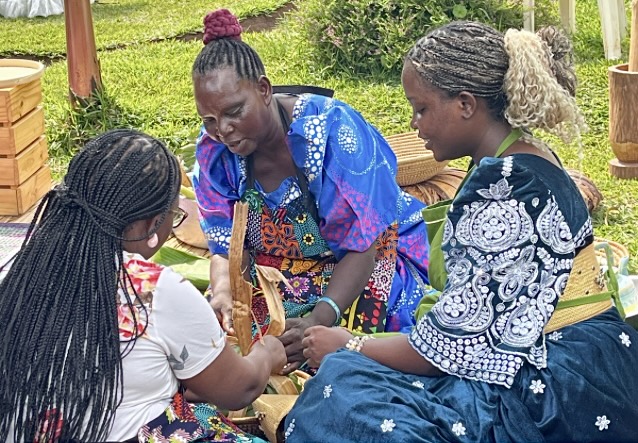
Community tourism and cultural tourism offer the human equivalent of that encounter. Cooking with a local family in their home, learning which spices go into a groundnut stew, being corrected on your chapati-rolling technique, eating at a table surrounded by people whose daily reality is nothing like yours, produces a memory structured around relationship rather than observation. You were there. You contributed something. Something was shared with you. That reciprocity is what makes the memory durable.
Guided birding in Uganda, for example, is a community tourism experience as much as it is a wildlife one. Local guides with intimate knowledge of specific forest patches, specific bird behaviours and the stories attached to specific species create an encounter that no ornithological field guide can replicate. The knowledge is local, earned, and offered generously.
Conservation-focused safaris add another layer, visitors leave not just having seen wildlife but having understood the systems that protect it and having contributed financially to those systems through their permits and park fees.

Meaningful Travel Examples: What Experience-Led Tourism Actually Looks Like
Experience-led travel is not an abstract concept. It has a specific shape in practice, and understanding that shape helps travellers choose experiences that genuinely deliver what they’re looking for.
- Cooking with local families: arranged through community cooperatives rather than hotel kitchens, these experiences involve real households, real recipes and real conversation. In Uganda, preparing matoke and luwombo alongside a Buganda family is an encounter with a living food culture that has sustained communities for centuries.
- Guided birding with local experts: birding safaris led by community guides in Uganda’s forests and wetlands combine wildlife tourism with direct community economic benefit. Over 1,000 bird species are recorded in Uganda, including the shoebill stork, one of the world’s most sought-after birds, making Uganda birding safari one of the most compelling niche wildlife experiences in East Africa.
- Conservation-focused safaris: rhino tracking at Ziwa Rhino Sanctuary in Uganda, where visitors walk on foot alongside animals whose entire population was rebuilt from zero after extinction in the 1980s, is conservation tourism at its most powerful. Gorilla permits directly fund mountain gorilla conservation. The species’ population has grown from 600 to over 1,000 individuals in large part because tourism permits make protection economically viable.
- Village experiences and cultural exchanges: the Batwa cultural experience near Bwindi Impenetrable National Park in Uganda is among the most ethically significant examples of community tourism in East Africa. The Batwa share traditional forest knowledge, fire-making, medicinal plant use and storytelling practices passed down through generations that no safari lodge programme can replicate.

How to Plan Meaningful Travel Without Falling Into Performative or Exploitative Tourism
The demand for authentic, meaningful travel experiences has created its own problem: a market of experiences designed to look authentic without being so. Performative tourism, community visits staged for cameras, ‘local’ experiences packaged and delivered by international operators with no community benefit, wildlife encounters managed for photographs rather than for animal welfare, is a real and growing issue in responsible tourism circles.
The difference between ethical travel and exploitative tourism often comes down to who controls the experience and who benefits from it. Community tourism that is designed, operated and financially benefited by the community itself is genuinely meaningful. A ‘community visit’ organised by an international operator and paid to a hotel concierge is something else. Asking who designed the experience, who receives the income and whether the community was consulted in its development reveals the difference quickly.
Sustainable travel planning for meaningful experiences involves choosing licensed local operators over international aggregators, asking direct questions about community benefit and environmental impact, selecting experiences with demonstrated conservation credentials and approaching cultural encounters with curiosity and respect rather than as content opportunities. The most meaningful travel experiences are almost never the ones most designed to look good on social media.
What Meaningful Travel Looks Like in 2026 and Why Uganda Delivers It
In 2026, meaningful travel is defined by depth over breadth, connection over consumption, and transformation over documentation. Travellers planning purpose-driven trips are asking different questions from those that drove booking decisions a decade ago. Not ‘which landmarks should I visit?’ but ‘what do I want to understand differently when I come home?’
Uganda answers that question with unusual completeness. The country’s combination of primate wildlife tourism, community-led cultural experiences, conservation-focused safaris, birding, adventure and genuine human warmth creates the conditions for meaningful travel more reliably than destinations built primarily around landmark sightseeing.
A Uganda safari is not a checklist. It is an accumulation of encounters, with gorillas, with people, with food, with history, with landscape, that tend to change the traveller in ways they didn’t fully anticipate when they booked.
That is what beyond-the-bucket-list travel is for, and Uganda delivers it time and time again. Plan a meaningful travel experience designed around purpose, connection, and unforgettable encounters. We create experience-led safaris that go far beyond landmark visits and into the moments that truly stay with you. Tell us what you want to feel by the end of your journey, and we’ll craft an itinerary built entirely around it.
Beyond the bucket list. Into something that lasts.

Leave a Reply