Ask someone to point to the source of the Nile on a map and most people point somewhere in Egypt. They point at the pyramids, or at Cairo, or vaguely southward into a continent they associate with the river but cannot quite place geographically. The Nile, in the popular imagination, belongs to Egypt.
But Egypt is where the Nile ends. Uganda is where it begins.
That distinction, simple, geographical and easily verified, quietly reframes everything about how Uganda sits in the world. A country many travellers think of primarily as a safari destination for gorillas and game drives is, in fact, the origin point of the river that fed the most enduring civilisation in human history. The Nile didn’t flow from somewhere mysterious and unknowable. It flowed from Uganda.
The Nile Runs Through Uganda’s Entire Identity
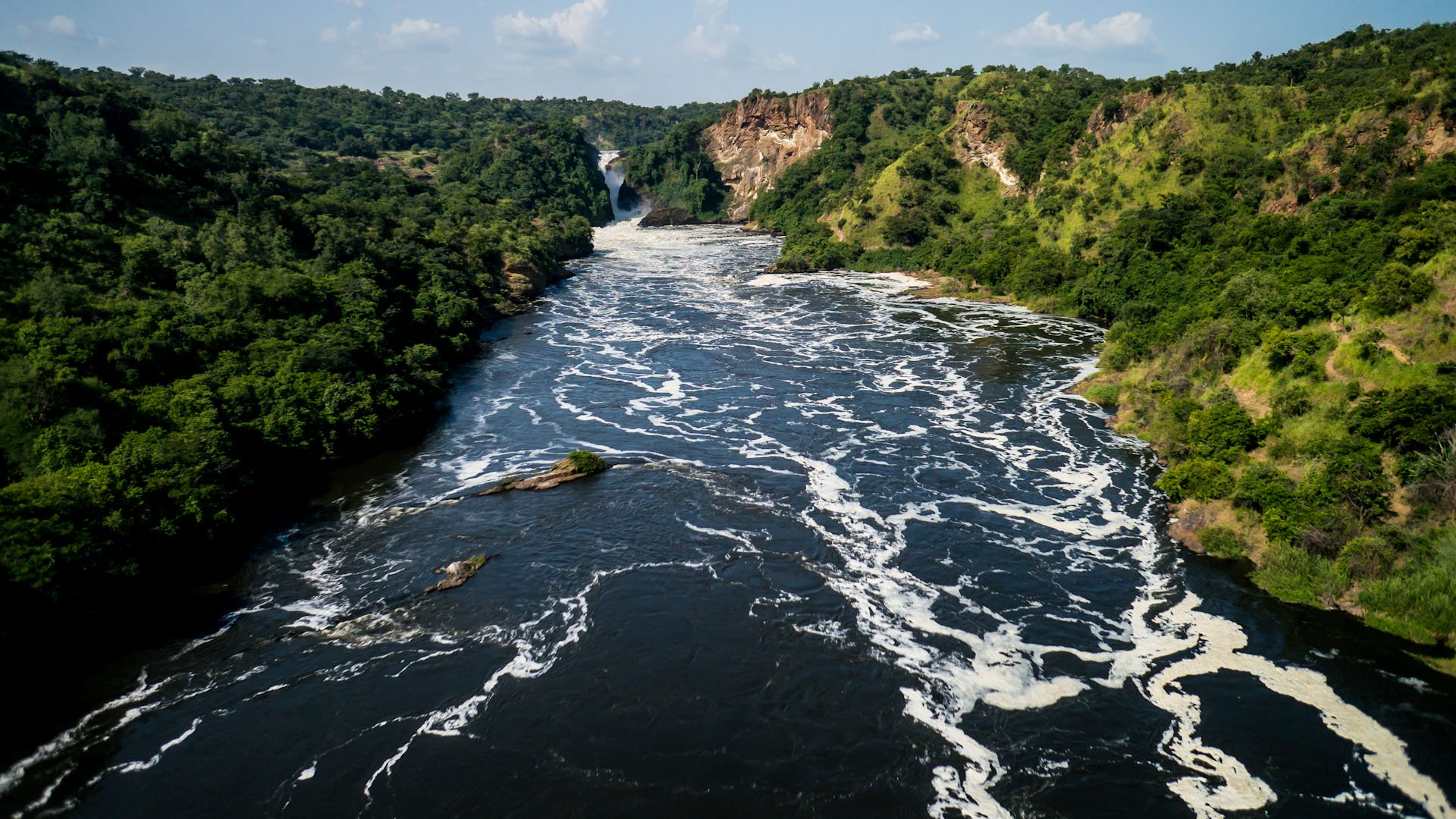
The White Nile, the Nile’s primary headwater, begins at the point where Lake Victoria empties northward at Jinja, approximately 80 kilometres east of Kampala. From there it travels as the Victoria Nile through northern Uganda, crashing through Murchison Falls, one of the world’s most powerful natural spectacles, before continuing as the Albert Nile toward South Sudan and eventually Egypt. The river doesn’t pass through Uganda. It is born there, shaped there and empowered there before it goes anywhere else.
This means that a safari in Murchison Falls National Park, even one focused purely on game drives, is almost always a Nile safari too. The boat cruise at Murchison Falls takes place on the Nile. The animals that gather at the riverbank for the morning game drive are gathering along the Nile’s banks. The hippos visible from the lodge terrace in the late afternoon are resting in the Nile. Uganda’s wildlife and the world’s longest river are, throughout the country’s northern corridor, completely inseparable.
What It Means to Stand at the Beginning of Something 6,650 Kilometres Long
There is a particular kind of travel experience that doesn’t require any wildlife at all to be genuinely extraordinary. It requires only geography and the willingness to let geography do what it does, which is to put a human being in a specific physical relationship with the scale of the world.
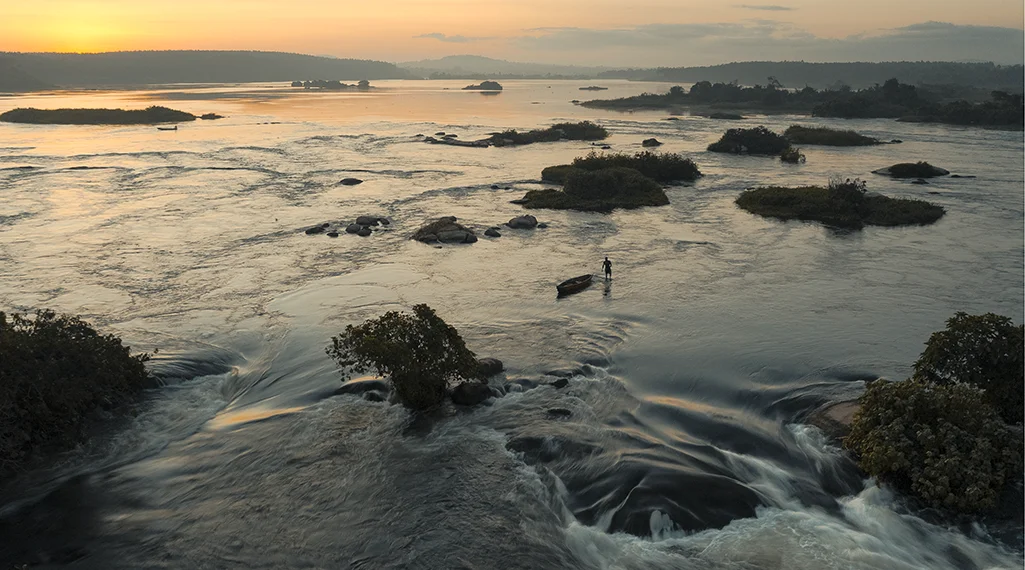
Standing at the source of the Nile in Jinja is one of those experiences. The water moving past you, dark and purposeful, will travel through Uganda, South Sudan, Sudan and Egypt before emptying into the Mediterranean Sea. It will pass through the landscapes of six countries, eleven nations if you count the lakes and tributaries that feed it. It will take weeks to complete a journey that began at this exact point, from this exact outflow, from this lake.
Most travellers who visit the source describe a feeling that is difficult to articulate, a sense of being at the beginning of something that dwarfs ordinary scale. It is the feeling that comes from standing at the edge of an ocean, or at the base of a very high mountain, or on the rim of a crater. The landscape is telling you something about size and time and your body understands it before your mind does.
The Nile and Uganda’s Conservation Story Are One Story
The Nile doesn’t exist in isolation from Uganda’s broader ecology. Lake Victoria, the vast inland sea that generates the White Nile, is shared between Uganda, Kenya and Tanzania, and its health directly affects the health of the river. The forests and wetlands that filter the lake’s inflows are part of the same conservation system that protects Uganda’s national parks. The gorillas in Bwindi, the chimpanzees in Kibale, and the source of the Nile are not unrelated points on a map. They are expressions of the same ecological richness.
This is one of the reasons Uganda has invested significantly in environmental protection, not just for tourism, but because the country understands that its natural resources are connected in ways that make the degradation of any one element a threat to all of them. Protecting the Nile’s source means protecting the forests and wetlands that sustain it. Protecting those forests means protecting the species that live within them. The conservation argument in Uganda is not abstract. It is written on the landscape.
The Explorers Who Gave Their Lives to Find What You Can Visit in a Day
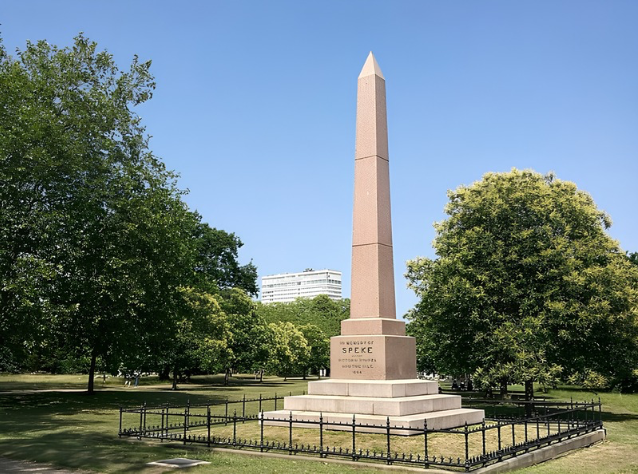
One of the quietly sobering things about visiting the source of the Nile in Jinja is the awareness of what it cost to find it. John Hanning Speke reached this spot in 1862 after years of grueling travel through East Africa, surviving temporary blindness and losing hearing in one ear. His conclusion that Lake Victoria fed the Nile ignited a bitter, lifelong feud with Richard Burton. On the eve of their scheduled public debate in 1864, Speke died from a gunshot wound while hunting; whether it was an accident or suicide remains disputed.
Henry Morton Stanley, who confirmed Speke’s finding by circumnavigating Lake Victoria in 1875-76, had already survived the journey to find David Livingstone in Central Africa, one of the most famous rescue missions in exploration history. The European explorers who established, beyond reasonable doubt, that the Nile began in Uganda did so at extraordinary personal cost, in conditions that are almost unimaginable today.
You can reach the same spot from Kampala in under two hours on a tarmac road, take a boat to the marker on the water and be back in the city in time for dinner. The contrast between the cost of discovery and the ease of access is one of the stranger aspects of visiting historically significant sites and it makes the visit feel, if anything, more worth making.
The Nile at Murchison Falls: The Source in Full Power
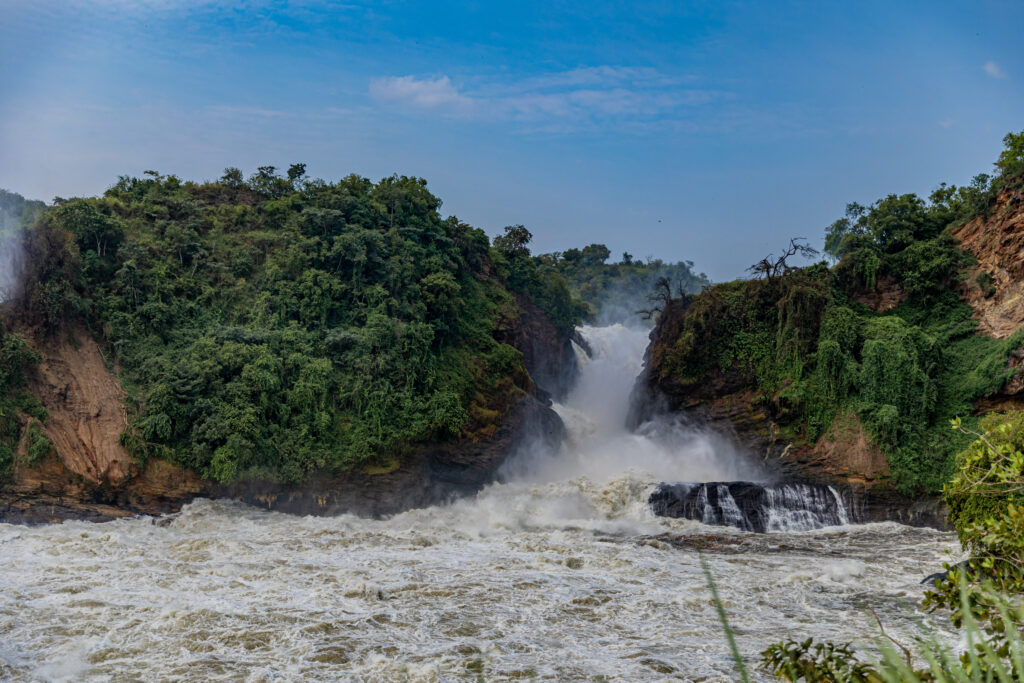
If Jinja represents the Nile’s beginning, quiet, wide, just setting out, then Murchison Falls, 300 kilometres to the northwest, represents what the Nile becomes when it has gathered momentum. The same river that starts as a gentle outflow at Lake Victoria arrives at Murchison Falls as a force that compresses the entire volume of the Victoria Nile through a gap just seven metres wide, dropping 43 metres in a cascade that throws spray into the air and can be heard from kilometres away.
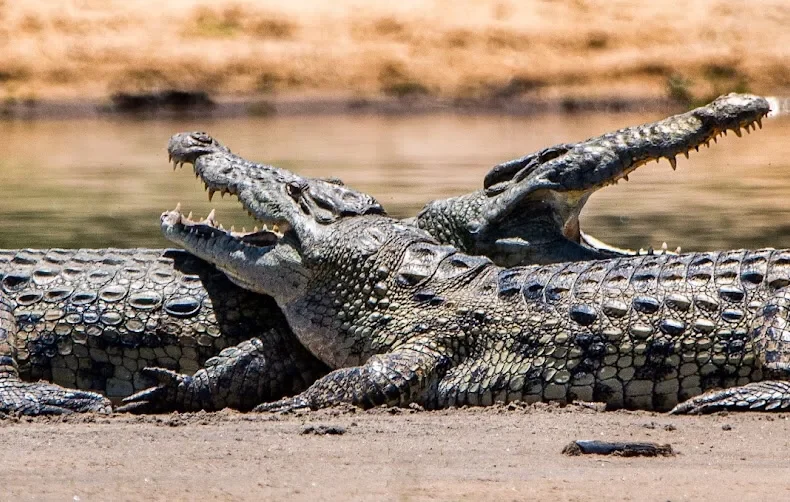
Visiting both ends of the Ugandan Nile, the source at Jinja and the falls at Murchison, tells the river’s Uganda story in full. The Nile begins quietly in the south, gathers itself through the country’s interior and arrives in the north as one of the most powerful natural spectacles in the world. Between those two points, there’s wildlife like: crocodiles, hippos and elephants along the banks, a boat cruise that brings you close to the falls from the water and opportunity to hike to the top and stand directly at the compression point where the river is at its most violent and most magnificent.
Why Uganda’s Nile Story Should Change Your Itinerary
Most Uganda itineraries are planned around specific wildlife experiences, gorilla trekking, game drives, chimpanzee tracking. The Nile is often an afterthought, a bonus on the way to somewhere else. But the river that runs through Uganda is not an afterthought. It is one of the great geographical facts of the world and Uganda’s position at its source is one of the most significant, and most undersung, things about the country.
A safari that includes the source of the Nile at Jinja and the falls at Murchison tells a story about Uganda that goes beyond wildlife. It places the country in global geography, in human history, and in the kind of scale that travel at its best is supposed to deliver. The gorillas are extraordinary. The lions are extraordinary. The source of the world’s longest river, in the same country, on the same trip, is something else entirely.
Explore Uganda’s Nile with The Rift Valley Explorer
From the Source of the Nile in Jinja to the thundering falls of Murchison, alongside unforgettable game drives, we craft Uganda itineraries that bring the country’s greatest stories together. Get in touch and we’ll start planning your adventure today!
Your Jinja adventure begins with The Nile.
Leave a Reply