For decades, the East African safari was a single-country affair. You flew to Nairobi, you did Kenya, you flew home. Or you flew to Entebbe, you did Uganda, you flew home. The countries were treated as separate products, distinct itineraries for distinct trips, each demanding its own planning, its own budget, its own journey.
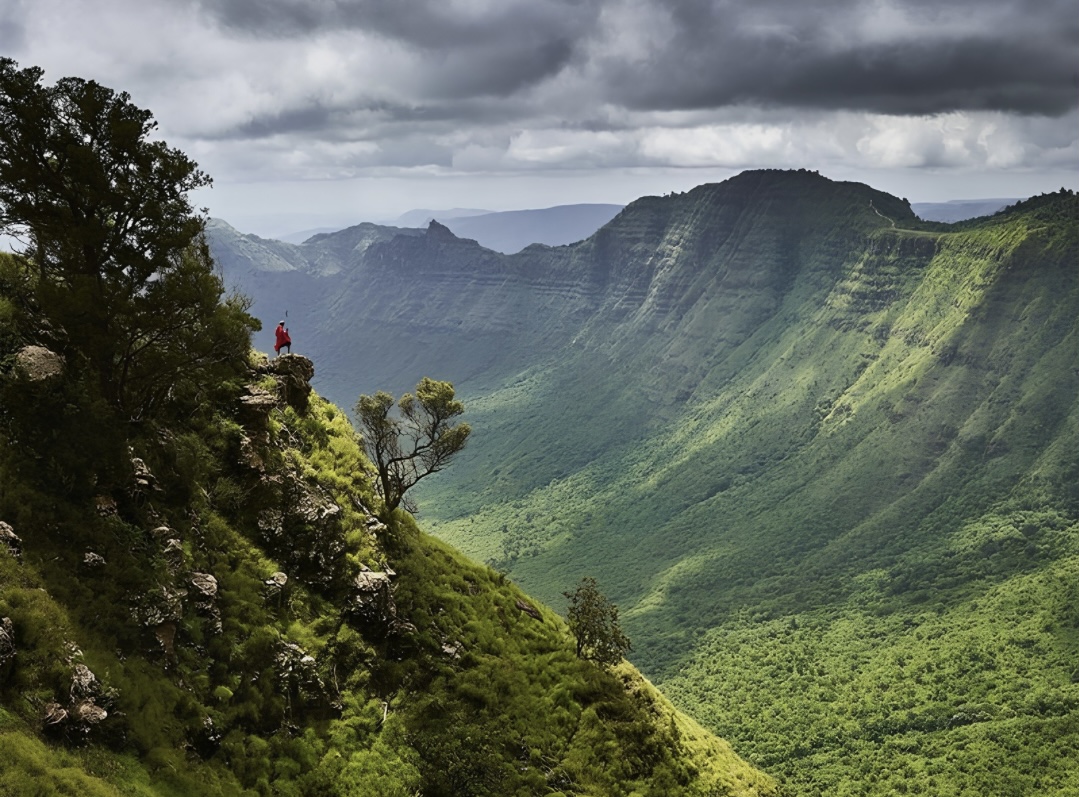
That model is changing. Across the travel industry, something that safari professionals have always known is becoming more widely understood: East Africa’s national borders are a political reality, but the landscape doesn’t recognise them. The Great Rift Valley runs without interruption through Uganda, Kenya, Rwanda, and Tanzania. The wildlife crosses the same borders freely. The culture, the geology and the ecosystem are one continuous story and increasingly, travellers want to follow that story across more than one chapter.
Multi-country itineraries are no longer the preserve of the very wealthy or the exceptionally well-travelled. They are becoming the new standard for serious safari travellers and the reasons why are worth understanding.
What the Rift Valley Actually Is
The Great Rift Valley is one of the most significant geological formations on earth, a vast tectonic fracture stretching approximately 6,000 kilometres from the Afar Triangle in Ethiopia down through East Africa to Mozambique. It created the continent’s great lakes, its towering volcanoes, its deep escarpments and the extraordinary diversity of habitats that makes East Africa the wildlife destination it is.
A multi-country itinerary following the Rift Valley’s logic gives travellers access to this interconnected landscape on a scale that a single-country trip simply cannot. Uganda’s forests, Rwanda’s volcanoes, Kenya’s savannah and Tanzania’s crater landscapes are all part of the same geological and ecological story. Experiencing them one after another makes the trip feel like one connected journey rather than a series of separate highlights.
Why Single-Country Itineraries Are No Longer Enough for Many Travellers
The traveller who has done Uganda once comes home knowing they’ve seen something extraordinary. They’ve tracked gorillas in Bwindi. They’ve watched lions on the Kazinga Channel. They’ve felt the spray of Murchison Falls. And then they start researching what’s on the other side of the border and they realise that Rwanda’s Volcanoes National Park is three hours from Bwindi. That Kenya’s Masai Mara and the Great Migration is a flight away. That Tanzania’s Serengeti and Ngorongoro Crater are within reach of the same trip.
The mathematics of long-haul travel make this logic compelling. The intercontinental flight from Europe or North America to East Africa is the single largest fixed cost of any trip. Once that cost is paid and that distance is covered, the incremental cost of extending the itinerary across a border is dramatically lower than making a separate trip later. Experienced safari travellers figure this out quickly. The question stops being ‘should I visit Uganda or Kenya?’ and becomes ‘how do I fit both, and possibly Rwanda, into the same trip?’
The Classic Multi-Country Combinations
Certain combinations have emerged as natural companions, destinations that complement each other geographically, experientially and logistically in ways that make the whole itinerary greater than the sum of its parts.
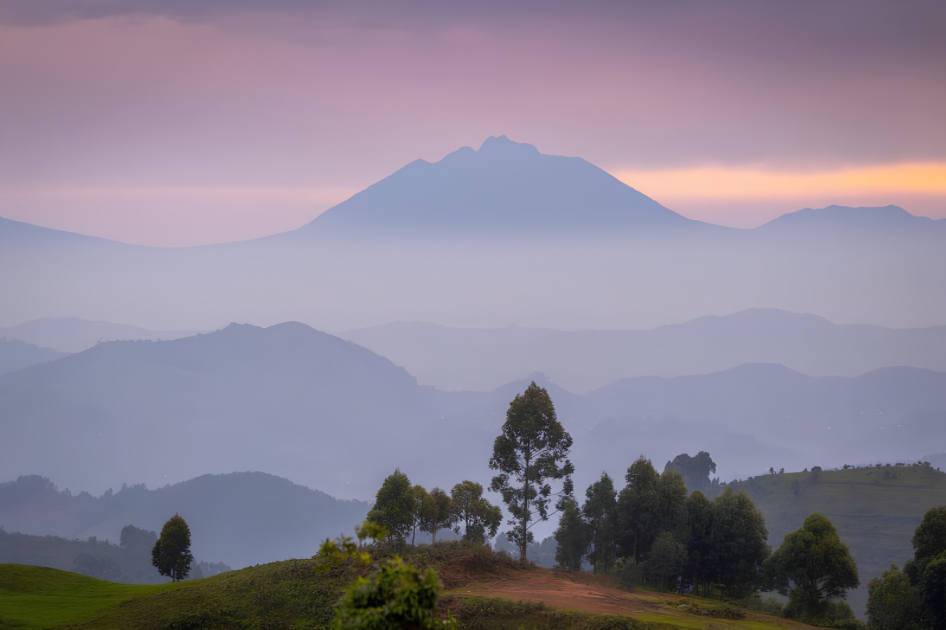
Uganda and Rwanda: The Primate Triangle
The most natural pairing in the region. Uganda’s Bwindi Impenetrable Forest and Rwanda’s Volcanoes National Park are separated by a border crossing that takes less time than most airport security queues. Both are home to habituated mountain gorilla families. Both offer dramatically different landscapes, Bwindi’s ancient lowland forest against Volcanoes’ dramatic volcanic slopes. Travellers who trek gorillas in both countries experience the same species in two completely different environments, deepening rather than repeating the experience. Rwanda’s golden monkey trekking and cultural immersion in Kigali add further texture to a Uganda itinerary already rich in content.
Uganda and Kenya: Forest Meets Savannah
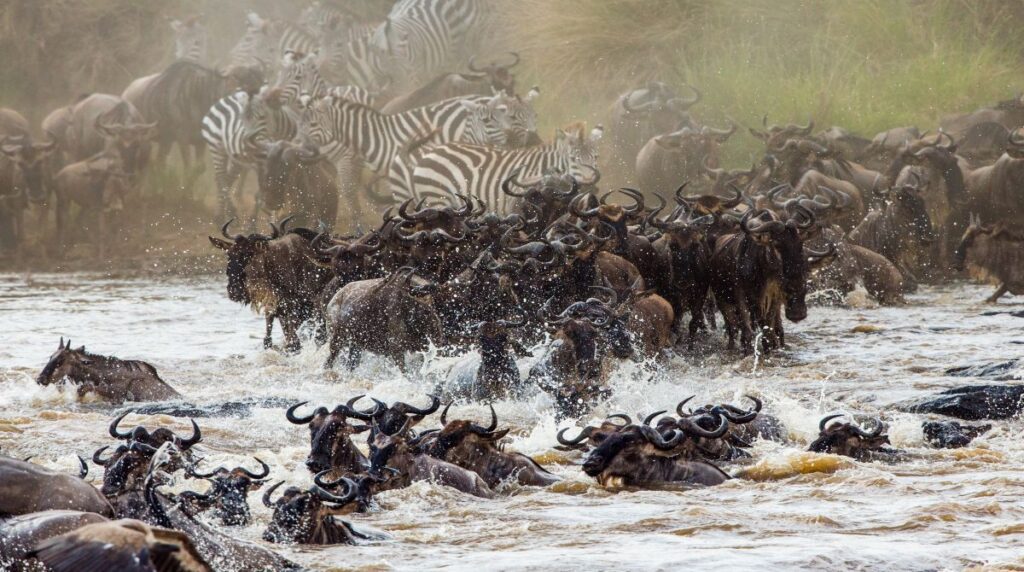
The contrast between Uganda and Kenya is precisely what makes their combination so compelling. Uganda delivers primates, dense forests, the Nile and an intimacy of wildlife experience that Kenya’s busier parks cannot match. Kenya delivers the open savannah drama that defined the safari aesthetic, the Great Migration, the Masai Mara’s lion-dense grasslands, the acacia-scattered horizon that most people picture when they hear the word safari. Combining the two gives travellers both the depth and the spectacle, each making the other more vivid by contrast.
Uganda, Rwanda, and Kenya — The Full Rift Valley Arc
For travellers with 12 to 16 days, the full arc from Uganda through Rwanda and into Kenya represents the most comprehensive safari experience available in East Africa. Gorillas in Bwindi, volcanoes in Rwanda, the Mara’s wildebeest and lions, each country contributes a chapter that the others cannot replace, and the sequence builds a narrative of East African diversity that no single country can tell alone. This is the itinerary that serious safari travellers describe, years later, as the definitive trip.
Uganda and Tanzania: Primates to the Serengeti
A less common but increasingly requested combination, pairing Uganda’s primate and forest experiences with Tanzania’s unrivalled savannah scale. The Serengeti’s size and the Ngorongoro Crater’s concentrated wildlife complement Uganda’s more intimate, forest-based encounters in a way that feels less like repetition and more like an education in the full range of what African wildlife habitat looks like.
What Makes Multi-Country Travel Work… and What Makes It Fail
Multi-country itineraries reward good planning and punish poor planning in ways that single-country trips do not. The logistics are genuinely more complex, permits in multiple countries, border crossings, domestic flights or overland transfers, accommodation across different regulatory environments and the need for an operator who actually knows all the destinations involved rather than just farming out the parts they don’t.
The most common failure mode is over-packing. A traveller who tries to do Uganda, Rwanda, Kenya, and Tanzania in ten days ends up spending more time in transit than in any single destination, and the trip dissolves into a series of rushed highlights rather than a coherent journey. The rule of thumb for multi-country itineraries is the same as for single-country ones: fewer destinations, more time. Two countries done well is a more satisfying trip than four countries done quickly.
The second failure mode is booking through separate operators in each country. Aside from the coordination complexity, separate bookings mean no single operator has full visibility of the itinerary, no one is managing the transitions and when something shifts a flight delay, a permit change, there is no one with both the authority and the local presence to fix it seamlessly. A DMC with genuine cross-border operating experience manages the whole trip as a single, continuous itinerary.

Why TRVE Is Particularly Well Placed for Multi-Country Itineraries
The Rift Valley Explorer is named after the landscape that defines this entire region. We operate handcrafted safaris across Uganda, Kenya, and Rwanda, with local knowledge in each country and established relationships with the permits authorities, lodges and ground operators that make seamless cross-border travel possible.
When you book a multi-country itinerary with us, you deal with a single team who knows every day of your trip from Bwindi to the Mara. One point of contact. One itinerary. One operator responsible for making it all work and physically present in the region when it needs to.
Let’s plan Your Multi-Country Rift Valley Safari. Tell us which countries are calling you and we’ll handle everything from there.
East Africa is one story. Let us help you read the whole thing.
Leave a Reply