You know the Big Five by name. You’ve seen them on safari brochures, wildlife documentaries, and the back of the Kenyan shilling. But how well do you actually know them? Underneath the iconic status are some genuinely strange, surprising, and occasionally hilarious truths about Africa’s most famous animals.
Prepare to see the lion, the leopard, the elephant, the buffalo and the rhino in a slightly different and possibly funnier, light.
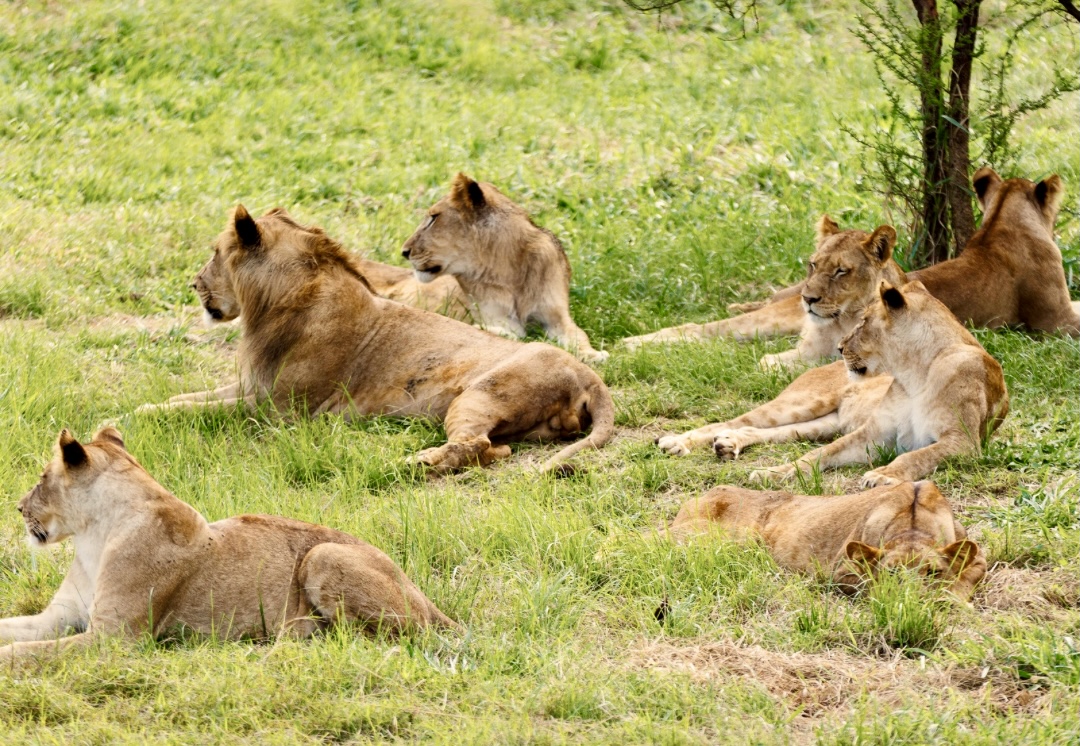
The Lion: Africa’s Most Famous Napper, “King of Bed Rotting”
Lions sleep up to 20 hours a day. Yes,TWENTY. That’s not a power nap, that’s basically a full-time commitment to doing absolutely nothing. In fact, if you’ve ever felt guilty about a lazy Sunday, consider that the lion, Africa’s apex predator, the animal the entire food chain is organised around, spends 83% of its life horizontal.
The reason, of course, is energy conservation. Lions hunt in short, explosive bursts and spend the rest of their time recovering from those bursts. It’s an efficient system. It’s also a system that means the dramatic lion encounter you’ve been imagining might, in practice, be a large cat snoring under an acacia tree.
Here’s another one: lions are the only cats that live in social groups. Every other member of the cat family is a solitary animal. The lion looked at that arrangement and decided: no, actually, I’d prefer company. A pride can include up to 30 individuals, which makes lions simultaneously the most sociable and the laziest members of the entire cat family.
And the roar? A lion’s roar can be heard from eight kilometres away. Which seems impressive until you learn that lions roar most frequently to announce their location to each other, essentially sending a very loud, very dramatic ‘I’m over here’ to the rest of the pride. Eight kilometres of range just to say hello.
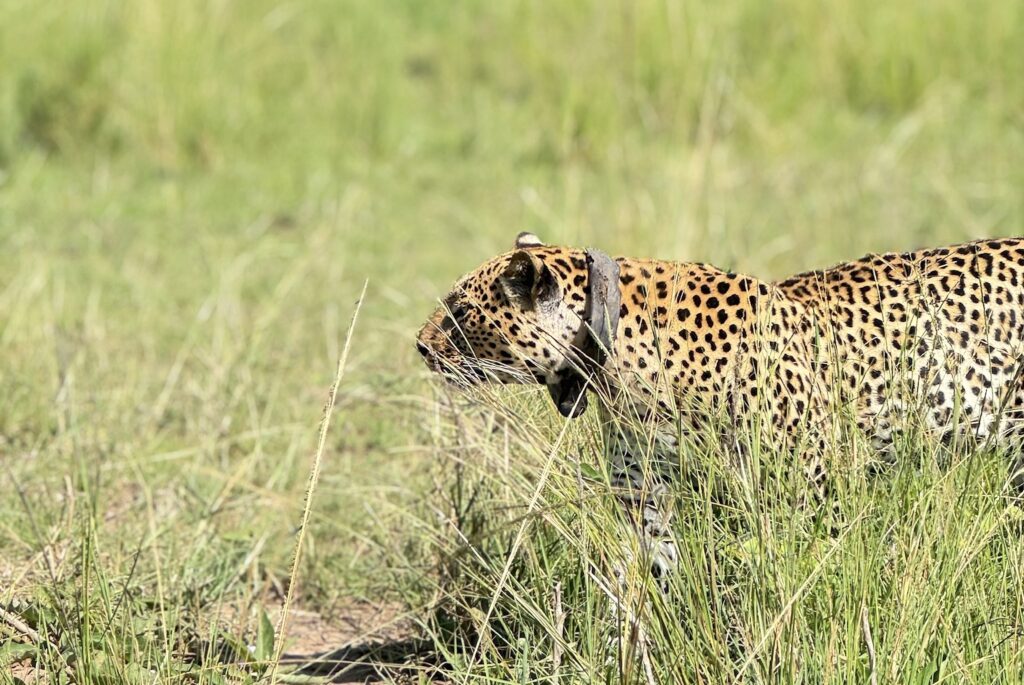
The Leopard: The Overachiever Nobody Talks About
Leopards are the strongest climbers in the cat family and they routinely haul prey heavier than themselves up into trees to keep it away from lions and hyenas. A leopard weighing 60 kilograms carrying a 90-kilogram carcass vertically up a tree is the kind of feat that makes gym enthusiasts question their entire workout routine.
They are also extraordinary swimmers, excellent runners and capable of leaping six meters horizontally. In short, the leopard is the Big Five’s all-rounder, strong, fast, agile and at home in trees, water, rocky terrain, forests and open savannah. It’s almost unfair.
The spots, by the way, are not spots. They’re rosettes, circular clusters of smaller spots arranged in rings, each slightly different from the next. No two leopards have the same rosette pattern, which means every leopard is technically unique. Wildlife researchers use rosette patterns to identify individual leopards the same way police use fingerprints.
Also worth knowing: black panthers are leopards. The melanistic coloring that produces a black coat is simply a recessive gene, the rosette pattern is still there underneath, visible in certain lights. A black panther is just a leopard wearing a very dramatic outfit.
The Elephant: Emotional, Excellent, and Mildly Terrifying
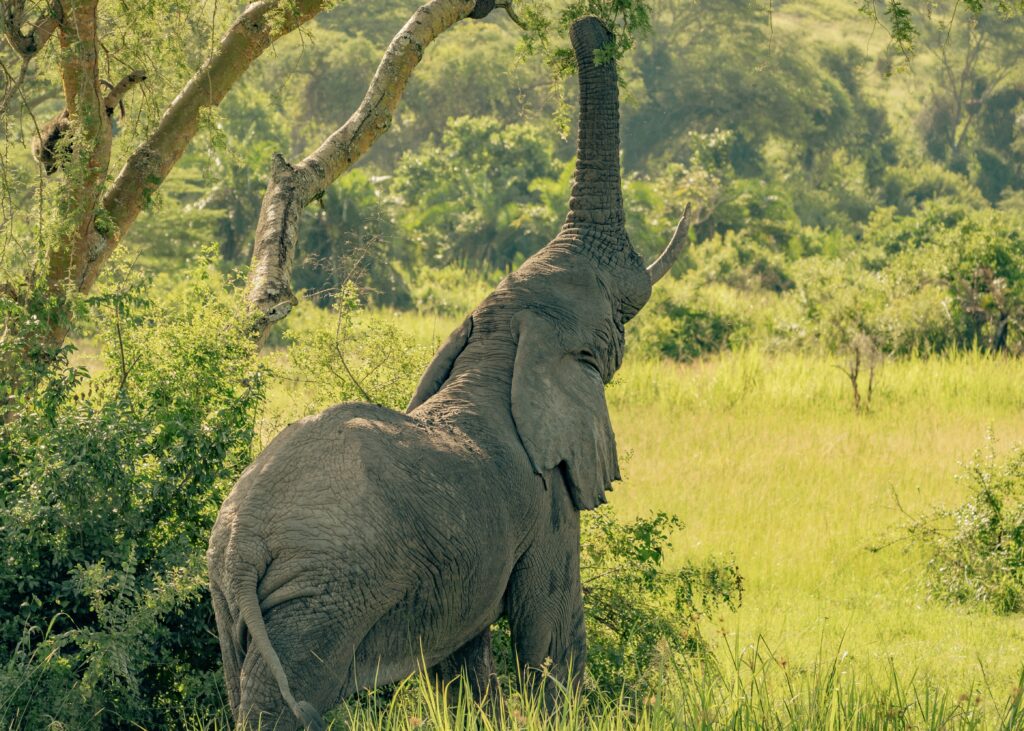
Elephants can recognize themselves in mirrors, something only a handful of species on earth can do, including humans, great apes and dolphins. They are also one of the few non-human animals that demonstrate behaviors consistent with grief, including returning to the remains of deceased family members and standing quietly over them in what can only be described as mourning. They remember the locations of water sources they visited decades ago and they hold grudges.
On a lighter note: elephants purr. Not quite like a cat, but they produce a low rumbling sound of contentment that researchers have confirmed is the elephant equivalent of a purr. A six-thousand-kilogram animal purring is one of the more delightful things nature has produced.
Their trunks contain approximately 40,000 muscles. For reference, the entire human body contains 639. An elephant’s trunk is stronger than most mechanical equipment, precise enough to pick up a single blade of grass, and sensitive enough to smell water from 20 kilometres away. It is also, apparently, used for greeting, playing, fighting, swimming, showering and making friends.
And this: elephants are right-trunked or left-trunked, they have a dominant side, just like humans are right or left-handed. You can tell which side by looking at which tusk is more worn down. Scientists have been studying this for years. The elephants have not commented.
The Buffalo: Democracy in Action, With Horns
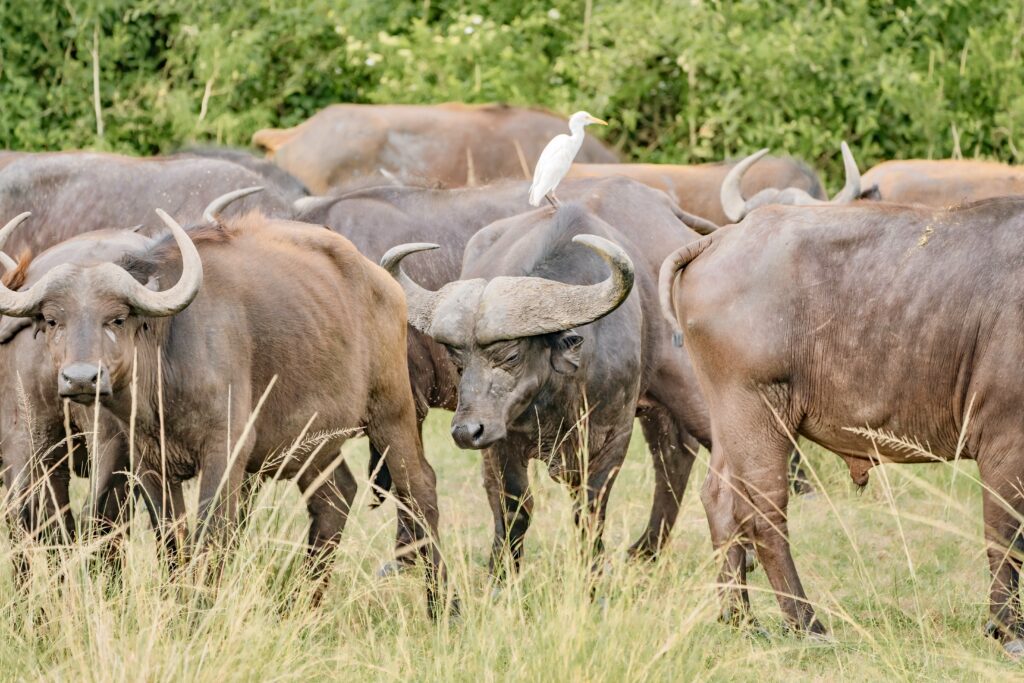
Cape buffalo make group decisions by voting. When a herd needs to decide which direction to move, females stand up, face the direction they want to travel, and then lie back down. The direction most females face is the direction the herd goes. Researchers studying this behavior have concluded that buffalo herds operate on a functioning democratic principle, majority rules, no debate, no campaign speeches. Just standing up and pointing.
The fused horn boss on an adult buffalo’s head, the solid, helmet-like structure where the two horns meet, is so dense that it can stop a rifle bullet.
This is, among other things, why 19th-century hunters feared the buffalo above all other Big Five animals. The buffalo effectively came with built-in armor .
Buffalo calves are born able to run within hours of birth, which is essential when you live in a landscape full of lions. They also make a sound described by wildlife researchers as a cross between a belch and a moo, which is somehow perfect for an animal that simultaneously holds a democratic election and carries natural bullet-proof headgear.
Old bachelor buffalo bulls, the famously dangerous ‘dagga boys’ driven from the herd, spend their time wallowing in mud, which keeps them cool and removes parasites. So the most dangerous animal in Africa is, in its downtime, enjoying a spa day. Alone. In the mud. Possibly planning something.
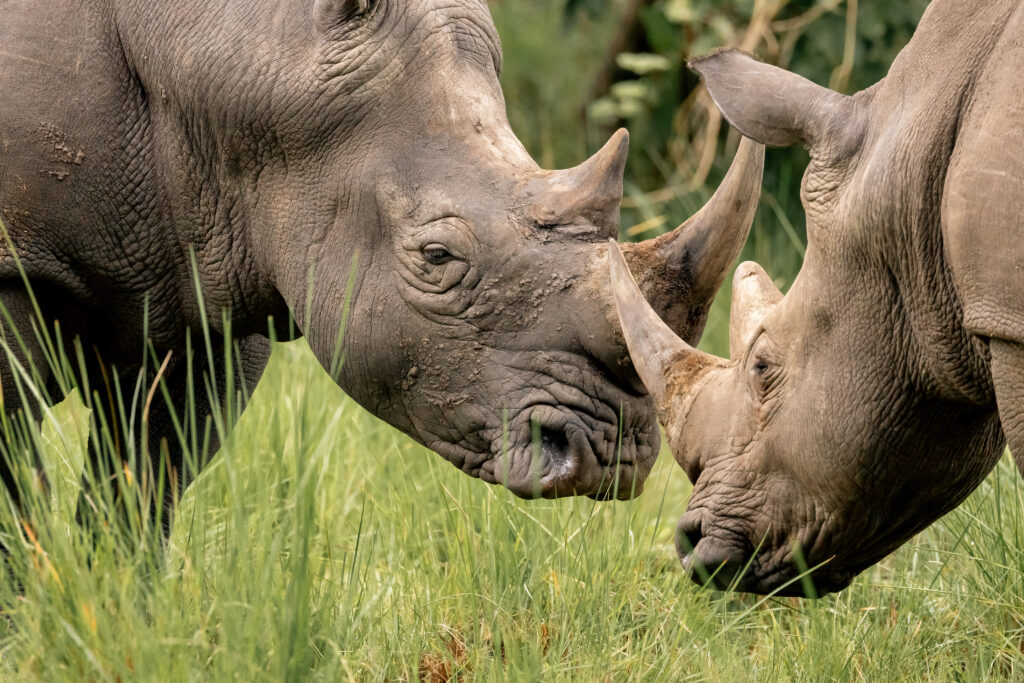
The Rhino: Ancient, Armoured and Surprisingly Communicative
Rhinos have been around for approximately 50 million years, which means they predate the Himalayas, the Alps, and most of the landmasses we currently take for granted. They survived the extinction event that wiped out the dinosaurs. They outlasted woolly mammoths, sabre-toothed tigers, and giant ground sloths. And then, in under a century, humans nearly finished them off for a horn made of the same material as human fingernails.
A group of rhinos is called a crash. As in, you encountered a crash of rhinos this morning. This is either because of the sound they make moving through dense bush or because wildlife naming conventions occasionally have a sense of humour. Either way, it is the correct term and deserves wider use.
Rhinos communicate primarily through dung. Each rhino leaves detailed chemical information in its droppings, age, sex, reproductive status and identity, and other rhinos read this information carefully when they pass through. It is, essentially, a social media feed made of dung. Researchers have spent considerable time studying this system. It works extremely well.
Despite their reputation for poor eyesight, rhinos genuinely cannot see clearly beyond about 30 meters. They have exceptional hearing and an extraordinary sense of smell.
A rhino may not be able to see you, but it absolutely knows you are there, what direction you’re coming from and approximately how anxious you are. This is useful information for anyone planning to stand between a rhino and its escape route.
Visit rhinos on your way to The Most Powerful Waterfalls in the World
See Them for Yourself
Facts are one thing. Watching a lion yawn from three metres away or a buffalo herd vote with their feet or an elephant trumpet at sunset over the Nile, that is something no blog can replicate. Uganda is home to the Big Five and they are more interesting, more complex and occasionally funnier than their iconic status suggests.
They have been headlining the wild for centuries and the stories are even better in person. Find out for yourself, with us as your guide. We’ll build you the perfect Uganda itinerary: game drives, rhino walks and everything in between.
The Big Five are stranger and more wonderful than you think.
Leave a Reply