You’ve heard the term. The Big Five. It shows up in every safari brochure, every wildlife documentary, every conversation about Africa’s wild places. But where does the name actually come from and what does it really mean?
The answer is more surprising than most people expect. The Big Five weren’t named by conservationists or wildlife photographers. They were named by hunters, and the criteria had nothing to do with size.
Here’s the full story behind Africa’s most iconic wildlife list, what makes each animal extraordinary, and what it means to encounter them in Uganda.
Why Are They Called the Big Five?
The term ‘Big Five’ was coined in the 19th century by big game hunters who came to Africa seeking the most dangerous animals to hunt on foot. The five weren’t chosen for size, they were chosen because they were the most likely to fight back. The most unpredictable. The most likely to kill you.
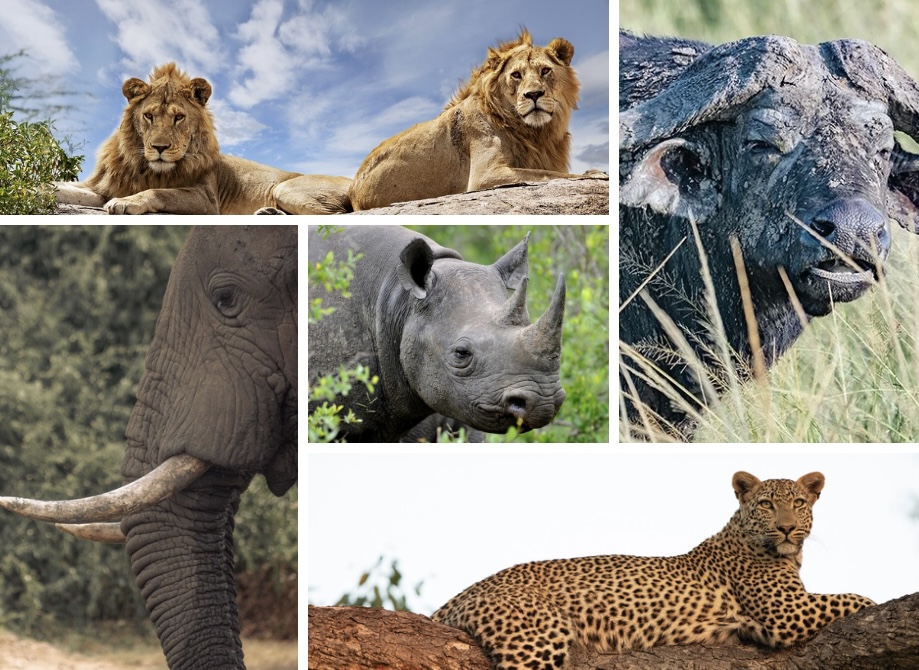
Lion, Leopard, Elephant, Buffalo and Rhinoceros. Each earned its place through a combination of aggression, physical power and the sheer difficulty of approaching them in the wild.
The language of the hunt has long since faded. Today, the Big Five are among the most photographed and fiercely protected animals on earth. But the name stuck and the animals behind it are every bit as formidable as their reputation.
1. The Lion: Africa’s Apex Predator
The lion needs no introduction. Africa’s largest predator and the only truly social member of the cat family, lions live in prides of up to 30 individuals and command their territory with an authority that reshapes the behaviour of every other species around them.
What made lions so feared by early hunters wasn’t just their size, it was their nerve. Unlike most wildlife, which flees at the sight of humans, a threatened lion will charge. Fast, low and committed. This combination of power and courage cemented the lion’s place at the top of the Big Five.
On safari, watching a pride in full social interaction, cubs tumbling over each other while adults yawn in the afternoon heat, is one of the most quietly magnificent experiences in the natural world.
📍Where to find them in Uganda: Murchison Falls National Park, Queen Elizabeth National Park and Kidepo Valley National Park
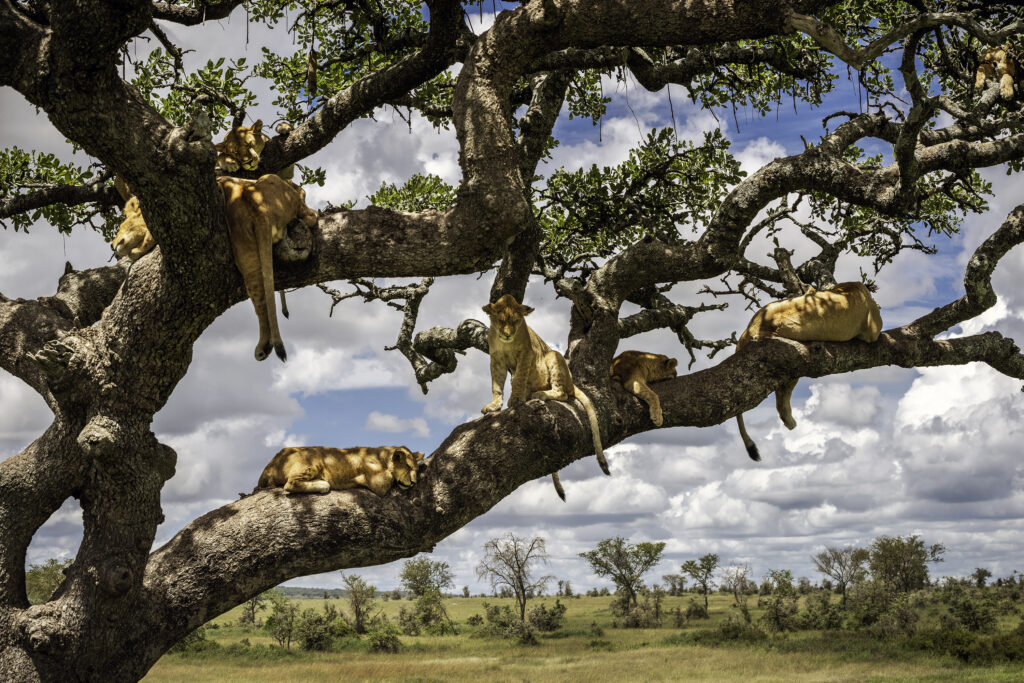
Uganda shelters incredible lion populations, including the world-famous tree-climbing lions of Ishasha sector.
Kidepo’s lions are among the most relaxed and accessible in East Africa, a world-class sighting in one of Africa’s wildest landscapes.
The Rift Valley Explorer tip
2. The Leopard: The Ghost of the Savannah
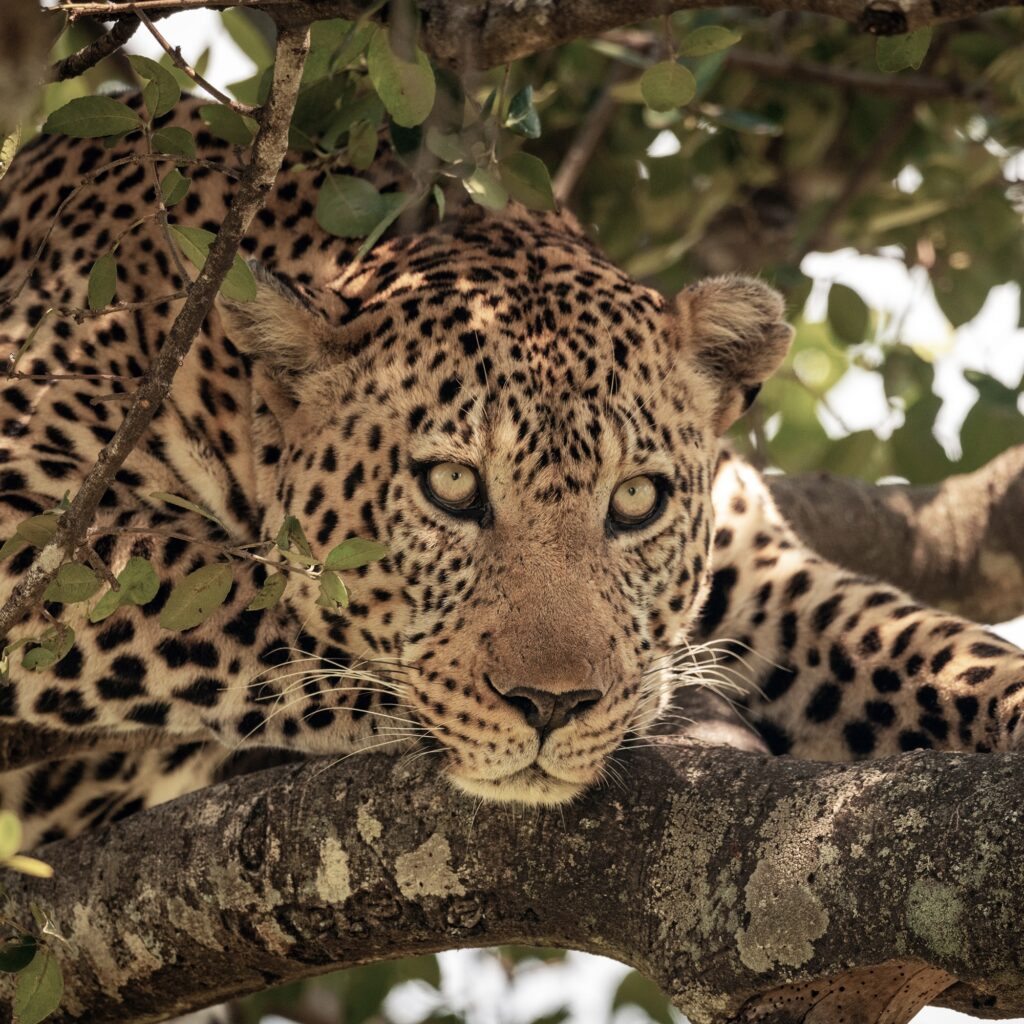
Of all the Big Five, the leopard is the one most likely to make you question your own eyes. Solitary, nocturnal and masters of concealment, leopards are present in many of Africa’s game parks but seen by relatively few visitors. They can lie in a tree directly above a road and remain completely invisible until they choose not to be.
Hunters feared leopards for their stealth and their ferocity at close range. A wounded leopard is considered by many wildlife professionals to be the most dangerous animal in Africa, explosive speed, acute intelligence and the ability to disappear into terrain that seems to offer no cover at all.
On safari, a leopard sighting feels like a gift. The realisation that this animal has been watching you long before you spotted it is something that stays with you long after the vehicle moves on.
📍Where to find them in Uganda: Queen Elizabeth National Park, Murchison Falls National Park, Kidepo Valley, Ziwa Rhino Sanctuary, Lake Mburo National Park, Kibale National Park
Leopards are officially classified as Vulnerable by the International Union for Conservation of Nature because their populations are threatened by habitat loss, deforestation and illegal poaching.
Best chance to see them is early morning and late afternoon drives, leopards are most active at the edges of the day.
The Rift Valley Explorer tip
3. The Elephant: The Gentle Giant That Is Neither Gentle Nor Small
The African elephant is the largest land animal on earth. A fully grown bull can weigh up to 6,000 kilograms and stand four metres at the shoulder. It can run at 25 kilometres per hour, faster than most people realise and far faster than any human can sprint across broken terrain.
Elephants earned their Big Five status because of what happens when they decide you are a threat. A charging elephant is one of the most terrifying experiences in the natural world, and unlike a lion or leopard, an elephant doesn’t always give a mock charge first. Hunters who underestimated them rarely had the chance to do so twice.
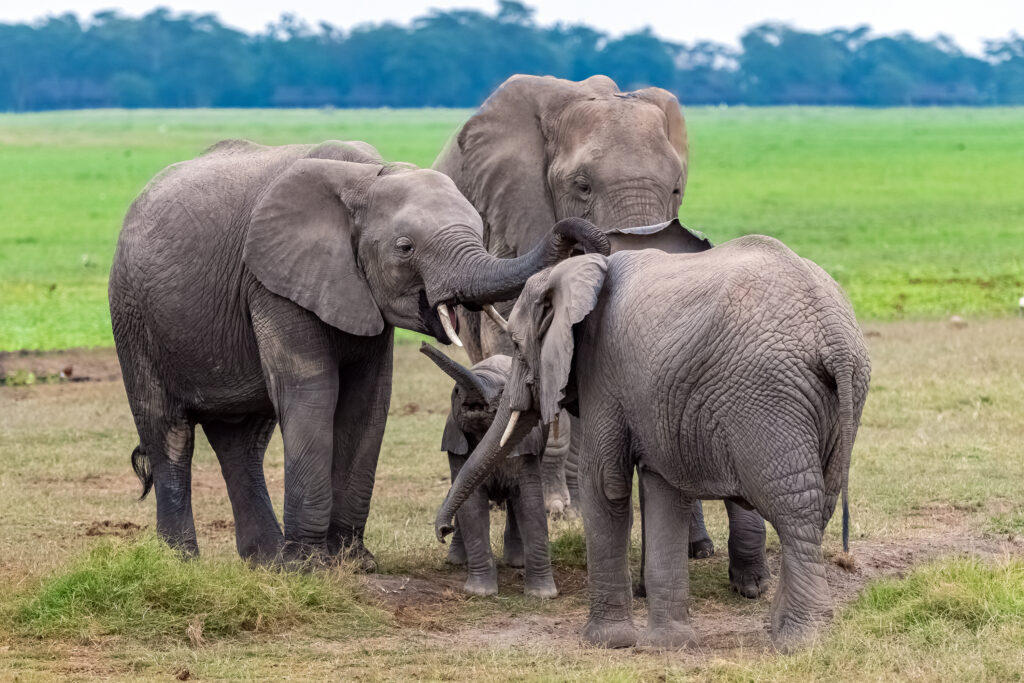
In conservation terms, elephants are ecosystem architects. They knock down trees to create clearings, dig waterholes that other animals rely on, and disperse seeds across vast distances. Uganda’s elephant populations in Murchison Falls and Queen Elizabeth are thriving, and watching a family herd move through the landscape, the matriarch leading with calm authority, is one of the defining moments of an East African safari.
📍 Where to find them in Uganda: Murchison Falls National Park, Queen Elizabeth National Park, Kidepo Valley, Kibale National Park, Bwindi Impenetrable Forest National Park
Elephants are matriarchal. They’re led by the oldest female (the matriarch) who guides her family based on decades of seasonal migration knowledge
Highlight: The boat cruise along the Nile in Murchison Falls offers some of Africa’s closest and most relaxed elephant encounters
The Rift Valley Explorer tip
4. The Buffalo: The Most Dangerous of Them All
Ask any professional safari guide which of the Big Five they’d least like to encounter on foot, and the answer is almost always the buffalo. Not the lion. Not the elephant. The buffalo.
The Cape buffalo is responsible for more hunter fatalities in Africa than any other Big Five animal. What makes it so dangerous isn’t size alone, though a bull can weigh 800 kilograms and carries a fused horn boss across its skull like a natural helmet. It’s the combination of unpredictability and a tendency to circle back on its tracker. Old buffalo bulls driven from their herds are known as ‘dagga boys’, solitary, short-tempered and with a long memory for anything they consider a threat.
On a game drive, buffalo herds are an extraordinary spectacle, thousands of animals moving as a single mass, calves tucked into the middle, the whole herd churning red dust into the afternoon air. Uganda’s savannah parks hold impressive buffalo populations, and they are always worth stopping for.
📍Where to find them in Uganda: Queen Elizabeth National Park, Murchison Falls National Park, Lake Mburo National Park, Kidepo National Park
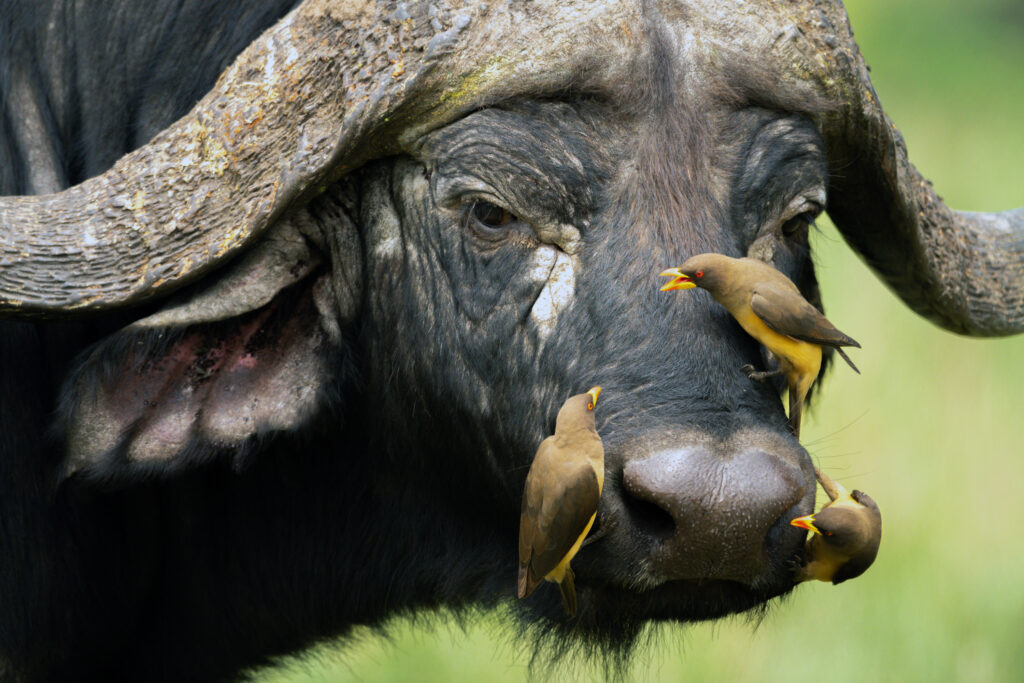
Three yellow-billed oxpeckers on Cape buffalo face
Look out for: Oxpecker birds riding on buffalo backs, feeding on parasites, a classic safari image.
The Rift Valley Explorer tip
5. The Rhino: Africa’s Most Endangered Icon
The rhino completes the Big Five, and it is the animal whose story is most entangled with tragedy. Hunted to near-extinction for their horns, African rhino populations collapsed catastrophically through the 20th century. What hunters once considered one of the most dangerous animals to pursue on foot became one of the most urgent conservation emergencies on the continent.
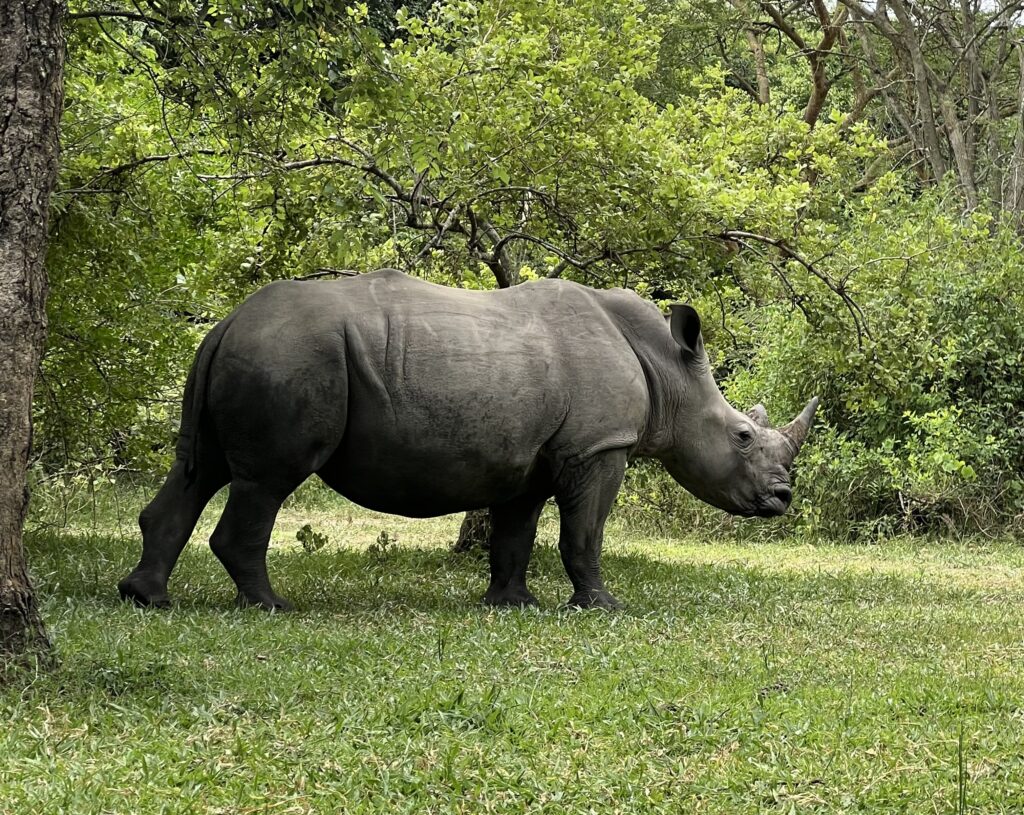
The white rhino, despite its name, is not white, the name comes from the Afrikaans word ‘wyd’ meaning wide, referring to its broad, flat lip adapted for grazing. The black rhino, smaller and with a hooked lip for browsing, is critically endangered with fewer than 6,000 individuals remaining in the wild.
In Uganda, rhinos were wiped out entirely by poaching and instability in the 1980s. But the story doesn’t end there. Ziwa Rhino Sanctuary, located two hours north of Kampala, is home to the country’s only wild white rhinos a growing population reintroduced through a conservation programme that began in 2005. At Ziwa, you track rhinos on foot with armed rangers, approaching within metres of these extraordinary animals. It is one of Uganda’s most powerful wildlife experiences.
📍Where to find them in Uganda: Ziwa Rhino Sanctuary
Only the Southern White Rhino currently lives in Uganda
Ziwa makes a perfect stop on the drive north to Murchison Falls, combine both for a full Murchison Falls National Park itinerary.
Uganda and the Big Five: Four in the Wild, One in Sanctuary
Uganda is home to four of the Big Five in their wild, open habitat — lion, leopard, elephant and buffalo and the fifth, the rhino, reintroduced through conservation efforts. Completing all five in Uganda is not only possible, it makes for one of the most varied and rewarding safari itineraries in East Africa.
What sets Uganda apart from classic Big Five destinations further south is the context. Here, you don’t just see the animals, you see them against a backdrop of extraordinary biodiversity. On the same day you watch elephants at Murchison Falls, you might encounter shoebill storks on the Nile, chimpanzees in Budongo Forest and over 100 bird species before lunch. Uganda’s Big Five experience comes embedded in an ecosystem that is richer and more alive than almost anywhere else on the continent.
See the Big Five with The Rift Valley Explorer
A Big Five safari in Uganda isn’t just something you tick off—it’s a thrilling escape into one of Africa’s most incredible wild landscapes. Our carefully crafted itineraries are designed around the moments you’ll truly remember, from catching the first light for a lion sighting in Kidepo, to feeling the buzz of a close-up rhino encounter on foot at Ziwa, to drifting along the Nile and watching elephant herds move in their natural rhythm.
Leave a Reply