You came for the gorillas. You stayed for the sunsets. And then someone placed a plate of rolex in front of you and you realised… Uganda was about to surprise you in ways you never expected.
Before you even fall in love with Uganda’s landscapes, you’ll probably fall in love with the food. Ugandan cuisine is bold, comforting, and deeply rooted in culture. Rooted in centuries of agricultural tradition, shaped by the cuisines of over 50 tribes and nourished by some of the most fertile land on the continent, every dish tells a story. From roadside snacks in Kampala to traditional meals served in rural homesteads, every bite is an experience.
Here are five foods you absolutely must eat in Uganda, and why each one is worth going out of your way for.
1. Rolex: Uganda’s Most Iconic Street Food (No, Not the Watch)
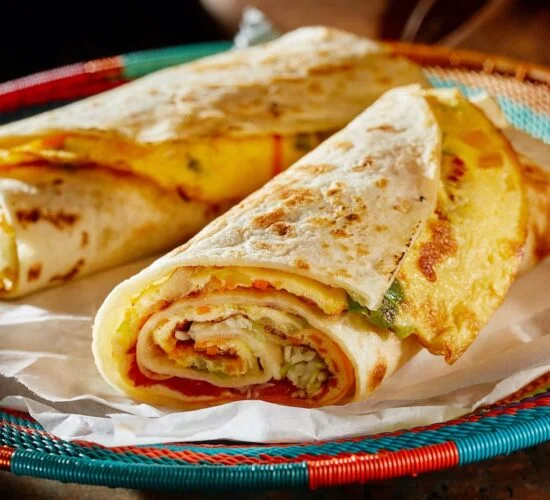
Let’s start with the icon. Uganda’s most famous street food is a simple but genius combination of eggs, chapati and vegetables, rolled together. The name comes from ‘rolled eggs’, and it’s as good as it sounds.
The chapati is freshly made, rolled thin on a hot griddle until it’s slightly crispy at the edges and soft in the centre. The omelette, spiced with onions, tomatoes and peppers is poured right on top, the vegetables added, and the whole thing rolled up tight and handed to you in a paper bag. It costs almost nothing. It tastes like everything.
Why it’s iconic:
- Cheap, filling, and made fresh right in front of you
- Found on street corners across the entire country
- Part food, part cultural experience
TRVE tip: Try it at night around Kampala’s street markets… it’s the full experience. Ask for a ‘special rolex’ for extra eggs and fillings.
Where to find it: Street vendors across most Ugandan cities
2. Matooke: The National Comfort Food
If rolex is Uganda’s street food hero, matooke is its soul. Made from steamed green bananas, mashed to a smooth, starchy consistency and served with groundnut sauce or meat stew, matooke is the backbone of the Ugandan table. It’s not just food. It’s tradition on a plate.
The Baganda people of central Uganda have cultivated bananas for centuries, and matooke holds a place of cultural significance that goes far beyond the meal. It’s served at weddings, funerals and every family table in between. To offer matooke to a guest is an act of genuine hospitality.
What makes it special:
- Soft, comforting texture that’s deeply satisfying
- The perfect base for bold, aromatic stews and sauces
- A staple in Ugandan homes, eating it feels like being welcomed in
Where to find it: Local restaurants across Uganda. Find a small family-run ‘local joint’ and ask for matoke with g-nut stew. You’ll understand immediately why this dish has lasted generations.

3. Luwombo: A Royal Ugandan Dish Worth Seeking Out
If you want to experience Ugandan cuisine at its most ceremonial, luwombo is your dish. This is the food that was once served to kings and eating it still carries that ‘special occasion’ feel today.
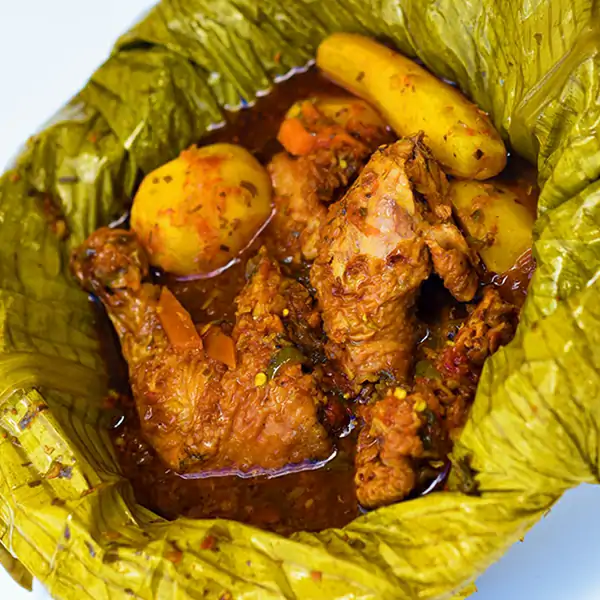
Luwombo is a slow-cooked stew of meat, chicken, or groundnuts, wrapped in banana leaves and steamed for hours until the flavours concentrate into something extraordinary. The banana leaf isn’t just packaging. It’s an active ingredient, infusing the stew with a subtle, grassy sweetness that you can’t replicate any other way.
The dish was invented in the royal kitchens of the Buganda Kingdom in the late 19th century by a royal chef named Kawumpuli for the Kabaka (king). It was originally prepared for royalty and it still carries that weight.
Why you should try it:
- Deeply flavourful slow-cooked food at its most rewarding
- Comes in chicken, beef, and mushroom varieties (great for vegetarians too)
- A genuine window into Buganda cultural heritage
Where to find it: Traditional Ugandan restaurants in Kampala, cultural centres, and some safari lodges. Luwombo takes time, it can’t be rushed, so sit down, order and enjoy the wait.
4. Eshabwe: Uganda’s liquid gold
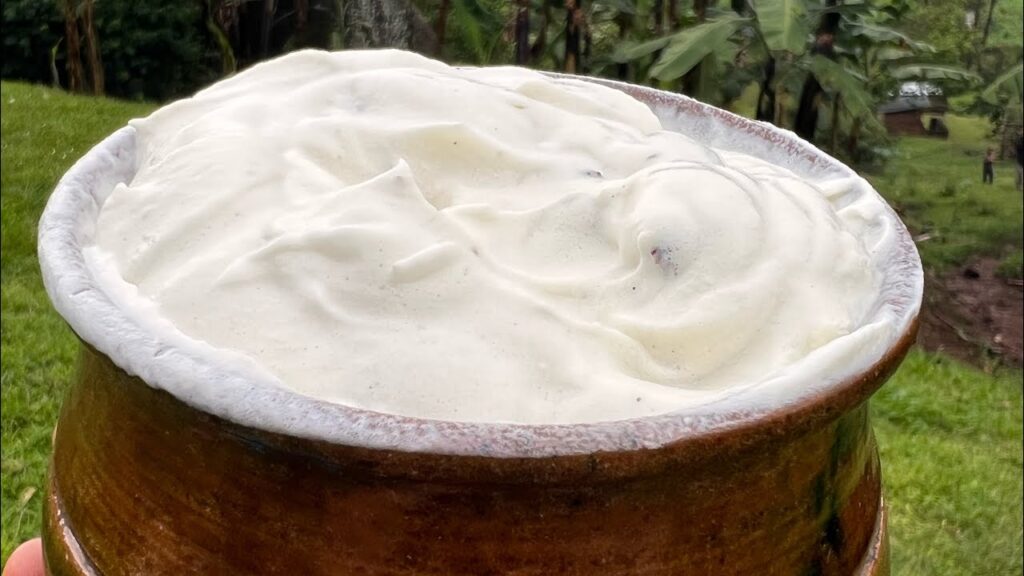
Most visitors to Uganda have never heard of eshabwe. That changes the moment they taste it. This is one of the most unique condiments on the African continent, a silky, clarified ghee sauce made from the milk of Ankole cattle, salted and whipped to a smooth, aromatic finish.
Eshabwe comes from the Banyankole people of western Uganda, a community whose identity is deeply tied to their long-horned Ankole cattle. The sauce is traditionally reserved for special occasions, celebrations, ceremonies, honoured guests. To be served eshabwe is to be welcomed in the fullest sense of the word.
The flavour is rich, buttery, and subtly complex, nothing else quite like it. It’s typically served alongside matoke or meat, spooned generously over the top and allowed to melt into whatever it touches. One taste and you’ll understand why this sauce has been considered a delicacy for generations.
Why it’s worth seeking out:
•Silky, buttery, and deeply aromatic, unlike anything else you’ll eat on safari
•Rooted in Banyankole culture and the legendary Ankole cattle tradition
•A genuine taste of western Uganda’s cultural heritage
Where to find it: Western Uganda, particularly around Mbarara, Kabale, and lodges near Queen Elizabeth National Park. Ask specifically; not every restaurant offers it, but the ones that do are worth the stop.
5. Muchomo: Uganda’s Roadside Grill
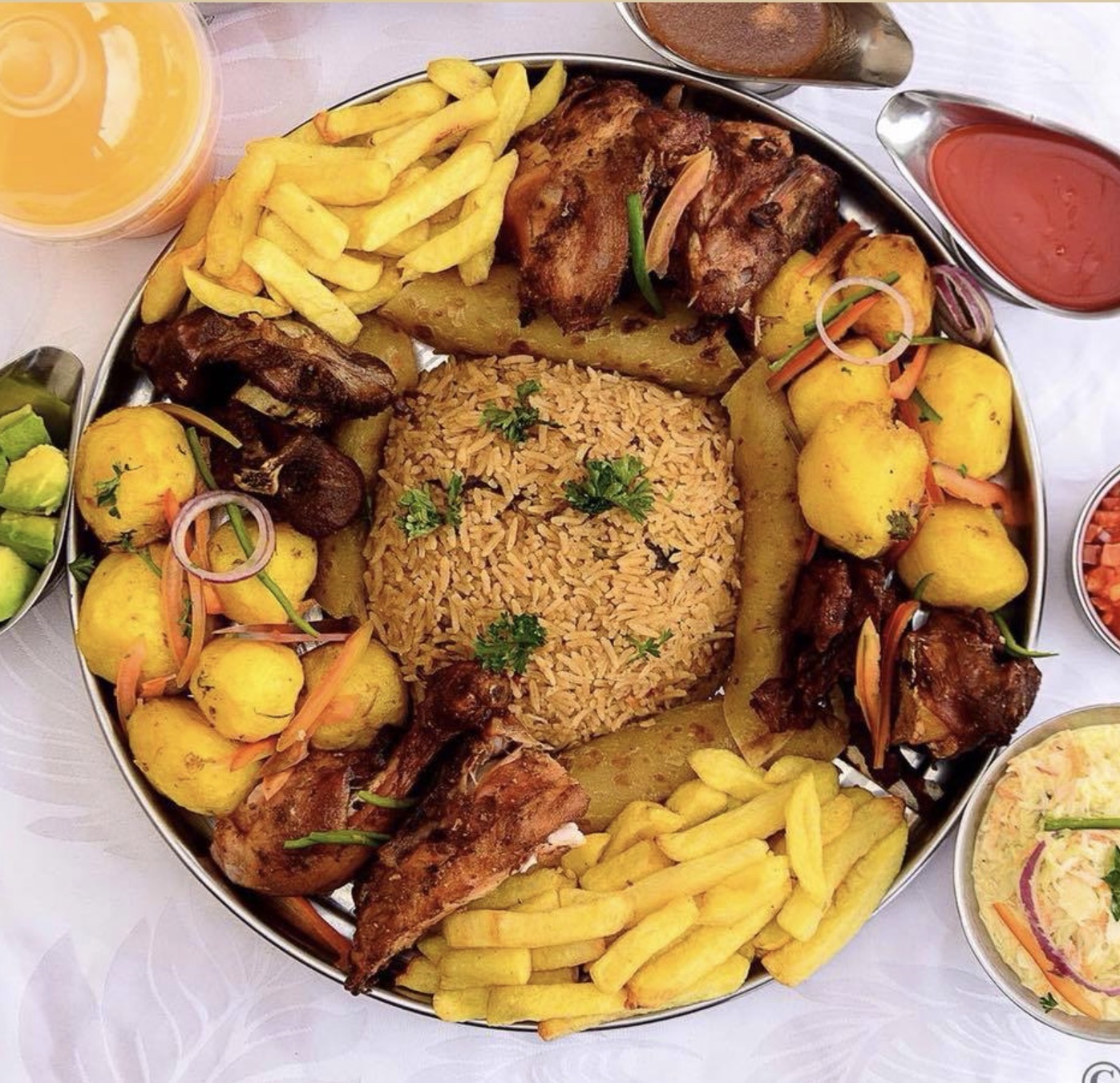
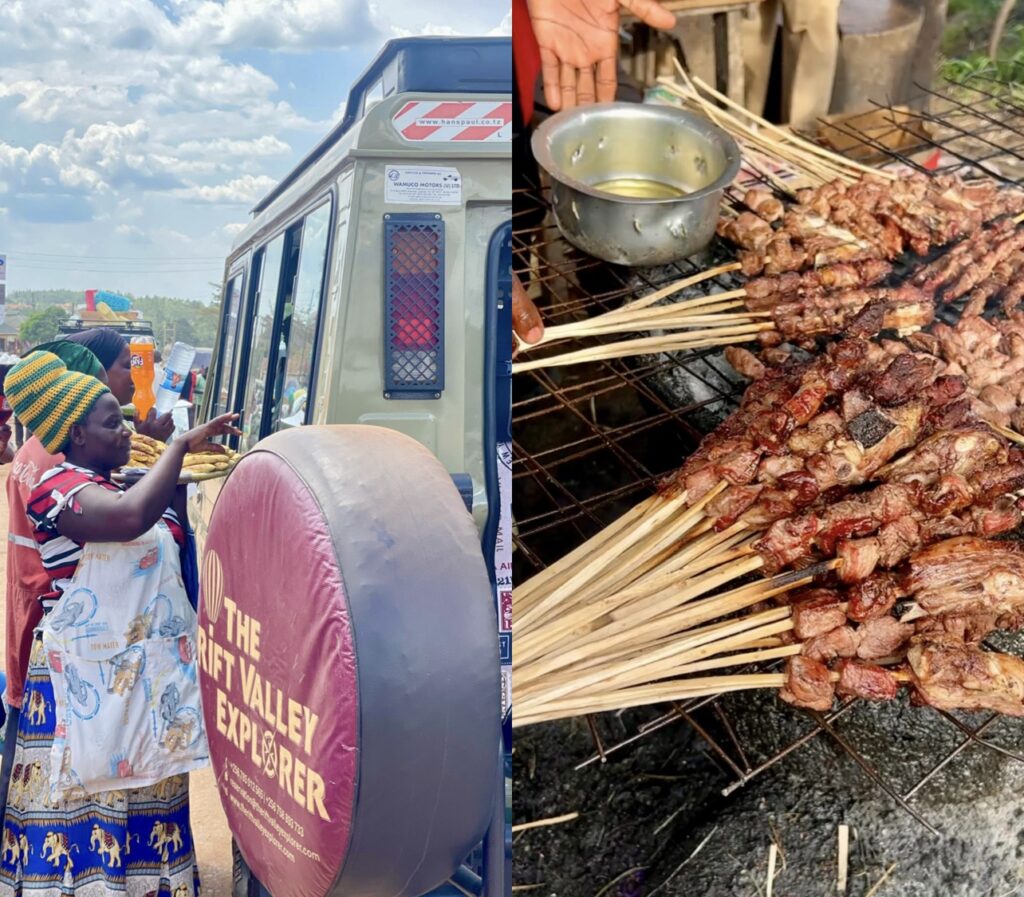
The smell hits you before you see the grill. Smoke rising from the roadside. The hiss of meat over hot coals. The vendor fanning the flames with the focused intensity of a craftsman at work. You’ve found muchomo and your day just got better.
Muchomo, from the Luganda word for ‘roasted’, is Uganda’s roadside grilled meat. Most commonly goat or chicken, skewered and slow-roasted over charcoal until the outside is charred and smoky and the inside is tender and juicy. It’s served with roasted plantains (gonja) and a green chilli sauce that adds just enough heat to make things interesting.
What makes Ugandan muchomo special isn’t a complicated recipe, it’s the technique and the fire. Roadside muchomo vendors have been perfecting their craft for years, and the best ones develop a following that stretches across entire cities. On the drive to Murchison Falls, heading toward Bwindi, passing through Fort Portal pull over when you see the smoke. The locals who stop there have been eating at that stall for years. That’s the only recommendation you need.
Why it’s unforgettable:
•Charred, smoky, and deeply satisfying, campfire food at its finest
•A roadside institution part food, part social experience
•Best eaten standing up, off a stick, watching the world go by
Where to find it: Roadside stalls on every major highway in Uganda. Order extra gonja (roasted plantain) it’s the perfect base for the charred drippings from the meat.
Extra: Nsenene
We said five. But Uganda wouldn’t let us stop there.
Nsenene are grasshoppers, specifically the long-horned variety that descend on Uganda in enormous swarms twice a year, around November and again in June. For most of the world, that’s a nature event. In Uganda, it’s a harvest festival.
Vendors set up lights at night to attract the swarms, collect them by the bucket, and prepare them fried or roasted with salt, onions, and chilli. The result is crunchy, nutty, and surprisingly addictive, a high-protein snack that Ugandans of all backgrounds eat with genuine enthusiasm. Nsenene season is a cultural moment. People travel for it. Families gather around it. It’s sold on street corners, in markets, and packaged in bags to take home.
Will it push you outside your comfort zone? Probably. Will you be glad you tried it? Almost certainly. The travellers who take the leap almost always come back for seconds.
Why it’s worth trying:
•Crunchy, nutty, and genuinely delicious, not just a dare
•A deeply cultural experience, nsenene season is a Ugandan institution
•The best story you’ll tell when you get home
When to find it: November and June, during the two annual grasshopper seasons. Street vendors and markets across Kampala and central Uganda, look for the crowds and follow the noise.

Bonus: What Makes Ugandan Food Special?
Five dishes barely scratches the surface. But beyond the food itself, it’s the experience that makes eating in Uganda memorable.
- Meals are shared, food here is communal by nature
- Everything is freshly prepared, no shortcuts, no factory lines
- Recipes vary by region and tribe, 50+ ethnic groups means 50+ food traditions
- Every dish carries cultural meaning, food is never just fuel here
From lakeside Nile perch near Lake Victoria to mountain-grown produce in the Rwenzori foothills, Uganda’s food map is as diverse as its landscapes. Travel here and you’re not just moving through geography, you’re moving through flavour.
And if you travel here without trying these dishes? You’ve only seen half the story.
Taste Uganda with The Rift Valley Explorer
A safari isn’t just what you see, it’s what you taste, smell and feel. At The Rift Valley Explorer, we don’t just show you Uganda. We help you taste it. We build itineraries that weave cultural experiences, including food, into every day of your safari, from breakfast at a forest lodge to roadside muchomo on the drive between parks.
Want a cultural food experience included in your safari? Let’s build your culinary adventure.
Uganda is one of a kind. Come hungry.
Leave a Reply