Uganda has recorded over 1,090 bird species. The question isn’t whether the birds are here, it’s knowing exactly where to find them.
From papyrus swamps on the shores of Lake Victoria to ancient highland rainforest, the open savannah of the northern Nile to the Congo Basin lowlands of the western RiftValley, each of Uganda’s birding hotspots offers a completely different experience. Here’s where to go, and what to expect when you get there.
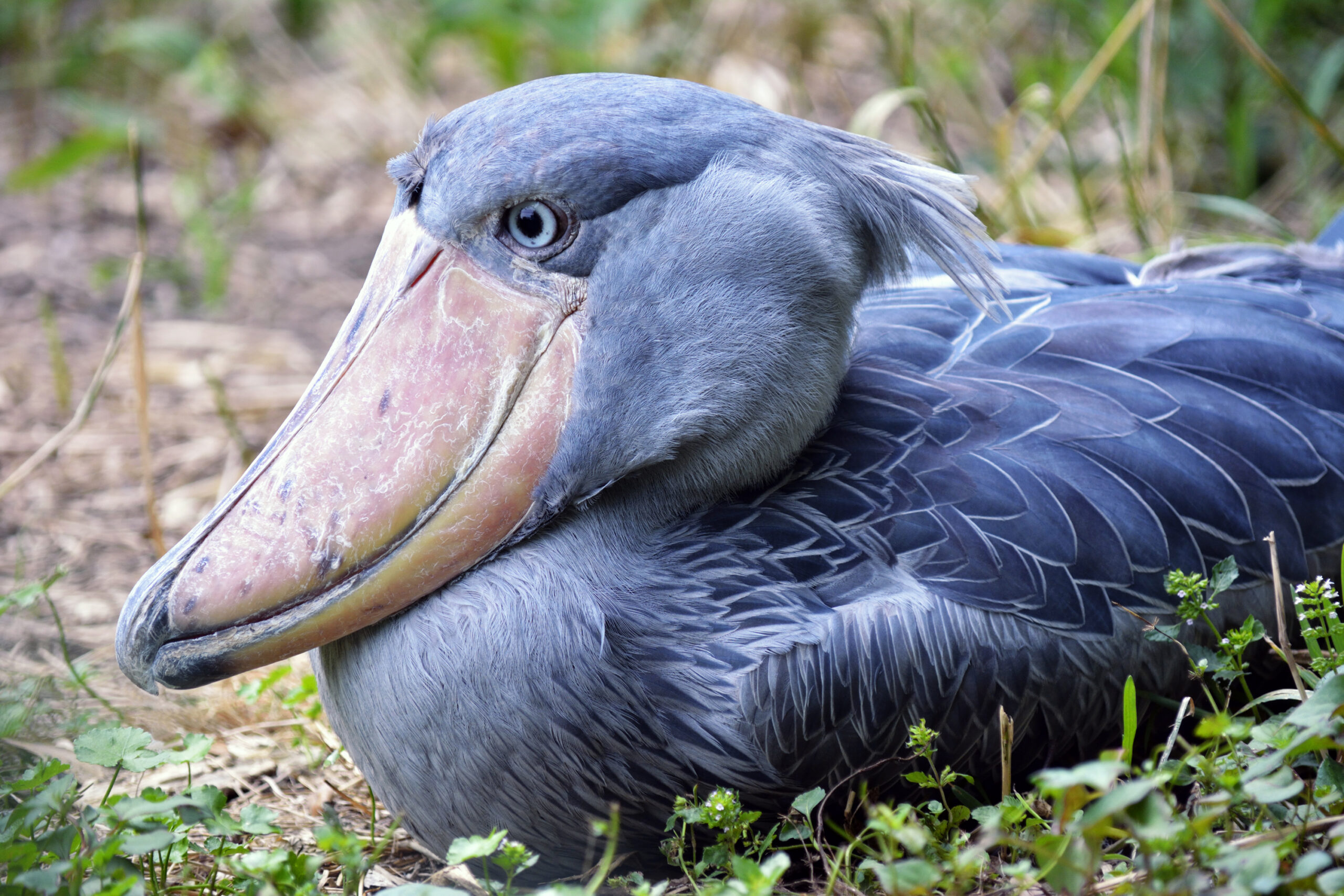
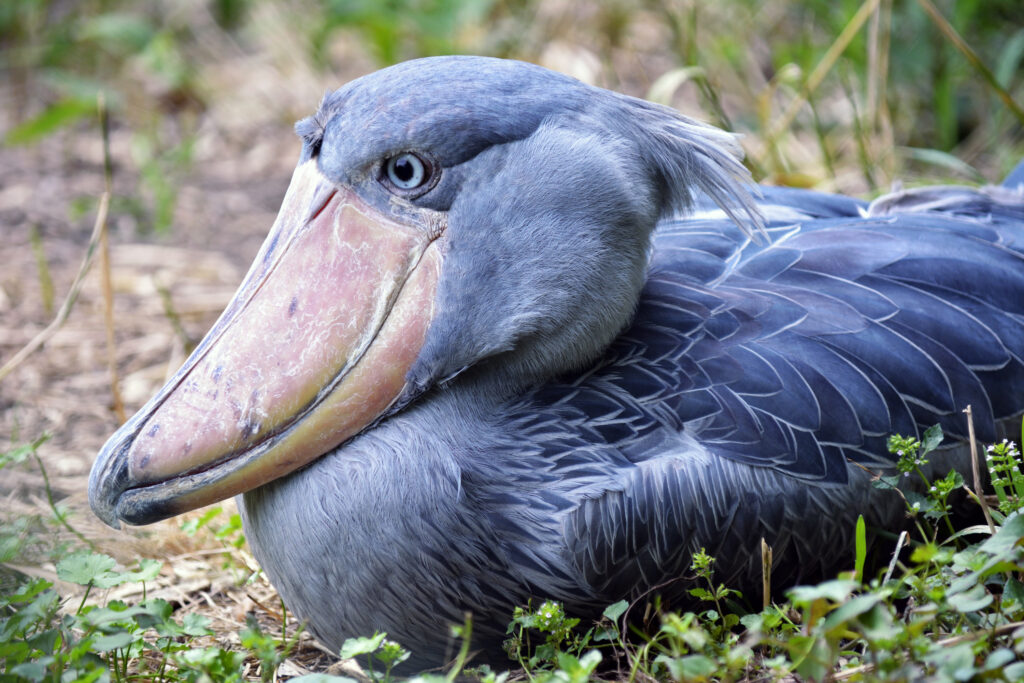
1. Mabamba Swamp: Home of the Shoebill
Every Uganda birding trip should begin here.
Mabamba Swamp sits on the northern shore of Lake Victoria, just 45 minutes from Entebbe International Airport, which means it fits neatly into almost any itinerary, whether you’re arriving or departing. And deep in the papyrus channels, something extraordinary is waiting: the shoebill stork.
Six feet tall. Grey. Ancient. Standing motionless in the shallows with an expression that suggests it has been here considerably longer than you have. The shoebill looks like it belongs in the Cretaceous period, and a dawn boat trip through Mabamba is the most reliable way to find one anywhere in East Africa. The swamp is shallow, the channels are navigable and experienced local guides know exactly where to look.
While you’re on the water, the supporting cast is impressive in its own right: African jacana picking its way across floating vegetation, malachite kingfisher blazing electric blue from a papyrus stem, blue-headed coucal calling from the reed edges and purple heron standing reed-still in the shallows.
Mabamba works for every type of visitor. For dedicated listers, it’s a bucket-list tick that justifies the detour on its own. For first-time safari travellers, it’s an introduction to Uganda’s birdlife that sets the tone for everything that follows.
Key species: Shoebill stork, African jacana, malachite kingfisher, blue-headed coucal, purple heron.
Best added to: Any itinerary flying in or out of Entebbe
2. Queen Elizabeth National Park: 600+ Species Across Every Habitat
Queen Elizabeth is Uganda’s most ecologically diverse national park, and that diversity is reflected directly in the bird list: over 600 species recorded, across savannah, wetland, forest and crater lake habitats. It’s one of the most species-rich parks in all of East Africa, and one of the few places where a birder and a non-birder can spend a full day together and both come away completely satisfied.
The defining experience is the Kazinga Channel boat cruise, arguably one of the finest birding boat trips on the continent. The channel connects Lakes George and Edward, and its banks are lined with birds at extraordinary density. African skimmer, goliath heron, pied kingfisher, yellow-billed stork, saddle-billed stork, African fish eagle, all visible at close range, from the water with hippos surfacing alongside the boat and elephants wading in the shallows behind. Nothing prepares you for the sheer volume of life on that channel.
Away from the water, Maramagambo Forest at the park’s eastern edge adds African broadbill and bat hawk to the list. The open savannah and crater lake circuit delivers martial eagle, bateleur, long-crested eagle, and African harrier hawk. And the Ishasha sector in the south, famous for its tree-climbing lions, produces its own distinct bird community.
Key species: African skimmer, goliath heron, saddle-billed stork, martial eagle, African broadbill, bateleur

3. Semuliki National Park: Congo Basin Species in Uganda
Semuliki is Uganda’s most specialised birding destination, and for listers, among the most exciting on the entire continent.
This lowland forest in the western Rift Valley is a northern extension of the Congo Basin rainforest, which means it brings Congo Basin species that are found nowhere else in Uganda or East Africa. The bird list reads like a collection of rarities that would anchor a serious birding trip anywhere in Africa: Congo serpent eagle, African piculet, black dwarf hornbill, Nkulengu rail, Maxwell’s black weaver, white-crested hornbill.
These are birds that require specialist knowledge to find and specialist time to appreciate. Come with good ears, a guide who knows the forest, and patience. Combine with Kibale and the Rwenzori Mountains for a western Uganda circuit that stands alongside the finest birding itineraries on the continent.
Key species: African piculet, black dwarf hornbill, Congo serpent eagle, Nkulengu rail, Sassi’s olive greenbul
Best combined with: Kibale Forest and Rwenzori Mountains
4. Bwindi Impenetrable National Park: Africa’s Finest Forest Birding
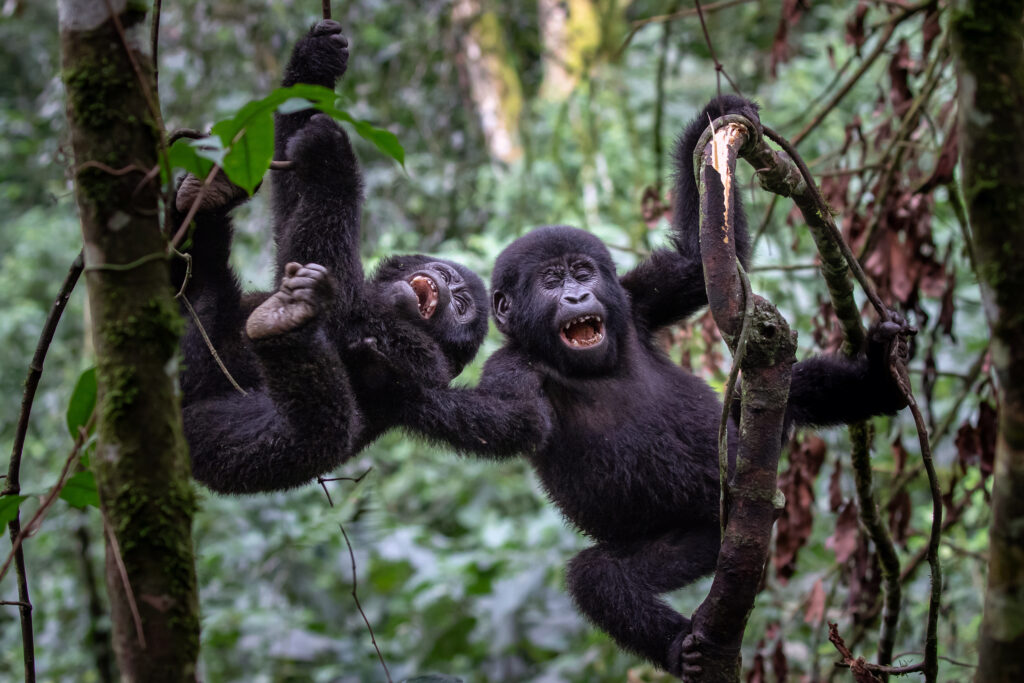
Bwindi’s reputation rests on mountain gorillas. Among serious birders, it earns a second reputation entirely: one of the most productive forest birding sites on the African continent.
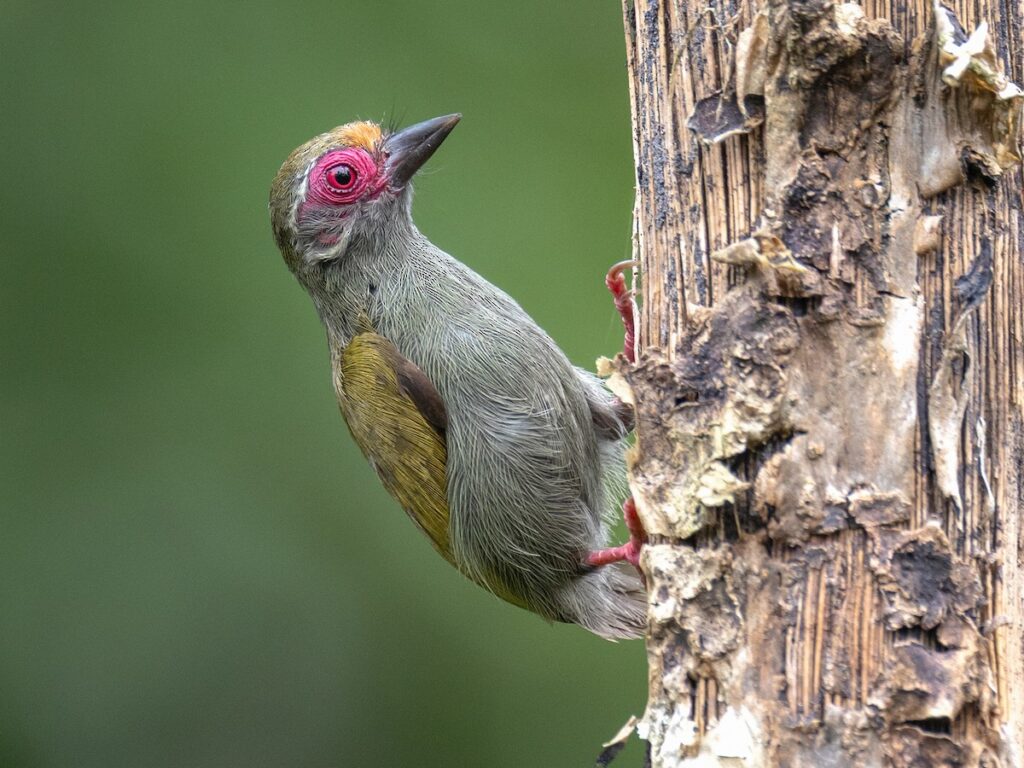
The forest holds 350+ bird species, including Albertine Rift endemics, birds found only in this narrow corridor of highland rainforest and nowhere else on earth. African green broadbill. Shelley’s crimsonwing. Handsome francolin. Kivu ground thrush. White-tailed blue monarch. These aren’t just rare birds. They’re birds that experienced ornithologists fly intercontinental flights specifically to see.
Birding at Bwindi is immersive and demanding in the best possible way. You’re listening as much as looking. The trails are dense. Light filters through the canopy in shafts. When a species finally reveals itself, a broadbill perched in the mid-storey, or a crimson wing moving through the undergrowth, the sighting feels genuinely earned.
The best sectors for birding are Buhoma in the north and Ruhija in the east. Ruhija sits at higher elevation and consistently delivers the highest concentration of montane endemics. For birders who are also tracking gorillas, the combination of a morning gorilla trek and an afternoon birding walk in the same forest is one of Uganda’s great double acts.
Key species: African green broadbill, Shelley’s crimsonwing, African emerald cuckoo, handsome francolin, Kivu ground thrush
Tip: Ruhija sector for the highest endemic density; combine with gorilla trekking for the full Bwindi experience
5. Murchison Falls National Park: Birding Along the Nile
Birding at Murchison Falls is cinematic in a way that few destinations anywhere in Africa can match. The Victoria Nile cuts through open northern savannah before exploding through a seven-metre gap in the rocks, and the banks of that river are packed with birdlife that makes every boat trip an event, every game drive a bonus.
The launch cruise from Paraa to the base of the falls is one of Uganda’s essential experiences regardless of your interest in birds. But the birding it delivers; goliath herons, African darters, Nile Valley sunbirds, pied kingfishers and African fish eagle, is exceptional. Between July and October, the experience reaches another level entirely. Colonies of carmine bee-eaters nest in the sandy Nile riverbanks, and when they lift as a group, a cloud of vivid crimson and turquoise wheeling above the water, it is one of the most purely spectacular sights in East African birding.
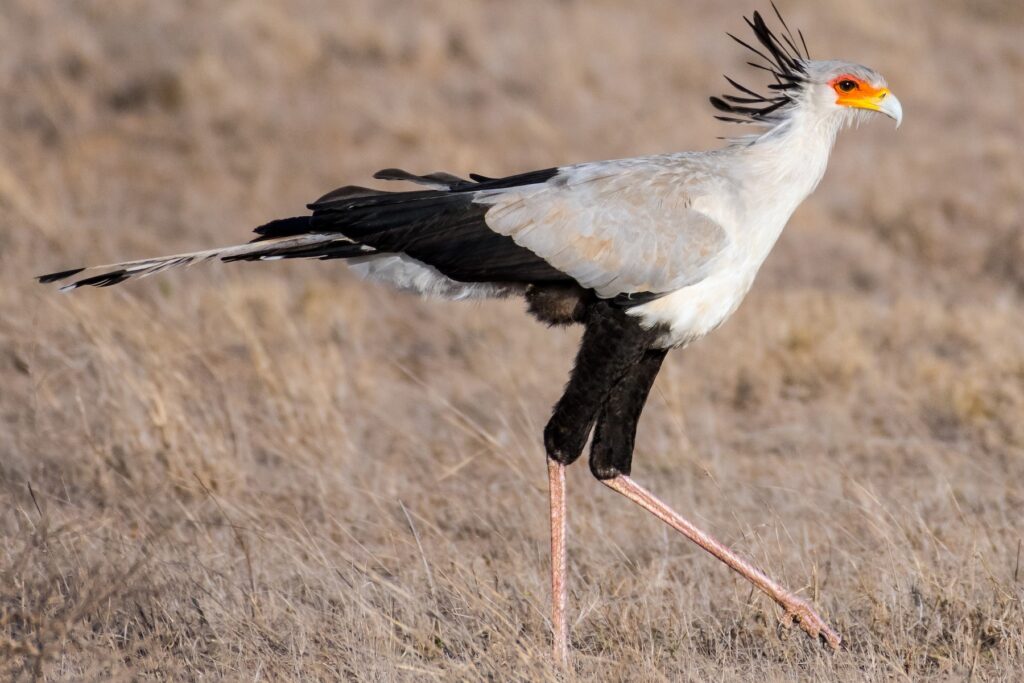
On land, Murchison’s open savannah adds species that are harder to find in the forest parks further south: secretary bird stalking through the grass, silverbird gleaming on an exposed branch and bateleur riding the thermals above the tree line.
Key species: Carmine bee-eater, goliath heron, African skimmer, African darter, secretary bird, bateleur
6. Kibale Forest National Park: For the Patient, Serious Birder
Kibale is internationally known as the chimpanzee capital of the world. For birders, it’s one of Uganda’s most rewarding and atmospheric forests, over 370 species, including Albertine Rift endemics, in a mixed forest of ancient trees and dappled light that rewards patience above all else.
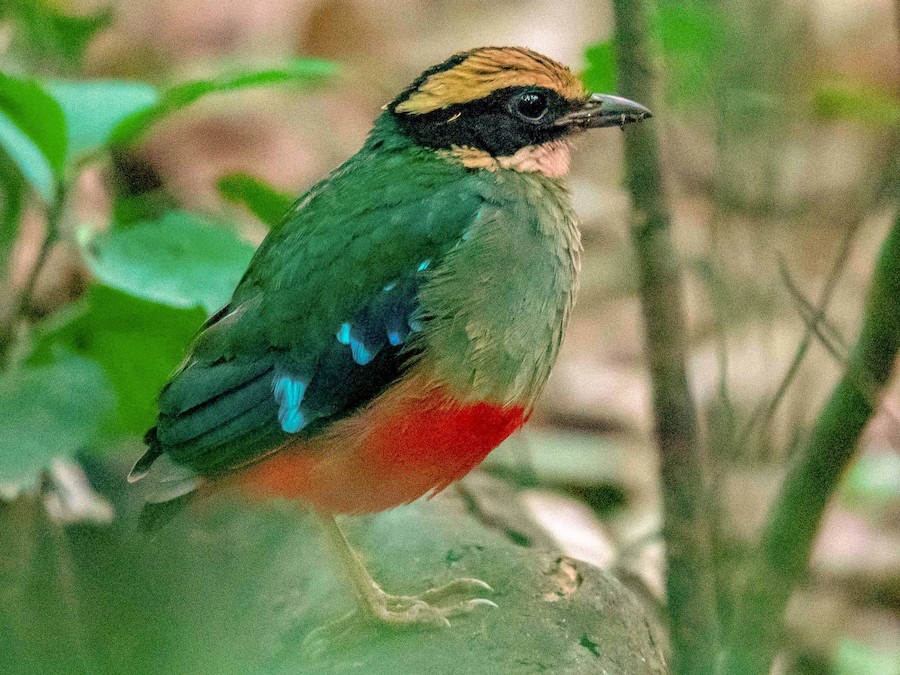
The bird that draws dedicated listers specifically to Kibale is the African pitta , secretive, jewel-coloured, a ground-dweller that moves through the forest understory like something from a dream. It emerges most reliably during the rainy seasons, and birders from across Europe and North America time entire Uganda trips around it. When you finally see one, vivid green, rust and electric blue in the leaf litter, the wait makes immediate sense.
Beyond the pitta: grey-winged robin-chat along the forest streams, African grey parrots moving noisily overhead, green-breasted pitta (during migration), sunbirds and hornbills filling the canopy, and the deep pre-dawn forest chorus that experienced birders describe as close to perfect.
Key species: African pitta, grey-winged robin-chat, African grey parrot, Nahan’s francolin
Best time for pitta: April–May and November–December rainy seasons
Building Your Uganda Birding Itinerary
The beauty of Uganda’s compact geography is that these destinations connect seamlessly. A two-week itinerary might open at Mabamba for the shoebill, move west through Kibale for chimps and the pitta, continue south to Queen Elizabeth for the Kazinga Channel, and close at Bwindi for forest endemics and gorillas. Add Murchison to the north and you have a circuit that covers every major habitat type in the country.Over 1,000 potential species. Multiple primate encounters. Big game. All within a single, flowing journey.
Let The Rift Valley Explorer Take You There
We know these habitats the way a local knows their neighbourhood, because they are our neighbourhood. Our guides have spent years in Uganda’s forests, swamps, and savannahs, and they know exactly where to look, when to go, and how to read a forest at first light.
Leave a Reply