If you’re planning a primate safari in Uganda, you’ll face one of the most exciting decisions in East African travel: gorilla trekking or chimpanzee trekking or if your itinerary allows… both?
Uganda is one of only a handful of countries on earth where you can track mountain gorillas and wild chimpanzees in the same trip. Both are extraordinary wildlife encounters. Both take you deep into ancient rainforest in search of our closest primate relatives. But they are, in almost every meaningful way, completely different experiences, different in pace, different in emotion, different in physical demand and different in cost.
This guide breaks down the key differences between gorilla trekking and chimpanzee trekking in Uganda, so you can choose the primate safari that fits your trip or make the case for why you should do both.
Where Each Primate Trek Takes Place in Uganda
Gorilla trekking in Uganda takes place in two locations: Bwindi Impenetrable National Park and Mgahinga Gorilla National Park, both in the southwest of the country. Bwindi, a UNESCO World Heritage Site, is the primary destination, home to over half of the world’s remaining mountain gorilla population, spread across four trekking sectors: Buhoma, Ruhija, Rushaga and Nkuringo. Mgahinga, set against the dramatic backdrop of the Virunga volcanoes, offers a more secluded experience with a single habituated gorilla family.
Chimpanzee trekking in Uganda is centered on Kibale Forest National Park in the west, widely known as the best chimpanzee trekking destination in Africa, home to over 1,500 chimpanzees and some of the continent’s highest habituation success rates. Additional chimpanzee trekking destinations include Kyambura Gorge within Queen Elizabeth National Park, Budongo Forest near Murchison Falls and Kalinzu Forest, making chimpanzee encounters accessible across multiple regions of the country.
Gorilla trekking locations: Bwindi Impenetrable National Park (Buhoma, Ruhija, Rushaga, Nkuringo sectors) and Mgahinga Gorilla National Park
Chimpanzee trekking locations: Kibale Forest National Park, Kyambura Gorge (Queen Elizabeth NP), Budongo Forest (Murchison Falls), Kalinzu Forest
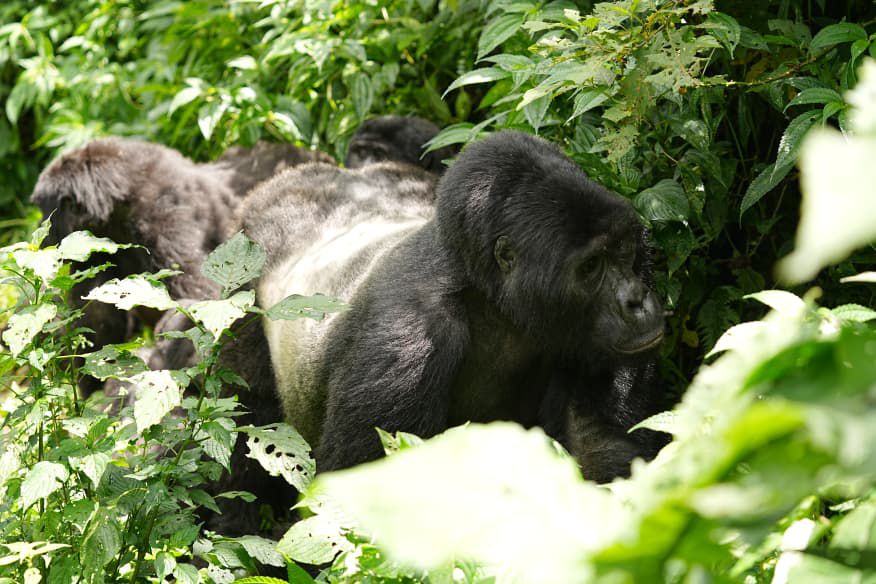
Silverbacks are dominant adult male gorillas who lead and protect their troops, and their chest-beats can carry through the forest as a warning or identity signal.
Gorilla Permit vs Chimpanzee Permit: How Much Does Each Cost?
Cost is one of the most significant differences between gorilla trekking and chimpanzee trekking in Uganda, and it’s worth being direct about the numbers.
A Uganda gorilla trekking permit costs USD 800 per person for foreign non-residents. This permit grants you one hour with a habituated gorilla family, escorted by experienced Uganda Wildlife Authority rangers and trackers. The price reflects both the rarity of the encounter and its direct contribution to mountain gorilla conservation. Permit revenue funds protection programs that have helped the mountain gorilla population grow from around 600 individuals in 2008 to over 1,000 today.
A chimpanzee trekking permit at Kibale Forest National Park costs USD 250 per person for foreign non-residents. This is a meaningful price difference, and for budget-conscious travellers or those doing multiple primate treks in one trip, it makes chimpanzee trekking a significantly more accessible entry point into Uganda’s primate safari experience.
Gorilla trekking permit Uganda: USD 800 per person (foreign non-resident, 2026 rate)
Chimpanzee trekking permit Kibale: USD 250 per person (foreign non-resident, 2026 rate)
Both permits must be secured in advance through a licensed Uganda tour operator. Gorilla permits especially sell out months ahead during peak season.
The Rift Valley Explorer tip
The Experience: What Gorilla Trekking and Chimpanzee Trekking Actually Feel Like
This is where the two primate safaris diverge most dramatically, not in logistics, but emotionally.
Gorilla trekking in Bwindi Impenetrable Forest is a slow, atmospheric, deeply moving experience. The forest is ancient, dense and extraordinarily quiet. When you find the gorilla family, and trained guides make sure you do, everything slows further. Mountain gorillas are calm, grounded and largely indifferent to human presence once habituated. A silverback may sit three meters from you, yawning, while juveniles tumble around him. Mothers groom infants. The family goes about its life. You watch. Your one permitted hour passes in what feels like minutes. Most first-timers describe gorilla trekking not as a wildlife sighting but as something closer to an emotional encounter, the kind of experience they will never forget.
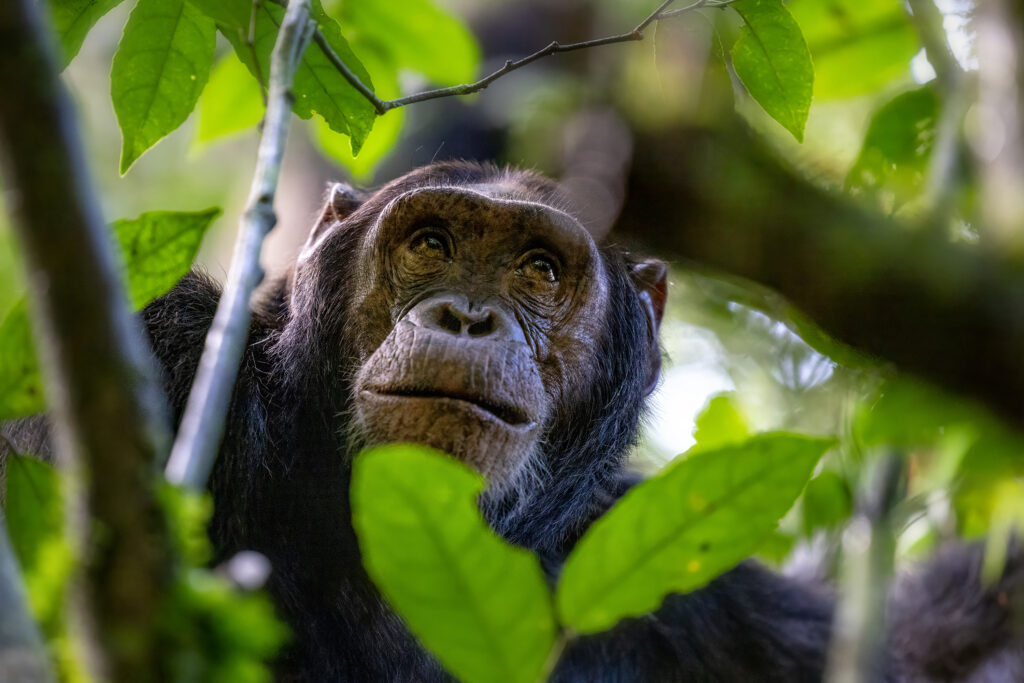
Chimpanzee trekking in Kibale Forest is the opposite in almost every respect. Chimpanzees are fast, loud, vocal and constantly in motion. They leap between trees, chase each other, scream across the canopy and have a social life so chaotic and energetic that keeping up with them requires agility and quick reflexes from your camera as much as your legs.
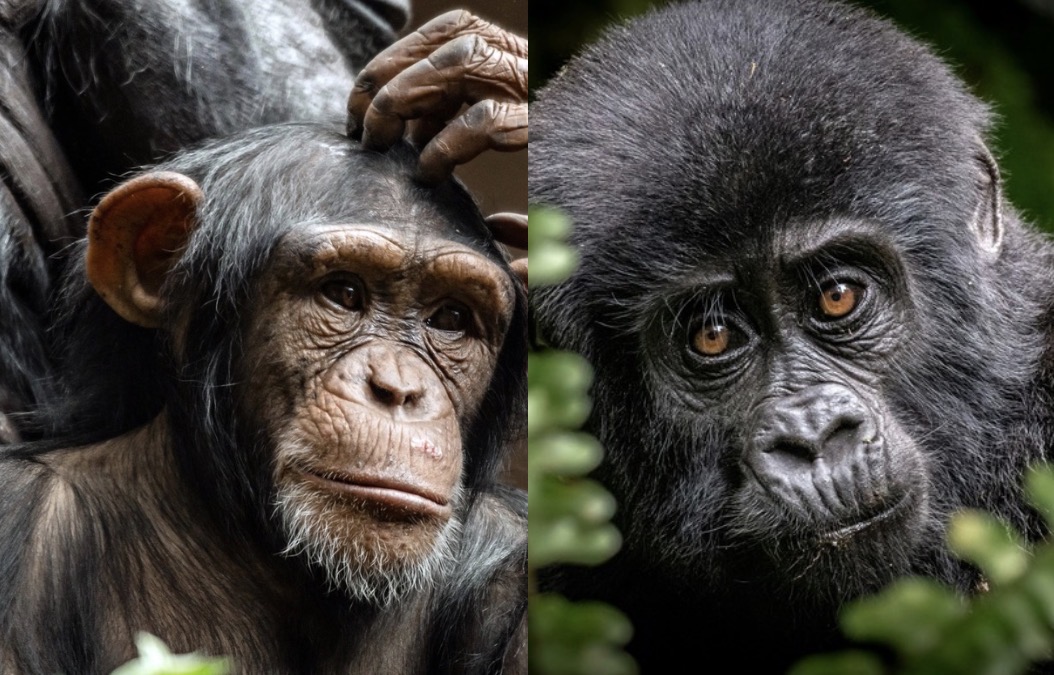
Where gorilla trekking is meditative, chimpanzee trekking is electric. Where gorilla trekking offers intimacy and stillness, chimpanzee trekking offers spectacle and movement. Both are unforgettable. Neither prepares you for the other.
Did you know: Chimpanzees don’t just use tools, they invent them, they remember who helped them and can also recognize their own reflection.
Physical Difficulty: Which Primate Trek Is Harder?
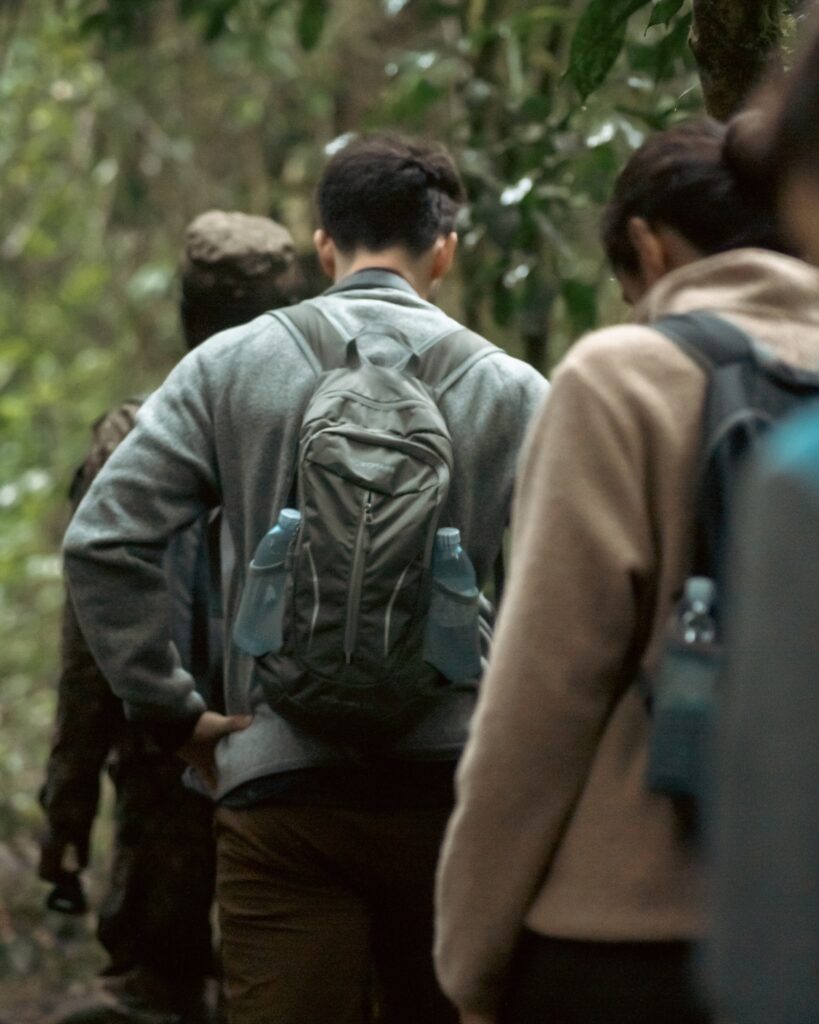
Gorilla trekking in Uganda varies significantly in physical difficulty depending on which sector and family you are assigned to. Bwindi’s terrain is steep, dense, often muddy and can be genuinely demanding. Some treks take under an hour to reach the family, while others can take four to six hours of difficult hiking through thick vegetation at altitude. There is no way to predict trek duration in advance, as gorilla families move freely. Fitness levels from moderate upward are generally recommended, though porters are available at all sectors to carry bags and provide physical support on steep sections.
Chimpanzee trekking is generally considered less physically demanding than gorilla trekking, as Kibale Forest’s terrain is flatter and more accessible than Bwindi’s mountain slopes. However, once chimpanzees are located, keeping up with them requires quick movement and sharp attention, chimpanzees do not wait for you. The physical challenge shifts from sustained climbing to bursts of fast-paced movement through the forest. Most travellers of reasonable fitness find chimpanzee trekking manageable and it is often recommended as an accessible primate experience for those uncertain about the demands of gorilla trekking.
Time Spent with the Primates: One Hour vs an Open Window
Gorilla trekking in Uganda permits exactly one hour with the gorilla family once located. This is a strict Uganda Wildlife Authority rule, enforced to protect the gorillas from prolonged human disturbance. That hour is precious, focused and passes at a speed that surprises almost everyone. For travellers who want more, Uganda also offers a Gorilla Habituation Experience in Bwindi’s Rushaga sector, a full four hours with a gorilla family still in the process of habituation, at a higher permit cost of USD 1,500.
Chimpanzee trekking does not apply the same strict time limit. Standard tracking permits allow a one-hour visit once the chimpanzees are located, but the Chimpanzee Habituation Experience at Kibale allows a full day in the forest with researchers and the chimpanzee community, from dawn departure to evening nest-building. For travellers who want maximum time with chimpanzees and a genuine insight into primate research and behavior, the habituation experience is one of Uganda’s most extraordinary and underrated wildlife activities.
Which Should You Choose: Gorilla Trekking or Chimpanzee Trekking?
Choose gorilla trekking if: you want the single most profound wildlife encounter available in Uganda, budget is not the primary constraintnand you are prepared for physically demanding terrain. The mountain gorilla trekking experience in Bwindi Impenetrable Forest is genuinely extraordinary, most travellers who do it describe it as a life-changing moment.
Choose chimpanzee trekking if: you want an equally extraordinary but more accessible and more affordable primate safari, you prefer a high-energy wildlife experience over a contemplative one or you are combining a primate trek with other Uganda safari activities and need to manage a budget across a longer itinerary. Chimpanzee trekking in Kibale Forest is Africa’s best chimpanzee experience, the success rates, the density of the chimpanzee population and the quality of habituation make it the definitive chimp trekking destination on the continent.
Choose both if your itinerary allows. Uganda is the only country in the world where you can tick both primate treks in a single trip, in two completely different ecosystems, delivering two completely different experiences. Most travellers who do gorilla trekking and chimpanzee trekking on the same itinerary agree that the contrast between them, the stillness of the gorilla encounter against the chaos of the chimp trek, makes both experiences richer than either would be alone.
Securing gorilla trekking permits and chimpanzee trekking permits in Uganda requires advance booking through a licensed tour operator. We handle all permit applications, track availability across sectors and build handcrafted Uganda primate safari itineraries that give you the best possible version of both encounters.
Leave a Reply