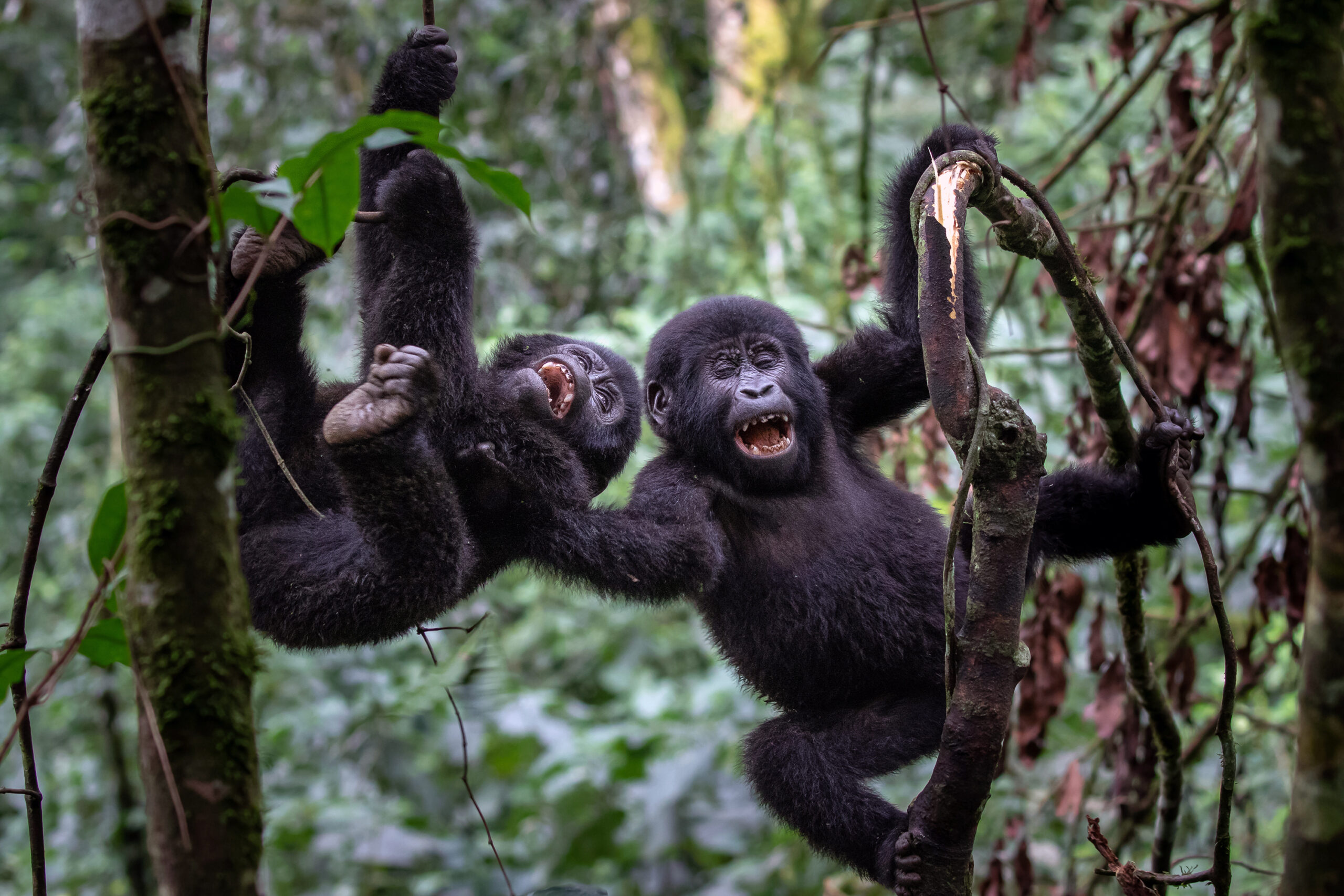
You’re standing at the edge of a mist-covered forest. The ranger ahead of you raises his hand — silence. Through a tangle of ancient roots and hanging vines, a silverback gorilla sits watching you. Calm. Enormous. Unhurried. For the next hour, nothing else exists.
That moment happens in Uganda. It also happens in Rwanda. The gorilla doesn’t know which country it’s in. But you will. Because everything around that encounter, from what you paid to get there, to what you did the day before and the day after, is completely different.
We’ve run a number of handcrafted safaris across East Africa. And when guests ask us, Uganda or Rwanda for gorillas? The answer, nearly every time, is Uganda. Here’s the full picture:
The Price Gap: Same Gorillas, Very Different Cost
Let’s start with the number that changes the conversation immediately.
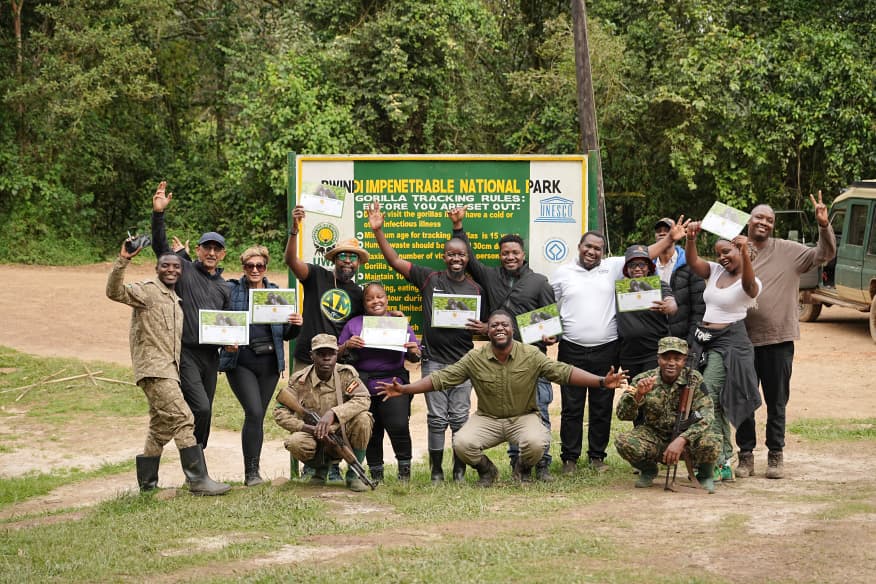
- Uganda gorilla permit: USD $800 per person
- Rwanda gorilla permit: USD $1,500 per person
That’s $700 more — per person — for the same one hour with the gorillas. For a couple, that’s $1,400. For a group of four, it’s $2,800 sitting on the table.
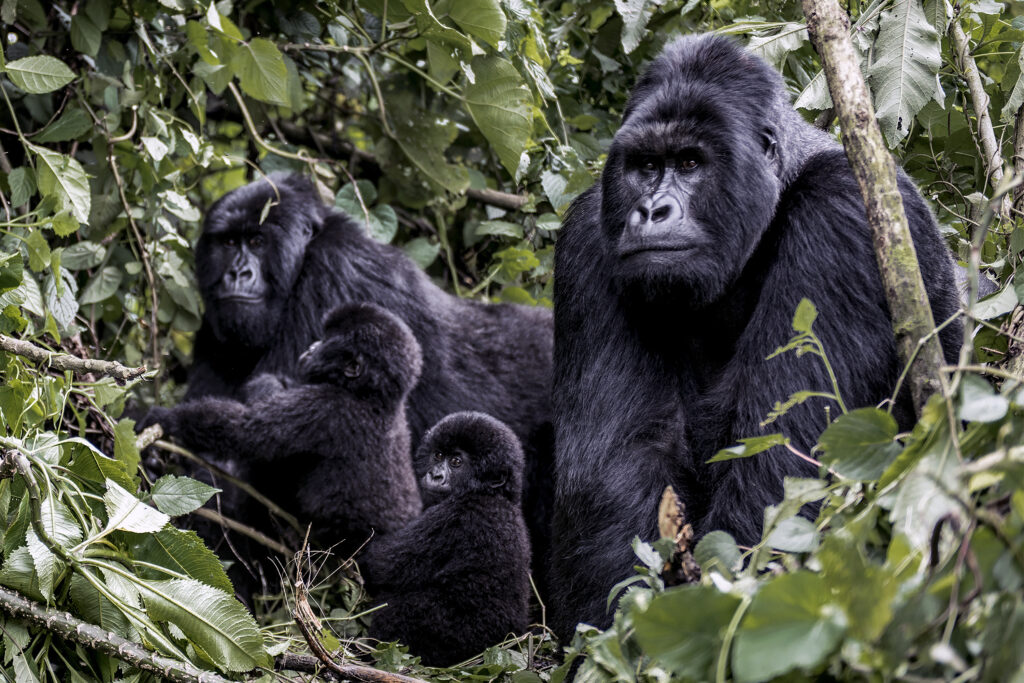
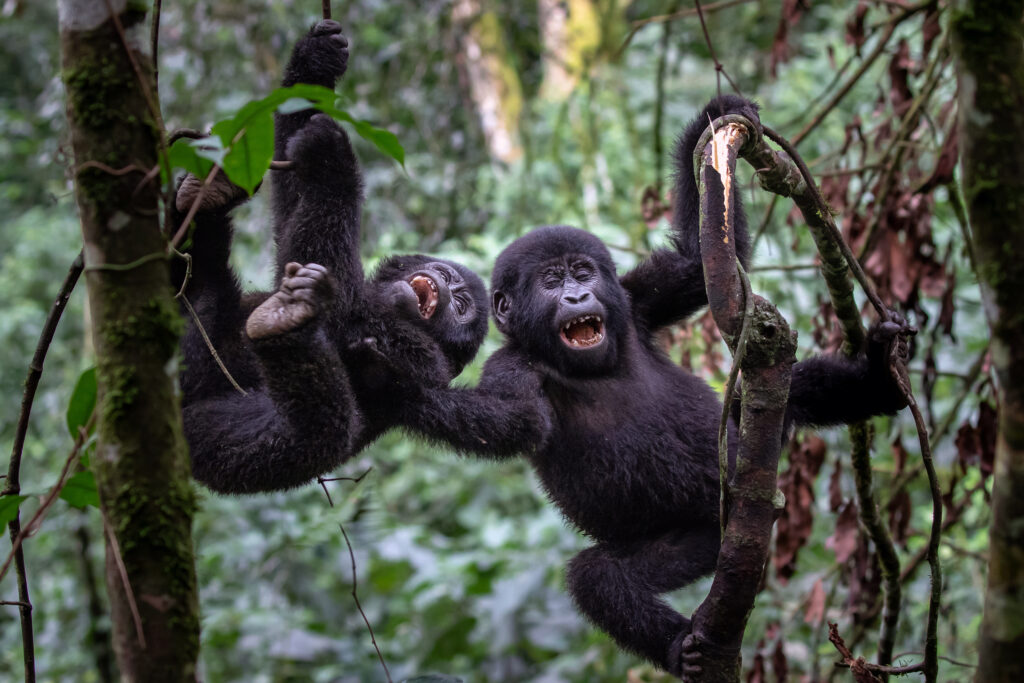
And here’s the question worth asking: are the gorillas in Rwanda better? No. Both countries protect the same species — the mountain gorilla — in similar highland forest ecosystems. The silverback doesn’t care which permit you’re holding. What you’re really paying a premium for in Rwanda is shorter travel times and a more luxury-positioned overall experience.
That $700 saving per person in Uganda can easily become a full safari extension — a Nile boat cruise at Murchison Falls, chimpanzee tracking in Kibale Forest, or a few extra nights at a beautiful forest lodge. Uganda gives you room to build a bigger, richer trip without stretching your budget.
More Gorilla Families, Better Availability
Uganda holds over half of the world’s remaining mountain gorilla population. Bwindi Impenetrable National Park alone is home to around 459 mountain gorillas across 19 habituated gorilla families. Add Mgahinga Gorilla National Park and Uganda’s gorilla credentials are simply unmatched.
Rwanda’s Volcanoes National Park shares its gorilla population with Uganda and the DRC. The number of habituated families and available permits is smaller — and the park fills up fast, often booked months in advance during peak season.
More families in Uganda means more permits available, more flexibility on dates, and more options on trekking difficulty. Whether you want a gentler introduction to the forest or a challenging full-day trek to a remote gorilla family, Uganda can match the experience to what you’re looking for.
At a Glance:
- Uganda: ~459 mountain gorillas, 19+ habituated families in Bwindi alone
- Rwanda: Shares its gorilla population across 3 countries; fewer permits, books up faster
- More families = more permit availability = easier planning, especially for peak season
The Trek Itself: Wild vs Curated
This is where the two experiences start to feel genuinely different — and it comes down to what kind of encounter you’re after.
Bwindi Impenetrable National Park earns its name. The terrain is steep, the forest is dense, and the trek can range from a manageable two hours to a serious half-day push through tangled jungle. You earn your encounter. There’s a rawness to it, a sense of genuine expedition, that stays with you long after you’ve left the forest.
Rwanda’s Volcanoes National Park sits on open volcanic hillsides with more predictable, accessible terrain. The hikes are generally shorter and less physically demanding. For some travellers — particularly those with mobility concerns or limited time, that’s a genuine advantage.
But if what you want is an experience that feels completely unscripted, immersive, and wild, Uganda delivers that edge in a way Rwanda simply cannot replicate.
Bwindi Is a World of Its Own
Rwanda’s gorilla habitat is beautiful — open montane forest on the slopes of ancient volcanoes. But Bwindi Impenetrable Forest is something else entirely. It’s a UNESCO World Heritage Site, one of Africa’s oldest and most biologically diverse rainforests, covering over 320 square kilometres of ancient mist-covered jungle that has remained largely unchanged for 25,000 years.
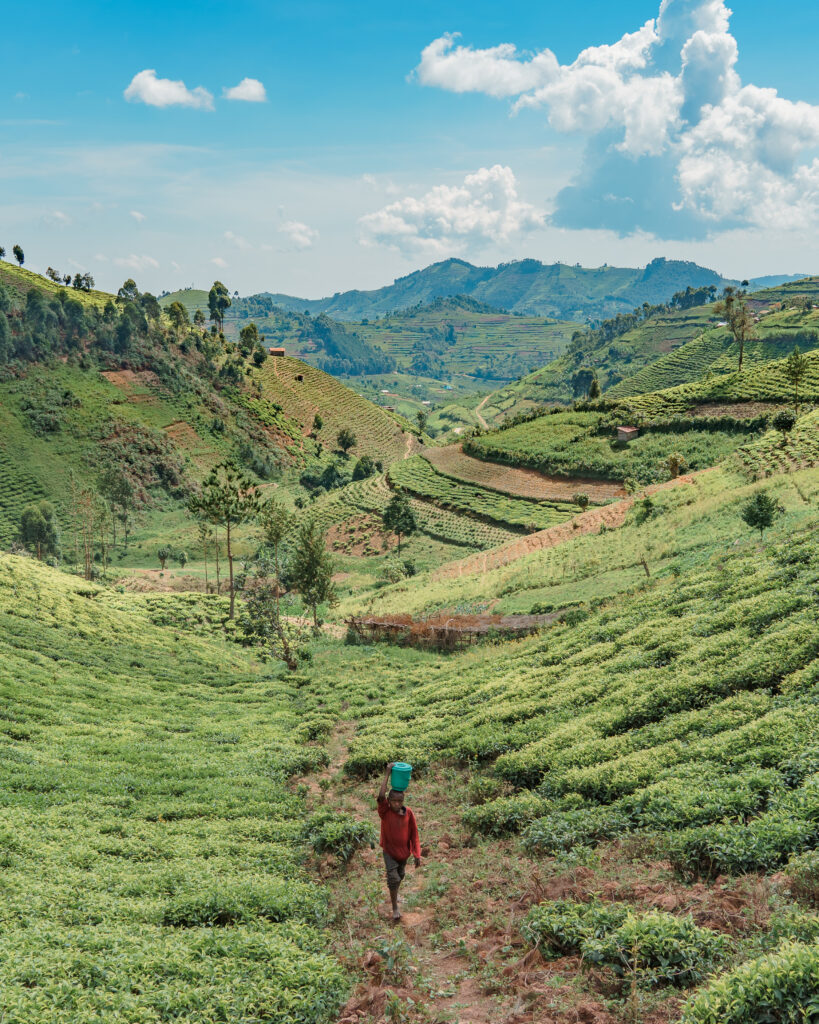
Trekking in Bwindi isn’t just about the gorillas. The forest itself is the experience. Over 350 bird species. More than 200 tree species. Black-and-white colobus monkeys, forest elephants, rare orchids. The trail smells ancient. The light filters through the canopy in ways that make even non-photographers stop to stare.
There are four distinct trekking sectors in Bwindi — Buhoma, Ruhija, Rushaga, and Nkuringo — each with different terrain, different character, and different gorilla families. No two treks feel the same.
What Makes Bwindi Different:
- UNESCO World Heritage Site — one of Africa’s oldest living rainforests
- Four trekking sectors offering very different terrain and gorilla families
- Extraordinary biodiversity beyond gorillas: birds, primates, rare flora
- A forest environment that feels genuinely primeval and remote
Uganda Gives You a Full Safari — Not Just Gorillas
This is where Uganda completely separates itself from Rwanda as a destination.
A Rwanda gorilla trip is typically a 2–3 day experience — fly in, trek, fly out. Spectacular, but contained. Uganda is a multi-layered safari destination where gorilla trekking is the centrepiece of something much bigger.
Within a single itinerary, you can experience gorilla trekking in Bwindi, chimpanzee tracking in Kibale Forest — the primate capital of the world — tree-climbing lions and boat safaris at Queen Elizabeth National Park, and the sheer thundering force of Murchison Falls on the Victoria Nile. That’s not an add-on. That’s a complete East African safari circuit in one country, with one specialist operator who knows every road.
Rwanda’s gorilla encounter stands beautifully on its own. Uganda’s becomes the highlight of an unforgettable journey.
Accommodation: More Choice, Same Quality
Uganda gives you genuine flexibility across every budget level. From well-run community lodges and comfortable mid-range safari camps to high-end forest retreats with views straight into the canopy, options are plentiful and excellent value.
Rwanda’s gorilla corridor — particularly around Volcanoes National Park — is heavily skewed toward luxury pricing. The properties are world-class, but the cost floor is significantly higher. If you’re not planning to spend $500+ per night on a lodge, your choices in Rwanda narrow considerably.
In Uganda, a beautifully run mid-range property inside or on the edge of Bwindi is absolutely achievable. You don’t have to choose between a great gorilla experience and a realistic budget.
When Rwanda Might Actually Be the Right Choice
To be fair (and we always are) Rwanda does have real advantages for certain travellers. It’s not a competition with one winner for everyone.
Rwanda may be the better fit if you’re very short on time (Kigali to Volcanoes National Park is roughly two hours), if you want an exclusively luxury-positioned experience with the very highest-end lodges, or if you have physical limitations that make Bwindi’s challenging terrain a concern.
Outside of those scenarios, Uganda offers more gorillas, more flexibility, more safari variety, and significantly better value — without compromising the quality of the encounter itself.
Side-by-Side: Uganda vs Rwanda for Gorilla Trekking
- Permit cost: Uganda $800 | Rwanda $1,500
- Gorilla families: Uganda 19+ habituated in Bwindi | Rwanda fewer, books faster
- Forest ecosystem: Uganda — Bwindi UNESCO rainforest | Rwanda — open volcanic montane
- Trek character: Uganda — wild, immersive, varied | Rwanda — more accessible, shorter
- Safari combination: Uganda — unbeatable (primates, big game, Nile) | Rwanda — mostly standalone
- Accommodation range: Uganda — budget to luxury | Rwanda — skewed toward high-end
- Accessibility: Rwanda slightly easier | Uganda very manageable with charter option
Our Verdict
Rwanda will always have a place on the gorilla trekking map. It’s a beautifully run destination with world-class infrastructure and genuine conservation credentials. We respect it enormously.
But Uganda wins on almost every measure that matters to most travellers: permit cost, gorilla availability, forest depth, safari variety, and overall value. And when gorilla trekking sits inside a broader handcrafted safari — which is exactly how we design every TRVE itinerary — it becomes not just a highlight but an experience that defines the entire trip.
Over 100 safaris. A 4.9-star rating from guests across the world. An owned fleet of Land Cruisers and a team that knows Bwindi intimately. When you trek with The Rift Valley Explorer, you’re not booking a permit. You’re booking an experience built around you.
Uganda’s gorillas are waiting. We’ll take you straight to them.
Leave a Reply