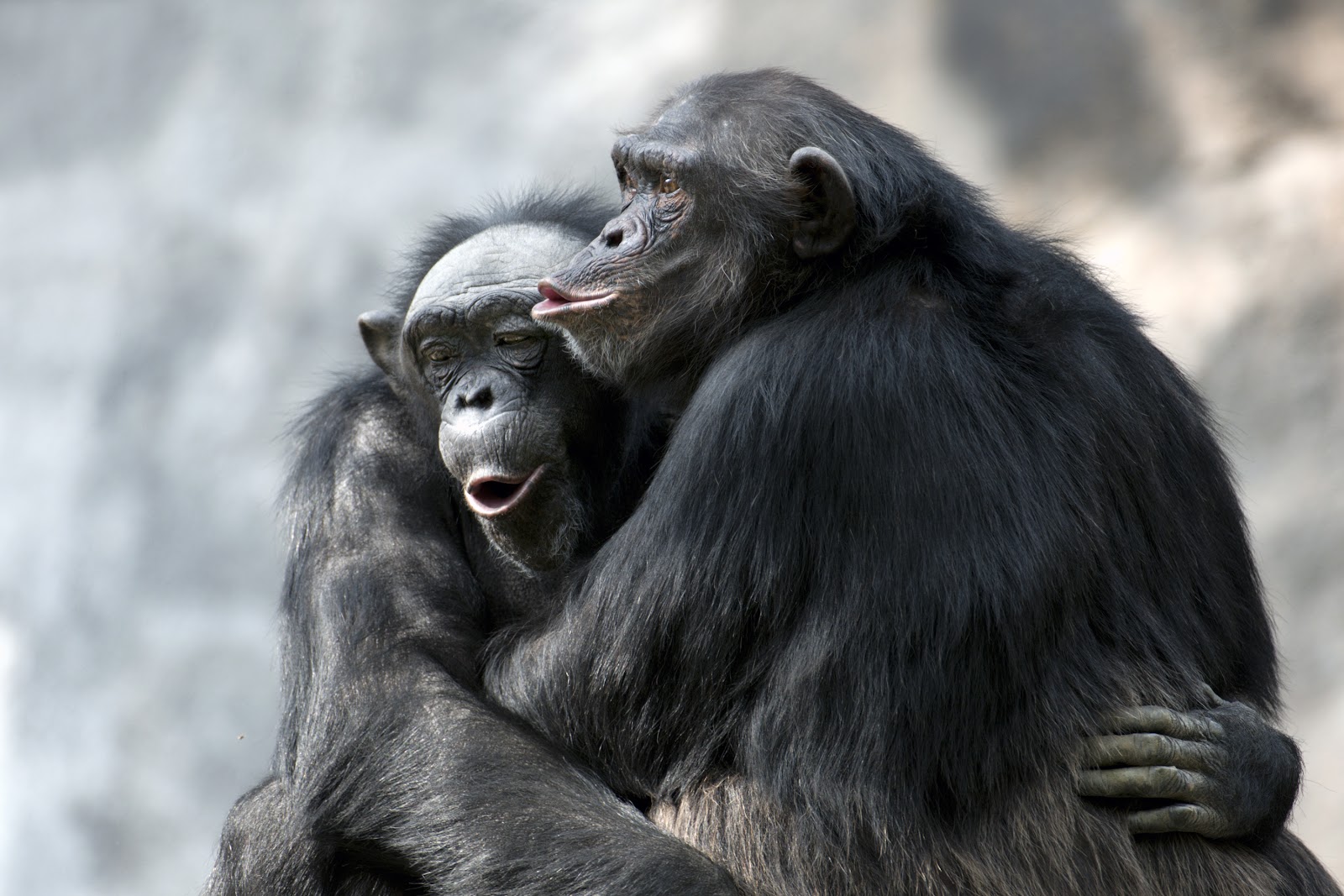
Somewhere deep in Kibale Forest in Western Uganda, two groups of chimpanzees are at war.
Not metaphorically or playfully, but at war — with coordinated raids, ambushes, territorial patrols and casualties on both sides. Former friends. Former family members. Now, mortal enemies.
Scientists published their findings in the journal Science in April 2026, and the world sat up and took notice. What's unfolding in Uganda's Kibale National Park has been described as the first clear, definitively documented chimpanzee civil war in recorded history — and it's been building slowly, tragically, for over a decade.
Here's the full story. And yes, there's a way for you to witness it in person.
Meet the Ngogo Chimpanzees: The Largest Known Wild Chimp Community on Earth
To understand the war, you first need to understand who these chimpanzees are.
The Ngogo chimpanzee community lives in a densely forested area of Kibale National Park called Ngogo, one of the richest and most biodiverse forest habitats in all of Africa. Scientists have been studying them continuously since 1995, building one of the most detailed long-term behavioural datasets ever assembled for any wild animal.
At their peak, the Ngogo community numbered close to 200 individuals, making them the largest known wild chimpanzee group ever documented. For nearly two decades, they lived in relative peace. They groomed each other. They hunted together. They patrolled their shared territory against outside groups. They were, by all accounts, a functioning, cohesive community.
Then, slowly, things began to change.
How Former Friends Became Fatal Enemies
The fracture begins (2015)
It didn't start with violence. It started with avoidance.
From around 2015, researchers began to notice that the Ngogo community was quietly dividing. Certain individuals were spending more time together, forming tight cliques. Two distinct clusters began to emerge — one group gravitating toward the western part of their territory, the other toward the central area. Scientists named them the Western and Central Ngogo chimpanzees.
Social ties between the two clusters unraveled gradually. Mating between individuals of different clusters slowed, then stopped. They started fighting over the shared border. And on 24 June 2015, it happened — members of the Western and Central clusters met near the centre of their territory, and the Central chimps chased the Western ones away. Something irreversible had shifted.
The point of no return (2017 to 2018)
By 2017, the Western chimps were regularly patrolling deep into Central territory — probing, watching, looking for opportunities to expand. That year, they attacked and injured the Central group's alpha male.
By 2018, the last social ties between the two groups had completely disintegrated. What had been a slow fracture became a permanent break. And the killing began.
The War: A One-Sided, Eight-Year Campaign of Violence
The Western chimps, despite starting as the smaller group, launched a systematic, coordinated campaign of lethal raids against the Central group. Between 2018 and 2024, researchers documented the Western chimps killing at least seven adult males and 17 infants from the Central group. Dozens more disappeared without trace — bodies were never recovered.
By 2026, the confirmed death toll had reached at least 28 chimpanzees, including 19 infants. The New York Times described it as the bloodiest conflict between chimpanzees in recorded history.
The attacks were not random. They were strategic. What the researchers observed:
- Coordinated ambushes on isolated individuals
- Targeted raids deep into Central territory
- Male infants ripped from their mothers and killed, with infanticide beginning in 2021
- Border patrols along clearly defined territorial lines
- Western group population growing from 76 to 108 individuals as Central numbers declined
The Central group, despite being the larger faction, never organised a coordinated counter-attack. Scientists are still trying to understand why.
Why Scientists Are Calling This a Once-in-500-Years Event
A true civil war within a single chimpanzee community — former group-mates turning on each other with lethal, sustained violence — is extraordinarily rare. Based on genetic evidence, scientists estimate such an event occurs, on average, only once every 500 years in a chimpanzee population.
The only previous comparable event was the famous Gombe Chimpanzee War, documented by Jane Goodall in Tanzania in the 1970s. But the Gombe chimps were given bananas by researchers, and critics argued this may have distorted their natural behaviour. At Ngogo, there was no provisioning, no artificial interference. This is nature, unfiltered.
"This is the first time that you could say definitively that the civil war is actually happening," said lead researcher Dr. Aaron Sandel of the University of Texas at Austin.
What caused it?
Here's what makes the Ngogo civil war truly extraordinary: it wasn't triggered by what we normally associate with conflict. There was no shortage of food in Kibale — the forest was rich and resources were plentiful. There were no cultural or ideological divisions.
The violence appears to have grown entirely from the breakdown of personal relationships — the slow erosion of friendships, the death of key individuals who had bridged different social cliques, a change in alpha male leadership, and the hardening of social clusters into rival identities. The key triggers researchers identified:
- Deaths of 'social bridge' males who had previously connected different cliques
- A change in alpha male leadership around 2015
- A disease outbreak that unsettled the community structure
- Gradual hardening of social cliques into distinct geographic clusters
- Reproduction becoming exclusive within clusters, deepening the divide
Once the groups stopped seeing each other as 'us', the path to violence was shockingly short.
You Can Witness This. Uganda's Kibale Forest is Open for Chimpanzee Trekking
Kibale National Park in western Uganda is not just the site of the world's most dramatic ongoing wildlife story. It's also one of the best places on Earth for chimpanzee trekking, home to over 1,500 chimpanzees across the park, including several fully habituated communities that researchers and tourists can follow on foot through the forest.
You won't trek directly with the Ngogo war community — they are a research-only group, carefully protected to preserve the integrity of the scientific study. But Kibale offers close, incredible encounters with other habituated chimp groups, guided by expert guides who know these forests deeply.
A Kibale chimpanzee trekking experience with TRVE includes:
- Early morning chimp trekking with expert Uganda Wildlife Authority guides
- Close encounters with fully habituated wild chimpanzee communities
- Interpretation of chimp social behaviour, territory, and family dynamics
- The chance to observe, in real life, the species at the centre of the world's biggest wildlife story
- Night stays at carefully selected lodges on the edge of Kibale Forest
Combine Kibale with a gorilla trekking permit in Bwindi Impenetrable Forest and you have the ultimate Uganda primate safari on a single trip.
Book Your Chimpanzee Trekking Tour With The Rift Valley Explorer
Our packages including chimpanzee trekking:
- Primate and Pride Explorer (9 days / 8 nights): Chimpanzee trekking at Kibale National Park + Tree Climbing Lions in Queen Elizabeth National Park (Ishasha sector) + Gorilla trekking and Batwa cultural experience at Bwindi Impenetrable National Park.
- Murchison Falls & Primate and Pride Explorer+ (10 days / 9 nights): Murchison Falls National Park + Chimpanzee trekking at Kibale National Park + Tree Climbing Lions in Queen Elizabeth National Park (Ishasha sector) + Gorilla trekking and Batwa cultural experience at Bwindi Impenetrable National Park.
We also offer other safari packages in Uganda — browse all trips →